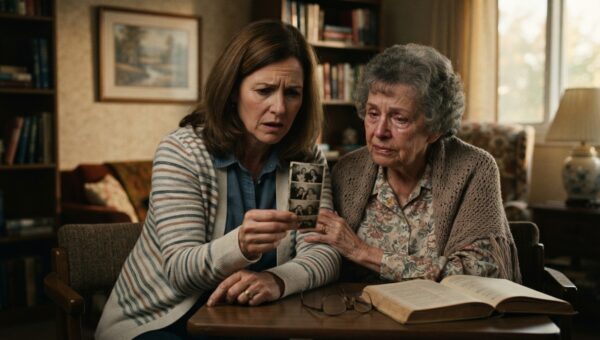
The kettle on the back burner was whistling a thin, sharp note that cut right through the hum of the old refrigerator, but I couldn’t move my feet off the linoleum. My coffee was sitting right there in the stoneware mug I’d painted back when my daughter was seven, still steaming just a little bit around the rim. Cole was standing by the kitchen island with his phone propped against the salt shaker, his thumb swiping across the screen over and over until the little glass table lamp started to rattle against the wood.
He had that hard, tight set to his jaw that meant he’d decided he was right about something, and once Cole decided he was right, you could have trucked in a mountain of evidence and he wouldn’t even blink.
“Just listen to it,” Cole said, his voice dropping down into that low, flat gear he used when he was trying to sound like the most reasonable man in the room. “The drawer was locked. Well, not locked, but it was pushed back. Two hundred dollars, gone. Just like that.”
“She’s eighty-four years old, Cole,” I said, my voice sounding thin even to my own ears. “People misplace cash. She hides things in pillowcases and forgets she did it. Remember when we found her pension check inside the dictionary?”
“That was six months ago, Nora,” he snapped, spinning the phone around so the screen faced me. “Look at the timestamp. Thursday afternoon at 2:14.
Maria walks in, straight to the mahogany chest, pulls the false bottom up, and slides four fifty-dollar bills right into her uniform pocket. She didn’t even hesitate. It’s right there in high-definition color.”
I didn’t want to look at the screen. I wanted to finish my coffee and check on Grandma in the back bedroom to see if she’d kicked her quilt off again. But I looked anyway because Cole had already made up his mind before he even bought the little black camera off Amazon Prime. He’d screwed it right into the molding above Grandma’s antique cherry wardrobe while she was eating her oatmeal, telling her it was a smoke detector upgrade because he didn’t want to upset her. Grandma hated changes in the house. She liked things the way they’d been since Granddaddy passed away back in ninety-four, with the heavy velvet drapes closed halfway and the smell of lemon oil on the baseboards.
Maria had been coming to the house every morning at seven for nearly a year now, wiping down the counters, making sure Grandma took her little yellow heart pills with her applesauce, and listening to the same three stories about Granddaddy’s boat down at the marina. She wore faded scrubs with little paw prints on the pockets and drove an old Honda Civic with a rusted-out tailpipe that rattled the windows every time she pulled into the crushed shell driveway. She made eleven dollars and forty cents an hour through the agency, which didn’t even cover the gas to drive out here to the county road twice a day.
“Did you ask her about it?” I asked, setting my mug down before my hand started shaking too hard to hold it.
“Ask her?” Cole let out a short, ugly sound that wasn’t quite a laugh. “You don’t ask a thief if they stole your wallet, Nora.
You call the county sheriff and you let them handle it. I already sent the file to Deputy Vance. He said they’re bringing her in for questioning within the hour.”
“You called the sheriff?” The coffee went cold in my throat. “Cole, she’s at the house right now. Grandma’s due for her noon dose in twenty minutes. Who’s going to give it to her?”
“I locked the front door from the outside and told her not to come back until the deputies cleared her,” he said, grabbing his keys off the counter with a heavy metallic clatter. “We’re done being played for fools. I’m going over there to meet Vance.”
He didn’t wait for me to answer. The front door swung shut with that dry, hollow thud that always meant the house was about to get much quieter and much colder. I stood there in the middle of the kitchen for a long minute, listening to the refrigerator motor kick on with a heavy shudder. Grandma was down the hall, humming something old and wordless to herself the way she did when the afternoon sun hit the yellow curtains just right. I walked past the hallway mirror and didn’t even recognize the woman looking back at me, with the dark circles under her eyes and the grease-stained apron I’d forgotten to take off since morning.
The house felt different with Maria gone. It didn’t feel safe; it felt empty in a way that made my skin prickle. Cole had left his laptop open on the dining room table with the security app running in the background, the little green recording light blinking steadily in the dark corner of the screen. I sat down in his leather desk chair, the leather still warm from where he’d been sitting, and dragged the mouse pointer over the timeline bar.
Cole had clipped the thirty-second highlight reel right to the desktop, neatly trimmed to start the exact second Maria’s hand reached into the drawer and end the moment she walked out the back door. That’s what he showed Vance. That’s what he showed me. But the full file was still sitting on the cloud server, four hours of unbroken, unedited footage from that Thursday afternoon.
I don’t even know why I clicked it. I think part of me just wanted to see if Maria had looked guilty before she did it, or if her hands had been shaking.
The progress bar crawled across the bottom of the screen. I watched the first hour pass in fast-forward, the sunlight moving slowly across Grandma’s rag rug until it hit the edge of the brass bedpost. Maria came into the frame at 1:55, carrying a basket of clean laundry she’d folded out on the back porch. She emptied the basket onto the quilt, smoothed the corners down with her palms just like Grandma liked them, and helped the old woman sit up to take a sip of water from the blue plastic cup with the flexible straw. Grandma said something that made Maria laugh, that quiet, tired little chuckle she always gave when Grandma started talking about the garden party of nineteen-fifty-two.
Then came the part Cole had clipped. At 2:14, Maria walked over to the dresser. Her face wasn’t angry or furtive. She looked tired, the kind of deep, gray exhaustion that comes from working two jobs and sleeping on a sagging mattress in a room with a leaky radiator. She opened the false bottom, took the four fifty-dollar bills, and slipped them into her pocket. My stomach gave a hard, sick wrench. There it was. No trick of the light. No misunderstanding.
I reached for the mouse to close the window, ready to tell myself that Cole was right after all, that people are just people and everybody breaks when things get tight enough. But the video didn’t end.
Maria didn’t leave the room. She turned around, grabbed her canvas tote bag off the cane-backed chair, and walked out the front door. The camera angle shifted to the driveway view through the wide front window. I leaned in close, the glow of the monitor washing out the small room around me until nothing else existed except that grainy gray image of the rusted-out Civic backing down our drive.
She didn’t go home.
The clock on the corner of the screen kept ticking. Twenty-two minutes past two. The Civic pulled into the strip mall down on Route 9, right next to the fading sign for the 24-hour Walgreens between the laundromat and the bait shop. The camera on the storefront across the asphalt caught her getting out of the car, her shoulders hunched against a cold wind that was kicking up the loose gravel in the parking lot.
She was inside for twelve minutes. When she came back out, she wasn’t carrying a purse or a carton of cigarettes. She had three small white paper bags from the pharmacy counter clutched against her chest like they were made of spun glass.
I sat there in the quiet dining room for a long time, the hum of the hard drive filling up the empty spaces between my ribs. Grandma’s prescriptions. The ones Cole and I were supposed to pick up on Monday after the insurance cleared, except we both got caught up with the zoning board meeting down at the town hall and completely forgot until Tuesday night, and then Wednesday got away from us with the roof leak in the utility room. We had been meaning to go. We said we’d go tomorrow. Tomorrow always seemed like plenty of time when you didn’t have to live inside an eighty-four-year-old body that stopped working right the second the little yellow pill wore off.
My hands were cold as I reached for my phone and dialed the number for the pharmacy. It took three tries before the pharmacist, a man named Henderson who had known our family since we used to buy penny candy out of the glass jars by the register, picked up the line.
“Henderson’s,” he said, sounding like he was chewing on a toothpick. “We close in ten minutes, make it quick.”
“Mr. Henderson, this is Nora Hayes,” I said, my voice coming out too loud in the empty room. “Out on the county road. My grandmother, Clara Hayes. I need to know about her refill status for this month.”
There was a dry rustle of paper over the line, the sound of a plastic binder being flipped back against a metal spine. “Clara? Well, let’s see here. You folks haven’t filled her Lantus or her heart maintenance since November. That’s four months, Nora.”
“Four months?” I said, though I already knew the answer before the words left my mouth. “Are you sure?”
“I’m looking right at the ledger,” he said, his voice dropping into that flat, disapproving tone small-town pharmacists use when they know more about your family than you do yourself. “Somebody’s been picking them up every twenty-eight days like clockwork, though. Same time every month. Sometimes on a Tuesday, sometimes on a Friday afternoon.”
“Who?” I asked, though the room was starting to tilt a little bit around the edges. “Who’s been picking them up?”
“Short-haired woman. Drives an old Honda with a noisy muffler. Always pays with her own debit card. Said she was family or working for the estate or something. Last month’s total alone came to eight hundred and forty dollars because the deductible reset in January. To be honest with you, Nora, I don’t know how she managed it on what aides make around here. That girl’s been keeping your grandmother out of an ICU bed since the snow started flying.”
The phone felt heavy against my ear, like a piece of wet lead. “She paid for them?”
“Every last cent out of her own pocket,” Henderson said. “Except for today. Today her card declined right at the register. Card was maxed out or had a bank hold on it, I don’t know. She looked like she was about to throw up right there on the linoleum. She left the bags on the counter, ran out to her car, and came back ten minutes later with four fifty-dollar bills in cash. Paid the balance in full and took the insulin straight out to her cooler box in the back seat so it wouldn’t spoil in the sun. Is everything all right down there? She looked terrible when she left.”
I didn’t answer him. I just muttered something about an emergency and clicked the phone off before he could ask any more questions.
The screen on Cole’s laptop was still glowing, showing the end of the video where Maria walked back into Grandma’s room, pulled the small refrigerator door open, and carefully tucked the three white bags right next to the carton of skim milk and the butter dish. She didn’t look around. She didn’t check to see if the camera was watching her. She just straightened the corner of the shelf paper, washed her hands at the little basin by the door, and went back to folding the rest of the laundry.
I looked down at my own hands, still stained with the dirt from the garden box I’d been weeding yesterday while Maria was inside scrubbing the bathroom floor. We hadn’t checked Grandma’s insulin supply in four months. We had assumed the automatic refill system was taking care of it, or that the county nurse was handling the paperwork, or that it just wasn’t our turn to worry about the logistics yet. Cole hadn’t bought that camera to protect Grandma’s silver spoons. He bought it because he wanted to catch someone doing something wrong so he wouldn’t have to look at the fact that he hadn’t stepped foot in that back bedroom for three weeks except to drop off a bag of groceries and complain about the cost of the heating bill.
The drive down to the county sheriff’s station took twelve minutes, but it felt like it lasted through three different seasons. The sky over the ridge had turned that bruised, purple color that comes right before a spring squall, and the wind was driving dry oak leaves across the asphalt in little ragged circles.
When I walked through the double glass doors of the station, the smell of floor wax and old coffee hit me all at once. Cole was sitting on a yellow plastic chair by the front desk, talking in low, sharp tones to Deputy Vance while holding his phone out like a weapon. Maria was sitting on a wooden bench against the far wall, her hands folded tightly in her lap, staring down at the scuffed toes of her white work shoes. She looked smaller than she did in the house, her shoulders rounded under her thin nylon jacket like she was trying to take up as little space as the room would allow.
“Nora, what are you doing here?” Cole stood up, smoothing down the front of his fleece vest. “Vance is just about to write up the formal charge. We’ve got her on tape, clear as day. She admitted she took the money from the drawer.”
“Did she tell you why she took it, Cole?” My voice didn’t shake. That was the funny part. When you get angry enough, your bones just turn to iron and the shaking stops entirely.
Vance looked up from his clipboard, his metal badge catching the harsh glare of the fluorescent tube overhead. “She said she needed it for personal expenses, ma’am. Standard shoplifting and petty theft. We find it a lot with home health workers. They think because they’re in the house, the property’s up for grabs.”
“She didn’t take it for personal expenses,” I said, walking right past Cole until I was standing two feet from Vance’s desk. I pulled the printed pharmacy ledger out from under my arm and laid it right across his paperwork. “She took it because my brother and I are too busy running our own lives to remember that our grandmother needs three hundred units of insulin every three days to stay alive.”
Cole let out a sharp breath, his face going red around the edges of his collar. “Nora, what are you talking about? Don’t make things complicated. The camera doesn’t lie. She took cash out of a locked drawer.”
“It wasn’t locked, Cole. It was just pushed back,” I said, turning to look right at him, really look at him, for the first time since we buried our mother five years ago. “And she didn’t spend a dime of it on herself. She spent it on three white bags from Walgreens that are sitting in Grandma’s refrigerator right this second because you couldn’t be bothered to check if the prescription was active since November.”
The room went very quiet. Even the dispatcher in the back office stopped clacking at her keyboard.
Vance slowly pulled the pharmacy printout toward himself, running a thick thumb down the column of dates and dollar amounts. His eyes moved from the paper to Maria, who was still staring down at her shoes, her lower lip caught between her teeth.
“Is this true, Miss Miller?” Vance asked, his voice losing that hard, official edge it had a minute ago.
Maria didn’t look up right away. When she finally raised her head, her eyes weren’t angry; they were just tired, the way people look when they’ve been running uphill in the dark for so long they forgot what level ground feels like.
“Her card declined,” Maria said, her voice barely louder than the hum of the vending machine down the hall. “The pharmacist said the bank put a hold on my account because of the gas bill. And she was out. Her sugars were already starting to climb when I got there at noon; she was starting to slur her words the way she does when things get low. I didn’t have time to call you folks. You never answer your phones on Thursdays anyway because of your board meetings. I knew where the cash was. I was going to put it back on Friday when the direct deposit hit from my other job. I’ve done it before when she needed extra gauze pads. I always put it back.”
She said it so simply, without any drama or grand speeches, that the silence in the room felt heavier than any yelling could have managed.
Cole stood there for a second, his mouth opening and closing once or twice like a fish out of water, before he looked down at the floor. “She… she could have called us. That’s what the agency is for. There’s a protocol.”
“The agency doesn’t pay for the insulin, Cole,” I said, and my voice sounded like ice sliding over glass. “You do. Or you were supposed to. For four months, you were supposed to.”
Vance reached down, picked up his red plastic pen, and drew a thick, single line right through the top of the incident report he’d been filling out. He didn’t say anything about procedure. He didn’t mention the video file or the chain of evidence. He just stood up, folded the papers in half, and dropped them into the gray metal recycling bin beside his desk with a dull thud.
“Looks to me like there hasn’t been any crime committed here today,” Vance said, looking straight at Cole until my brother finally dropped his gaze to his own boots. “Looks like a family matter that got out of hand. Miss Miller, you’re free to go. If your car still has that bad tailpipe on it, I suggest you take the back road past the station so the state troopers don’t pull you over for the noise.”
Maria stood up slowly, her knees making a small popping sound in the quiet room. She didn’t look at either of us as she walked toward the door, her shoulders still curved forward under that thin nylon jacket, but she stopped with her hand on the brass push-bar and looked back over her shoulder.
“She likes her tea with two small spoons of honey, Mr. Hayes,” Maria said softly, her voice steady and clear in the drafty room. “Not three. Three is too sweet for her now. Don’t forget to check the milk before you give it to her tonight. It expires on Sunday.”
The heavy glass door swung shut behind her with a dull click, leaving the three of us standing under the bright white lights of the precinct lobby with nothing left to say to one another.