PART 1
I told my daughter I would not attend her wedding. She was marrying a man from another faith, and I thought I was protecting our family. You will regret this, I said. She married him anyway. That was 2010.
For sixteen years, her chair stayed empty at Christmas. I still set out six plates, then put one back.
My husband passed away three years into that silence, leaving me with a house that felt too large and a kitchen table that held too many memories of a daughter who stopped calling. People at church told me I stood on principle. They praised my devotion to the old ways, as if holding a line against change made me strong. But strength looks different when you are sitting alone in the dark eating toast by the sink.
Last Sunday, our church bulletin printed a scholarship announcement. Dr. Naomi Harris had given twenty-four thousand dollars to local students through a new community fund. The name stopped me dead in the middle of the fellowship hall. My neighbor leaned over, pointed a blue-veined finger at the page, and said, That is your girl, isn’t it?
I did not answer her. I folded the bulletin so hard the paper tore right through the ink.
Naomi had two children, a clinic of her own, and a husband who held her hand in every photograph posted in the local paper. She had built an entire life fifty miles away while I was busy preserving an empty chair.
I drove to her house after service. My hands shook on the steering wheel the whole way down Route 9, the old Buick sliding slightly on the wet asphalt. I parked three houses down because I did not want my car in her driveway. I wanted to see her first before she saw me. I needed to know if she still looked like the girl who walked out of my kitchen in a white dress that did not belong to our traditions.
When I walked up the paved walkway, the landscaping was neat, full of hostas and trimmed boxwoods. Through the front window, I saw a little boy with dark curls chasing a golden retriever across a hardwood floor.
Then Naomi walked into view carrying a stack of mail. She looked older, softer around the eyes, wearing a simple gray sweater.
At the door, I lifted my hand and froze. My knuckles hovered an inch from the wood. I thought about the sixteen years of holidays, the quiet birthdays, the letters I had burned in the backyard barrel because I was too proud to open them. I lowered my hand and turned back toward the sidewalk.
PART 2
I walked back to my car, but I could not bring myself to turn the key. Instead, I sat there watching her front door for twenty minutes. A delivery van stopped, and Naomi came back out to grab a package. When she turned to go inside, she looked directly toward my car. She did not yell or wave. She just stopped moving for three seconds, her hand tightening on the cardboard box, before she stepped back inside and closed the door.
She knew I was there. She had always known how to read the way I parked.
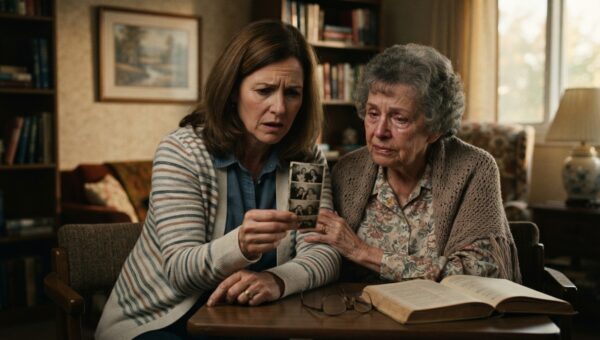
On Tuesday morning, a plain brown envelope arrived in my mailbox. There was no return address, just my name written in handwriting I would know anywhere. Inside was a single printed photograph from her wedding day in 2010. It showed Naomi standing under a simple floral arch with her husband, smiling with a radiance I had never permitted her to show in my presence. On the back, she had written three sentences in blue ink. You missed the best day of my life, Mother. But I saved a place for you at the table anyway. If you want to talk, come to the clinic on Thursday at noon. No church rules. Just us.
I spent Wednesday cleaning my entire house from top to bottom. I scrubbed the kitchen floor on my hands and knees until my joints ached, trying to scrub away sixteen years of stubbornness. I called the parish hall and told them I would not be coming to committee meetings anymore. The woman on the other end sounded confused, but I did not care.
Thursday morning arrived with a cold autumn rain. I drove to the medical center downtown, parking in the visitor lot instead of hiding down the street. Naomi was waiting for me in her office, sitting behind a clean wooden desk with a stethoscope draped over the corner.
PART 3
When I pushed the door open, she did not stand up right away. She looked at me with the same stubborn set of the jaw that she inherited directly from me.
You took your time, she said. Her voice was steady, but her fingers were twisting the hem of her white lab coat.
I walked in and sat down in the green vinyl chair opposite her desk. The room smelled of rubbing alcohol and fresh coffee.
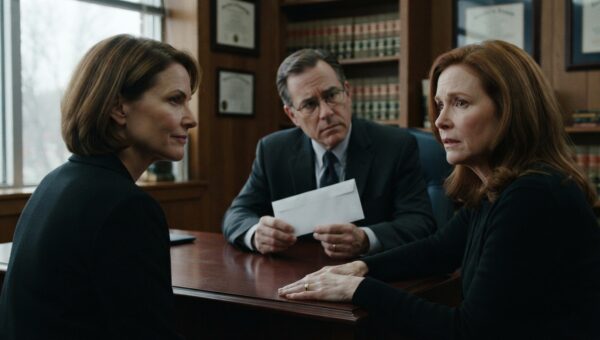
I brought the photograph, I said, pulling the envelope from my handbag and laying it on the wood between us. I am sorry, Naomi. I was wrong.
She looked down at the picture, then back up at me. A long silence stretched between us, filled only by the distant hum of the hallway vending machines.
Being right was more important to you than having a family, she said quietly. For a long time, I blamed David for pulling us apart. But it was not him. It was you choosing your pride over your child.
Every word she spoke hit me like cold water, but I did not look away. I deserved every syllable.
I know, I whispered. I spent sixteen years setting a plate for a ghost.
Naomi let out a long breath, and the tension in her shoulders dropped an inch. She reached into her desk drawer and pulled out a small leather-bound photo album. She slid it across the desk toward me.
These are your grandchildren, she said. Leo is eight. Maya is six. They ask about their grandmother who lives in the big house by the church. I told them you were just very busy.
I opened the album with trembling fingers. Page after page of birthday parties, soccer games, and Christened smiles. Children who had my nose and my mother’s chin, growing up while I sat alone counting my grievances.
ENDING
We talked for two hours. We did not fix sixteen years in an afternoon, and we did not pretend the old wounds never happened. But when I stood up to leave, Naomi walked me out to the clinic doors and kissed my cheek.
Drive carefully, she said, using the exact same tone my own mother used to use. Come back on Saturday. Bring an appetite. We have two extra chairs at our table now.
I drove home through the thinning rain. When I walked into my quiet house, I went straight to the kitchen cabinet, pulled out the extra dinner plates I had hidden away in the back, and stacked them right on the counter where I could see them.