PART 1
When my grandmother passed away three years ago, she left behind a clean estate and a very clear will. The house in Clearwater was sold, the accounts were settled, and the remaining balance was placed in a trust bearing my name. The exact figure was one million dollars. At fifty two years old, after decades of working night shifts at the local community clinic and stretching every grocery bill until it broke, that number felt like a different language.
It meant I could finally stop waking up at four in the morning with a tight knot in my chest. It meant I could pay off the rest of my mortgage and perhaps even help my own children with their college loans without feeling like I was robbing my own future.
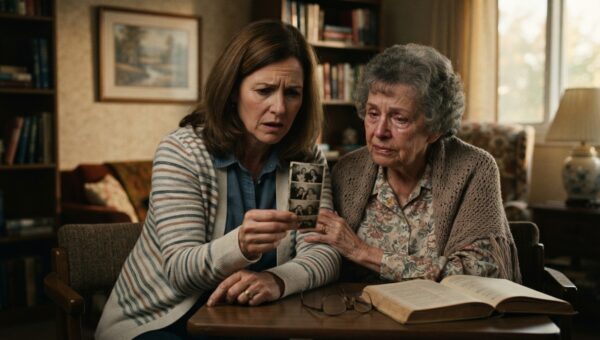
My parents, however, saw the inheritance quite differently. My mother called me into her kitchen three days after the funeral, pouring weak coffee into chipped mugs that had been in our family since I was a child.
“You are single, Clara,” she said, her voice dropping into that quiet, reasonable tone she always used when she was about to take something from me. “You don’t have a household to maintain. You live alone in that drafty little bungalow. Chloe, on the other hand, has a family. She has Marcus. They are trying to build something real.”
Chloe is my younger sister by six years. She has been the golden child since the day she was born, blessed with my mother’s sharp jawline and an effortless ability to make everyone in the room feel like they were standing in her personal spotlight.
Marcus, her husband, is the local police chief, a man whose heavy gold signet ring and slow, deliberate stride always gave the impression that he owned the pavement he walked on. They lived in a sprawling colonial on the north side of town, drove matching luxury SUVs, and constantly talked about opening an upscale dining establishment that would put our quiet county on the map.
“The money is in my trust, Mom,” I told her, wrapping my hands around the warm mug. “It is for my retirement. Grandmother was very specific about that.”
“Grandmother was old and confused at the end,” my father chimed in from the doorway, his flannel shirt smelling faintly of sawdust. “She didn’t understand how modern business works. She would have wanted the family name carried with pride. Chloe and Marcus have the vision. You just have the bank account.”
They wore me down. That is the honest truth, and I carry the shame of it in my bones.
It did not happen all at once. It happened through a slow, relentless drip of family guilt. Every Sunday dinner turned into an interrogation about my lack of ambition, my empty house, and my supposed selfishness. My mother told me that holding onto a million dollars while my sister struggled with business loans was a sin against the bloodline. By the fourth week, exhausted by thirty years of playing the dutiful, invisible eldest daughter, I agreed to let them use a portion of the funds as a bridge loan for the restaurant.
Only it was not a bridge loan.
Within two months, the entire one million dollars had been transferred out of my trust account and into a commercial holding account controlled jointly by Chloe and Marcus. When I asked for the paperwork showing my stake in the business, Marcus patted my hand like I was a slightly dim child.
“Don’t you worry about the red tape, Clara,” he said, smiling with his teeth. “Family handles things on trust here. We’ve got you covered.”
The first sign that something was deeply wrong came when I tried to pull five thousand dollars from my secondary savings to fix a leaking roof. The ATM swallowed my card. When I drove to the branch downtown, the young teller behind the glass gave me a tight, pitying look and asked me to step into a side office. The manager, a man named Henderson whom I had known for ten years, looked uncomfortable as he slid a printed ledger across the mahogany desk.
“Mrs. Davis,” he said softly, clearing his throat. “Your primary trust account was completely cleared out six weeks ago. The authorization bears your signature, notarized by a firm downtown. Furthermore, your personal savings were pledged as collateral for a commercial line of credit tied to the restaurant. As of yesterday, that line of credit defaulted.”
I sat there in the quiet office, watching the dust motes drift in the narrow strip of sunlight coming through the blinds, feeling the floorboards tilt beneath my sensible walking shoes.
PART 2
I drove straight from the bank to the construction site on the main square. The old brick hardware store was gone, replaced by massive glass storefronts and dark wood trim. A large canvas banner stretched across the second-story balcony read: THE GILDED HEARTH – COMING SOON.
Inside, the interior was already unrecognizable. Italian marble tiles covered the floors, and massive brass light fixtures hung from the vaulted ceilings like frozen waterfalls. Workers in high-visibility vests were carrying crates of stemware through the dining room. I found Chloe standing near the back bar, pointing at a clipboard while a young man in an expensive gray suit nodded along.
“Chloe,” I said. My voice was hoarse, stripped of all the small-town politeness I had carried for fifty-two years.
She turned slowly, her designer sunglasses pushed up into her honey-blonde hair. A small, amused smile touched the corners of her mouth.
“Clara. You shouldn’t be here in those work clothes. The smell of the clinic clings to you, you know.”
“The bank manager called me,” I said, stepping across the newly laid marble. “The trust is gone. The savings account is gone. Henderson showed me the papers. You cleaned out every single dollar Grandmother left me.”
Chloe did not even blink. She handed the clipboard to the man in the gray suit and waved him away before turning back to face me with her hands on her hips. Her eyes were hard, completely devoid of the sisterly warmth I had tried to believe in all my life.
“Mom and Dad told you how it was going to be,” she said, her voice bright and sharp like broken glass. “You didn’t earn that money, Clara. You just happened to be the one living in Grandma’s guest house when she finally gave up. Marcus and I actually have dreams. We have a social standing to maintain in this town. What were you going to do with a million dollars? Sit in your little kitchen and read library books until you died?”
“It was mine,” I whispered.
“Was is the exact right word,” she laughed, throwing her head back. She didn’t lower her voice; she wanted the workers nearby to hear. She wanted them to know who held the power. “Call the cops, loser. I dare you. Go down to the station and tell Marcus’s deputies that your sister stole your inheritance. See who answers the phone.”
Before I could answer, my mother appeared from the kitchen doorway, wiping her hands on a linen dish towel. She looked at me not with anger, but with a cold, disgusted disappointment that hurt worse than any blow.
“Stop making a scene, Clara,” my mother said, stepping between us and lifting her chin. “You are embarrassing the family. We don’t serve beggars here, and we certainly don’t have time for your childish tantrums. Get out of this building before I have Marcus’s men escort you off the property.”
PART 3
I did not go to the local police station. I knew better than that. Instead, I spent the next three weeks doing something my family never expected me to do. I drove fifty miles to the county seat, hired a probate attorney named Arthur Vance whose office smelled of old leather and damp paper, and laid out every single bank statement, text message, and will document I had managed to keep.
Arthur did not look at me with pity. He looked at me with the cold, professional eye of a man who had spent forty years untangling small-town corruption.
“They used a forged power of attorney to clear the trust,” Arthur said, sliding my grandmother’s original will across his desk. “And they used your personal savings as a secondary guarantee without your informed consent. That is not just civil theft. That is wire fraud and forgery.”
“Marcus is the police chief here,” I reminded him quietly. “His friends control the local judges.”
“Marcus is a big fish in a very small, muddy pond,” Arthur replied, pulling a thick stack of federal forms from his drawer. “Federal postal inspectors and state banking investigators do not care who belongs to the local country club.”
The grand opening of The Gilded Hearth arrived on a crisp Friday evening in November. The street outside was blocked off with red velvet ropes. Valet attendants in crisp black vests parked foreign sports cars along the curb. Inside, the crystal chandeliers cast a brilliant, blinding light over the room, reflecting off the polished brass and the expensive dresses of the town councilmen and local bankers who had come to kiss my sister’s ring.
I did not wear my work scrubs. I wore the navy blue wool dress my grandmother had bought me for her eightieth birthday, sensible heels, and a heavy leather briefcase under my arm.
I walked through the mahogany double doors right behind the mayor and his wife. The noise of the room died down just a fraction as I stepped onto the imported marble. Chloe was standing near the host stand, laughing with Marcus, who wore a custom tuxedo with a silk pocket square.
When Chloe saw me, her smile vanished. She marched across the room, her high heels clicking sharply against the floor, her face flushed with sudden rage.
“Are you out of your mind?” she hissed, grabbing my arm. “Security! Get this woman out of here right now!”
Before the two burly men in black suits could reach me, the glass front doors opened again. But it was not more guests. Three men in plain dark suits walked in, holding leather folders and federal identification badges. Behind them walked Arthur Vance, and beside him stood two state troopers from the capital who answered to no one in this county.
The room went dead silent. The only sound was the low hum of the commercial refrigeration units behind the bar.
Marcus stepped forward, his face darkening as he flashed his gold badge. “What is the meaning of this? This is a private event. You have no jurisdiction here without clearing it through my department first.”
The lead investigator did not even look at Marcus’s badge. He pulled a folded document from his leather folder and stepped past him, stopping directly in front of Chloe.
“Chloe Davis-Callahan and Marcus Callahan,” the investigator said in a voice that carried clearly to every corner of the room. “You are named in federal warrants for bank fraud, identity theft, and the unlawful seizure of protected trust assets totaling one million dollars.”
Chloe let out a sharp, breathless sound, her hand flying to her throat as the color drained completely from her face. She looked back at our parents, who were standing near the hostess station looking like ghosts.
Marcus lunged forward, his face turning a dark, furious purple. “This is a local dispute! You can’t just walk in here—”
“Step back, Chief,” one of the state troopers said, his hand resting calmly on the holster at his hip. “We have the federal freezing orders for all commercial assets, including this restaurant, the building deed, and your personal bank accounts.”
ENDING
The Gilded Hearth never served a single meal. Within forty-eight hours, federal marshals padlocked the heavy oak doors, and the grand canvas banner was cut down from the balcony. The building went into receivership to begin the process of returning the stolen funds to my trust.
My parents called me seven times that first week, their voices small and broken on my answering machine, begging me to drop the charges for the sake of the family name. I did not pick up. I deleted every message without listening to the end.
A month later, I sat alone in my kitchen on a quiet Sunday afternoon. The house was drafty, just as my mother had always said, but the mortgage was fully paid, and my retirement account was restored down to the last penny.
On the kitchen table sat the chipped ceramic mug my mother used to pour weak coffee from on the day they decided I was disposable. I picked it up, walked to the back door, and dropped it into the outdoor trash bin. Then I closed the door, locked it twice, and sat down at the table to read a library book in the quiet sunlight.