PART 1
I told my daughter I would not attend her wedding. She was marrying a man from another faith, and I thought I was protecting our family. “You’ll regret this,” I said. She married him anyway. That was 2010.
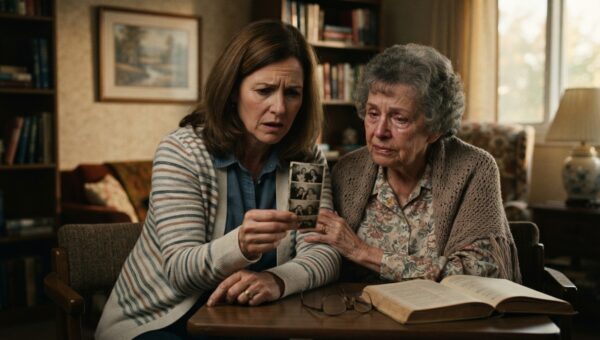
For sixteen years, her chair stayed empty at Christmas. I still set out six plates, then put one back. My husband had passed away three years before the wedding, and after our daughter walked out, my son moved two towns over for work.
He visited on holidays, but the house felt hollow. I kept busy with church committee meetings and choir practice, convincing myself that standing firm on my beliefs was more important than keeping peace.
Last Sunday, our church bulletin printed a scholarship announcement on the back page. Dr. Naomi Harris had given twenty-four thousand dollars to local students through an endowment fund. The name stopped me mid-sentence while I was folding the papers in the fellowship hall.
My neighbor Martha leaned over my shoulder, pointing a wrinkled finger at the glossy paper. “That’s your girl, isn’t it?”
I didn’t answer. I just stared at the ink. Naomi had two children, a pediatrician clinic downtown, and a husband who held her hand in every photograph the local paper printed. She wasn’t asking for my help, and she certainly wasn’t waiting for my blessing.
After service, I didn’t go straight home. I drove past the address listed in the directory, telling myself I just wanted to see what kind of life she had built.
The house sat on a quiet street lined with maples, the lawn neatly trimmed and a blue bicycle lying on the grass by the porch. I sat in my sedan with the engine running, watching a man with dark hair lift a little girl into a minivan while Naomi stood on the porch laughing, her hair cut shorter than I remembered.
At the door, I lifted my hand and hovered my knuckles over the brass knocker, but my arm felt heavy as lead.
PART 2
I didn’t knock that afternoon. I backed my car out of the driveway and drove home, my hands shaking on the steering wheel the whole way back.
For three days, the memory of that porch kept me awake. I kept telling myself I had every right to stay away back in 2010. A parent has standards, I thought. But the twenty-four thousand dollars on the church bulletin kept echoing in my head.
Naomi hadn’t just survived without me. She had built something solid, something generous, while I sat in my empty house polishing silverware for holidays that never came.
On Wednesday, I decided to drive back, but this time I went to the downtown medical clinic where her name was on the bronze plaque by the entrance. I sat in the waiting room for an hour, pretending to read a magazine about gardening, just watching her walk past the glass partition in a white lab coat. She looked tired around the eyes, but steady. When she stopped to talk to an older woman holding a crying baby, her voice was soft and patient. It was a voice I hadn’t heard in sixteen years.
When she finally walked toward the front desk, I stood up. My knees felt weak.
She froze halfway across the tiled floor. The charts in her arms slipped an inch before she caught them against her coat.
“Mother,” she said. It wasn’t a question, and it wasn’t a welcome. It was just a statement of fact.
PART 3
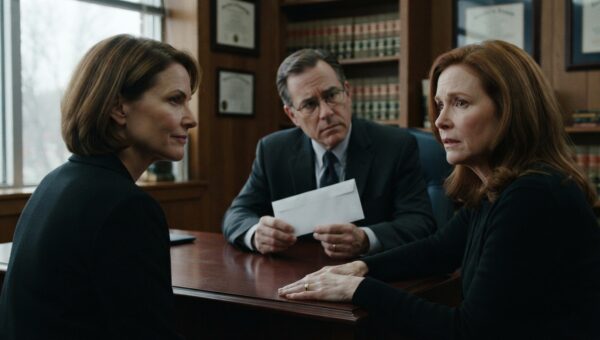
We sat in a small empty consultation room at the back of the clinic where the hum of the air conditioner covered the sound of our breathing. For the first twenty minutes, neither of us said much about the wedding or the letters I had sent back unopened in 2012. We talked about small things. She told me about her son’s asthma and her daughter’s violin lessons. I told her about my hip replacement last winter and how the cherry tree in the backyard finally stopped producing fruit.
“Why the endowment, Naomi?” I asked finally, looking at the framed license on her wall. “Twenty-four thousand dollars is a lot of money to give away all at once.”
Naomi looked down at her hands, tracing the gold band on her left ring finger. “It was the exact amount you put into my college savings account before I turned eighteen, Mother. You told me then that education was the one thing nobody could ever take away from me.”
The words hit me harder than any shout could have.
“I wanted to give that same start to kids who didn’t have anyone in their corner,” she continued, her voice quiet and even. “Kids who had to figure things out on their own when the people who were supposed to love them walked away.”
I looked at her face, really looked at it, and saw the lines around her mouth that came from years of standing her ground. I had spent sixteen years guarding my pride in an empty dining room, while she had taken the one good lesson I ever taught her and multiplied it for strangers.
ENDING
I drove home as the sun was setting behind the hills, painting the sky in pale shades of orange and gray.
When I walked into the kitchen, the table was set for one. I looked at the extra plates stacked in the cabinet, the ones I had kept out of habit for a family that wasn’t coming back the way I wanted them to.
I took out two plates instead of one, carried them to the counter, and put the extra ones away in the back cupboard where they belonged. My phone sat on the counter, silent. I picked it up, opened my contacts, and stared at her name for a long time before typing out a short message.
*I saw your clinic today. You’ve built a good life. Whenever you’re ready, I’d like to meet your children.*
I set the phone down on the wooden table, pulled out my chair, and sat down to eat in the quiet house.