Three hundred miles of solid whiteout is a long time to think about how fast a family can rot from the inside out. My headlights were cutting a yellow tunnel through the snow on Interstate 81 when my phone buzzed against the center console for the fourth time that hour. I didn’t answer it because I was gripping the steering wheel so hard my knuckles were the color of skim milk, and because I already knew what the screen would say if I looked down.
It would say Warren. Or it would say Caleb. The two men who had spent the last two years turning my mother’s retirement into their own personal bank account while she grew smaller and quieter in the big house on the ridge.
The phone had rung the first time at 3:00 a.m. sharp. I was half-asleep, listening to the old radiator in my bedroom knock against the floorboards, when the bedside table started vibrating like a trapped beetle. I flipped it over and saw Mom’s name. When I pressed the talk button, there wasn’t any hello or any preamble. There was just the sound of wind whistling through a receiver and a voice that sounded like dry leaves scraping across frozen gravel. Help… me. That was all she managed before the line clicked dead with a hollow tone that stayed ringing in my ears for the next five hours of driving.
I didn’t pack a bag. I pulled my heavy winter boots on over my flannel pajama pants, grabbed my keys off the brass hook by the door, and backed my sedan out into a yard that was already disappearing under four inches of fresh powder. My foot went down on the gas and it stayed there all the way across state lines. The radio didn’t work through the mountains, just static and emergency broadcast warnings telling people to stay off the roads unless life or death was on the line. Well, this was life or death, and I didn’t need a weather report to tell me my mother was out there somewhere in the freezing dark with two men who looked at her like she was just an expensive piece of furniture taking up space.
By the time I skidded into the emergency room parking lot of St. Jude’s Memorial, the clock on my dashboard read 8:46.
The snow was still blowing sideways, piling up against the bumpers of parked cars in hard blue drifts. I threw the car in park before the tires had even finished spinning and jumped out into the freezing slush. I didn’t see her at first. The ambulance bay was empty, the sliding glass doors flashing a dull green light against the falling flakes. But then I looked toward the iron security gate at the edge of the service road, and my chest went tight.
Mom was standing right there in the middle of the open lot. She had nothing on her feet, just bare blue toes pressed directly into the frozen slush. Her shoulders were hunched up around her ears inside a flimsy hospital gown that looked like tissue paper against the gale. Her gray hair was plastered to her forehead, frozen stiff in the wind. I didn’t think; I just crossed the asphalt in three long strides, tore my heavy wool coat off my shoulders, and wrapped it around her until she was entirely swallowed up in the lining.
Her teeth were chattering so hard I could hear it over the wind.
I pulled her toward the warmth of the vestibule, pressing my back against the automatic doors until they slid open with a soft hiss, and sat her down on a vinyl bench. I knelt right there in front of her, chafing her cold heels with my bare hands until the circulation started to crawl back into her skin. Who did this? I asked her, my voice shaking so badly I barely recognized it as my own. She looked down at her lap, staring at the frayed edge of my coat where it dragged on the linoleum. Warren said I was wasting money. Caleb said the house wasn’t mine anymore.
Those two sentences sat in the air between us, heavy and ugly and entirely unsurprising once I let them settle into my brain. Warren was her second husband, a man who wore expensive loafers and talked about investments while letting bills pile up in the kitchen drawers, and Caleb was my younger half-brother who had never held a job for more than three months without quitting because the boss didn’t appreciate his vision. They had been living in Mom’s house rent-free for three years, eating her groceries, driving her sedan, and slowly convincing the county that she was losing her wits whenever she brought up the subject of her own bank statements.
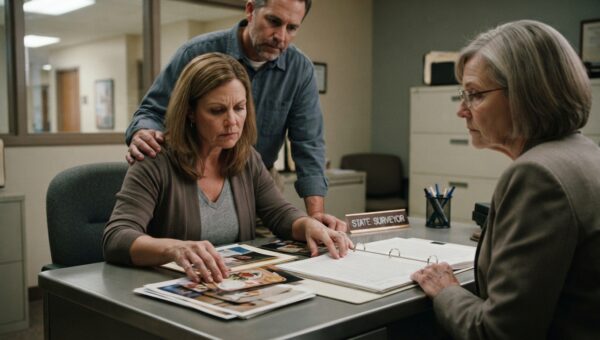
And yeah, they had forced her to sign papers. Mom told me the whole miserable story in broken whispers while the triage nurse hurried over with a warm blanket and a plastic cup of water. Two days before, while Mom was still recovering from a severe bronchial infection that had left her half-delirious and sleeping eighteen hours a day, Warren had brought a man with a leather briefcase into her bedroom. They didn’t let her read the pages. They just held the clipboard down against the floral quilt, guided her thumb into a little square of purple ink, and told her it was just routine medical authorization for her lingering cough. It wasn’t medical authorization. It was a quitclaim deed transferring the entire property, down to the last acre and the family heirlooms in the attic, into Warren and Caleb’s joint names.
When Mom woke up coughing at two in the morning, feeling suffocated by the cold air Warren kept pumping into the house to save on heating oil, she had tried to use the landline to call me. Warren had caught her in the hallway, ripped the cord out of the wall, and told her she was going on a little trip to get some fresh air. They didn’t even bother to dress her properly. They bundled her into the back of Caleb’s pickup truck in her nightgown, drove her thirty miles through the foothills, and shoved her out into the snow by the hospital gate before tearing off into the dark without looking back.
I sat there on the edge of that hospital bench, feeling a cold, steady rage replace every other emotion in my body. It wasn’t the hot, messy anger I used to feel when we were kids; it was something quieter and much sharper, the kind of feeling that comes when you realize the people you share blood with are actually just thieves waiting for you to look away. I didn’t yell. I didn’t cry. I just pulled out my phone, laid it face up on my knee, and waited.
The clock on the wall above the reception desk ticked toward ten. At exactly 10:12, the phone in my hand started vibrating again. The caller ID flashed Warren’s name, bold and obnoxious against the black screen. I tapped the speakerphone button and laid it right there between us on the vinyl bench so Mom could hear every single word.
I didn’t say anything first. I just let the static hum for a second before Warren’s voice came through, loud and dripping with that lazy, arrogant sarcasm I had grown up listening to across holiday dinner tables. Well, look who’s playing hero, Warren laughed, the sound dry and mean. You drove all that way for nothing. She doesn’t live there anymore. The paperwork is filed, the county records are updated, and the house belongs to us. You have no power here, so you might as well take her back to your little apartment and keep her out of our hair.
He paused, probably waiting for me to start screaming, waiting for me to lose my temper the way I always did when he pushed too hard. But I didn’t give him the satisfaction. I just looked down at Mom, who was holding my coffee cup with both hands, her eyes fixed on my face with a quiet, terrifying trust. Before I could even open my mouth to answer him, the heavy glass doors of the emergency entrance swung open again and a gust of wind swept across the lobby.
An officer in a dark navy winter jacket hurried around the corner, his boots squeaking against the wet tile floor. It was Officer Miller, a local man I went to high school with, holding a heavy-duty department tablet in his gloved hand with the screen still glowing blue. He didn’t even look at me; he walked straight up to the bench, tapped the glass of his tablet twice to wake it up, and held it out so the light hit Mom’s face.
I’m sorry to interrupt, Officer Miller said, his breath fogging slightly in the cold air from the doors, but we just pulled the security footage from the gate cameras about ten minutes ago. And dispatch just ran the timestamp on that property transfer deed you told me about on the phone during your drive down.
Warren’s voice was still crackling faintly through the speaker on my lap, though he had started talking over the silence. Did you hear me? I said you’re locked out. The deed is done.
Officer Miller looked down at my phone on the bench, his jaw tightening into a hard line as Warren’s laugh echoed off the white walls. He reached out with one gloved finger and tapped the screen to mute the call, then looked back at me with a look that told me everything I needed to know. The deed was signed at 1:15 p.m. on Tuesday while your mother was listed in the clinic registry as being under heavy sedatives for acute pneumonia, Miller said, his voice dropping into that flat, official register that leaves no room for argument. Under state law, any signature executed while a patient is medically documented as incapable of informed consent is automatically void. More than that, we have clear footage of Mr. Warren and your brother dumping an incapacitated patient in a public snowdrift at three in the morning. That’s not just civil fraud anymore. That’s felony elder abandonment and reckless endangerment.
The lobby seemed to get very quiet for a second, the hum of the vending machines down the hall fading into the background. I looked down at the tablet screen in the officer’s hand. There was a still frame captured from the hospital gate camera showing Caleb’s blue pickup truck backed up against the yellow line. The passenger door was open, and a figure in a thin blue hospital gown was stumbling backward into the snow while the tail-lights flared red against the falling flakes. The license plate was as clear as day, right down to the little dent in the bumper where Warren had backed into a mailbox three winters ago.
I picked my phone back off the bench, unmuted the speaker, and held it up so the microphone could catch the sound of the officer’s radio crackling softly in the background. Warren? I said, my voice barely above a whisper. You still there?
Yeah, Warren snapped, his tone losing a little bit of its edge. What’s going on over there? Who’s that in the background?
That’s Officer Miller, I told him, and he’s currently looking at the security footage of you and Caleb pushing an eighty-two-year-old woman out into the snow in her nightgown. And by the way, he’s also holding the paperwork that voids your little signature trick because Mom was hopped up on morphine when you made her touch the pen. We’re about thirty minutes away from the house. I’d suggest you start packing whatever fits in the trunk, because when we get there, the locks are getting changed and the sheriff is going to be waiting on the porch.
There was a long, dead silence on the other end of the line. Not a laugh, not a clever comeback, just the sound of heavy breathing before the line went dead with a sharp, electronic click.
We didn’t rush. We waited for the ER doctor to sign off on Mom’s discharge, wrapped her in two heavy woolen blankets from the supply closet, and helped her into the passenger seat of my sedan, turning the cabin heater up until the vents rattled. By the time we pulled into the long gravel driveway of the house on the ridge, the snow had stopped falling, leaving the pine trees heavy and white under a pale afternoon sun.
Warren and Caleb’s trucks were parked sideways across the apron of the garage, their trunk lids gaping open like the mouths of dead fish while cardboard boxes were piled haphazardly in the slush around their tires. They didn’t look up when my tires crunched on the gravel. They didn’t say a word as Officer Miller’s cruiser pulled in right behind them with the blue lights spinning silently against the white fence rails. They just stood there in their coat sleeves, holding half-packed duffel bags, looking small and miserable in the middle of a yard they thought they had finally stolen.
I helped Mom out of the car, her new house slippers crunching softly on the fresh powder as she walked up the wooden steps of the front porch. She didn’t look back at them once. She just reached out with a steady hand, pushed open the heavy oak front door, and stepped back into the hallway where the smell of cedar and old coffee was still waiting for her.
Inside, the living room was warm and quiet, the fire pit already glowing faintly where the pilot light had kept the room from freezing through the night. Officer Miller stayed out on the porch with Warren and Caleb, reading them their rights and handing over the eviction notice while the sound of packing tape tore through the cold afternoon air.
I walked into the kitchen, filled the old copper kettle with water from the tap, and set it on the front burner to heat. While it started to hiss and whistle softly against the iron, I walked over to the front windows and looked out through the clean glass. The snow was already starting to melt off the porch rail in big, heavy drops, dripping down into the dirt below.
Mom sat down in her old armchair by the hearth, drawing a heavy knitted quilt up over her knees. Her bare feet, finally warm and dry in thick wool socks, rested comfortably against the braided rug by the fire. A heavy ceramic mug of hot tea sat on the wooden coffee table beside her hand, sending up a thin, steady curl of steam into the quiet room. She looked down at her toes, wiggled them once against the wool, and let out a long, slow breath that sounded like the last piece of a heavy door finally clicking shut.