Thirty-six years I welded in that shop, and before that I did four years in the Navy learning how to run a bead that would hold together at the bottom of a cold ocean. I trained the boys who train the boys now. When Dabrowski caught his hand in the brake press back in ninety-four, I am the one who wrapped it in clean shop rags and ran him to the ER out on CY Road doing eighty miles an hour, and he kept his thumb because of it.
I know every squeak in the overhead crane and every draft that comes under the south bay doors when the winter wind kicks up off the river. I figured a man who stays forty hours a week in the same four walls until his hair goes gray has earned a quiet exit when his time comes, but the new outfit that bought us didn’t care about a quiet exit. They wanted the top of the pay scale gone so they could bring in kids at half the wage and pocket the difference.
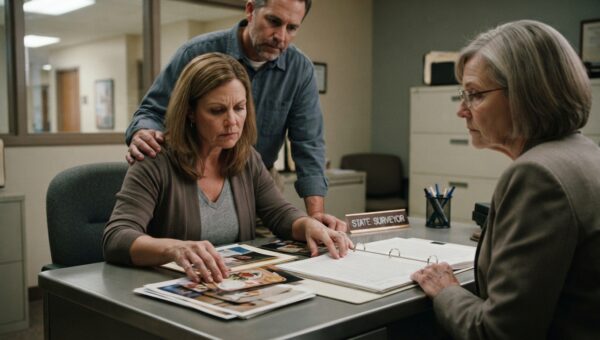
It happened on a Tuesday morning around nine, right when the air in the breakroom still smelled stale and burnt. The floor manager, a sharp-faced fellow named Miller who wore loafers that had never seen a drop of cutting oil, called me into the glass office by the tool crib. HR sat beside him with a yellow folder open on the laminate table, her fingers tapping a silver pen against the plastic edge.
Miller didn’t look me in the eye. He just slid a single sheet of cardstock across the scuffed grey desk. My initials were stamped at the bottom of the tag, but the slant of the letters was all wrong. Anyone who ever watched me sign a requisition slip knew I cross my sevens and hook my wyes, and this tag looked like it had been drawn by a kid with a crayon.
Miller cleared his throat and tried to look important. “Old dog, sloppy work. Sign it and we won’t call it fraud.”
The silence in that little glass box was thick enough to chew on. I looked down at the paper, then up at Miller, and then at the woman from HR who wouldn’t stop clicking her pen. A man my age doesn’t need to yell to make a point, and I reckon shouting just wastes good air. I didn’t argue in front of HR.
I just said, “Alright then,” and pulled my heavy galvanized toolbox off the floor by my chair. I walked out past the idle Miller tables and the drill presses, listening to the hum of the plant for the last time. They never once thought about how many men on that floor got started because I stood behind them, or what those men would do if I asked.
Wednesday and Thursday were quiet around the house, which felt strange after waking up at four-thirty every morning for nearly four decades. My hands felt clumsy sitting empty on the porch rail, so I cleaned my old pocket knife with a drop of sewing machine oil and a scrap of denim. A few of the senior hands dropped by the driveway after shift on Wednesday evening, just idling their trucks at the curb with the engines running low and rough. Dabrowski climbed out of his old Dodge with his right hand shoved deep in his pocket, rubbing that thumb I saved all those years ago.
He didn’t stay long, just leaned against my fender and asked if the rumors were true about the forged tag. I told him how it went down, word for word, and let him see the copy I managed to slip into my pocket before Miller took the file back. Dabrowski didn’t cuss, but the way his jaw worked told me everything I needed to know. Word travels fast across a shop floor when the men realize the ledger is being balanced with their livelihood.
The plant had its grand reopening that Friday under a big white canvas tent pitched right in the middle of the gravel parking lot. They had folding chairs set up in rows, a couple of catering trays under silver domes, and the local paper sent a young girl with a digital camera to take pictures of the mayor cutting a red ribbon with giant brass scissors. I got up at six that morning, shaved clean, and put on my good pearl-snap shirt that my sister gave me for my sixtieth. I drove my old truck down past the chain-link gates just as the speeches were getting started under the canvas.
The mayor was up there talking about progress and new partnerships and how the company was bringing modern efficiency to our little town. Miller and the corporate vice president from out of state were sitting in the front row, both of them wearing matching navy suits that looked like they’d been ironed by a machine. I didn’t make a scene at the gate. I just walked right past the folding chairs, slow and easy, until I was standing near the edge of the tent where the breeze was lifting the white fabric.
When the mayor finished his speech and invited the plant manager up to say a few words about the bright future ahead, I stepped out from behind the canvas support pole. The crowd turned around to see who was blocking the aisle. The mayor blinked behind his wire-rimmed glasses, and Miller went the color of a wet cardboard box. I reached into my breast pocket and pulled out the folded cardstock with the forged initials, holding it out where the morning sun hit it square. I didn’t have to yell because the silence on that gravel lot fell heavier than any press I ever operated.
Dabrowski and about forty other men from the morning shift didn’t even wait for me to finish my sentence. They dropped their clipboards and safety glasses right there by the assembly line doors and started walking out from under the tin roof in a slow, steady line. They didn’t shout or raise their fists. They just walked out into the sunlight and stood behind me in their grease-stained denim and canvas jackets, shoulder to shoulder, filling up the whole driveway until the mayor’s microphone started whistling with feedback.
The corporate vice president tried to grab Miller by the elbow and hustle him toward the back trailer, but the local reporter already had her lens pointed right at them. The mayor looked between me and the line of welders stretching back to the loading dock, and then he put his brass scissors down on the table like they weighed fifty pounds. I didn’t say much to Miller when he tried to stammer something about company policy and restructuring. I just told him he should have learned how to write my initials better if he wanted to run my shop.
By noon, the catering trays were sitting out in the sun with the lids still closed, and the big white tent was coming down before the afternoon wind could catch it. The corporate men packed their briefcases and drove off down the highway in their rental cars without ever cutting the red ribbon. The boys went back inside to shut down the furnaces properly so nothing would warp over the weekend, leaving the plant as quiet as a church on Monday morning. I drove home with my windows rolled down, letting the cool air blow across my face. When I got back to the house, I hung my clean shirt up in the quiet hallway of my home and felt the familiar, permanent white scars on my knuckles, the quiet proof of a lifetime spent building things that lasted.