The notification light on my phone flashed three times at 5:14 in the morning while the coffee maker was still spitting the last drops into the pot. I didn’t touch it. I just stood there watching the little amber bulb blink against the granite counter, wishing I had never bought that rusted-out heap of metal from the towing auction outside Dayton in the spring of 2022.
It barely ran when I hauled it home on a flatbed. Bald tires, a cracked windshield that looked like a spiderweb made of frost, and a driver’s door that required a good shoulder shove every single time you wanted to get out. The yard manager had leaned against the fender with a stained coffee cup in his hand and practically begged me to leave it behind. “It’s a parts truck, friend,” he told me, spitting a bit of tobacco into the gravel. “Whoever owned it walked away and never looked back.”
I figured I would spend my Saturdays pulling the alternator, maybe salvage the transmission if the housing wasn’t cracked, and strip whatever else was worth hauling to the scrapyard. But life gets busy, and trucks have a way of sinking into the weeds if you let them. It sat in my gravel driveway through the summer heat, the autumn leaves piling up against the rusted rocker panels, and an entire Ohio winter where the snow froze hard enough to lock the doors shut.
It wasn’t until the following spring, somewhere around mid-April of 2023, that I finally rolled up my sleeves and went to work on the interior. I needed to clear out the cab to drop in a replacement floor mat I picked up off a guy on Marketplace. The old bench seat was held down by four carriage bolts that had rusted solid into the floorboards. I had to bust out the breaker bar and spray half a can of penetrating oil just to get them to turn without snapping the heads off.
When the seat finally broke free, I dragged it backward out the door and let it drop into the dirt with a heavy thud. That was when I noticed the floor underneath wasn’t bare gray metal like it should’ve been. There was a panel there that didn’t belong. It was a square piece of heavy-gauge steel welded or bolted down with hardware that didn’t match anything else in a Ford cab, the bolt heads scratched bright from being turned more than once with an adjustable wrench.
The hair on the back of my neck stood up because nobody goes to that kind of trouble to hide things in a three-hundred-dollar parts truck unless they are hiding something they cannot afford to lose. I grabbed a socket set from the workbench, wedged the extension bar onto the ratchet, and went to work on those mismatched bolts. They screamed as they backed out, the old threads fighting me every quarter turn until the metal let go with a sharp pop. I pried the steel panel up, and the second I saw what the last owner had hidden under that seat, I stopped breathing.
It wasn’t just a stash of old tools or loose change. Sitting right there in the recess of the floorboards was a waterproof military-surplus ammunition can, olive-drab paint chipping around the edges, held shut with a heavy brass latch. The rubber gasket around the lid had kept out the dust and the moisture, preserving whatever was inside for over a year.
I sat back on my heels in the dusty cab, wiping grease off my hands onto my jeans, staring at that metal box like it was about to tick. I didn’t open it right away. I sat there listening to the distant hum of traffic on the bypass and the sharp whistle of a cardinal in the oak tree by the fence, wondering what kind of trouble I was about to buy myself into for three hundred dollars. When I finally reached out and flipped the latch, the lid popped open with a clean, muffled hiss of trapped air.
Inside were three things neatly packed in bubble wrap and old shop rags. The first was a stack of vintage micro-cassette tapes, each one labeled with a tiny strip of white masking tape and handwritten black ink dates from the autumn of 2021. The second was a small, spiral-bound ledger with water-stained cardboard covers and pages packed tight with neat, precise columns of figures and notes. The third item was resting right at the bottom, half-wrapped in a greasy shop towel: a heavy gold pocket watch with a union carpentry emblem etched into the polished brass back. I picked up the watch first, turning it over in my palm. The crystal was clear, and when I gave it a gentle shake, the mainspring caught and it began to tick with a rapid, steady heartbeat that sounded impossibly loud in the quiet cab.
I took the ammo can inside the house and set it down on the kitchen table, right next to my cold cup of coffee. I spent the next three hours reading through that ledger line by line. It didn’t take a genius to figure out what I was looking at. The handwriting belonged to a man named Arthur Pendelton, a master carpenter who had spent thirty years framing commercial buildings around Montgomery County. The pages detailed every single shortcut, every compromised foundation pour, and every skipped structural inspection at a massive new warehouse project going up off Route 4. Arthur hadn’t just suspected things were bad; he had documented them with the precision of a man who knew his signature was going to be tied to a disaster if the roof ever caved in. According to the notes, the site foreman, a man named Greg Miller, had been cutting cement mixes with substandard aggregate to pad the subcontractor’s payout, and when Arthur refused to sign off on the framing logs, the threats started coming hard and fast.
The last entry in the ledger was dated November 14, 2021. It was just one sentence scrawled across the bottom of the page in ink that had smeared slightly from what looked like sweat or rain. “If anything happens to me, Miller has the keys to the south gate and the county inspector is looking the other way.” After that, Arthur Pendelton vanished off the face of the earth. Local news reports from back then had painted a neat, tidy picture of a middle-aged man walking away from his debts and his family, calling it a voluntary disappearance because his pickup truck was found abandoned miles away at a tow yard with a blown head gasket. The police didn’t look twice because guys walk out on their lives every day in towns like Dayton when the pressure gets to be too much. But Arthur hadn’t walked away by choice. He had left his truck behind when the engine threw a rod mid-flight, carrying only the clothes on his back and whatever evidence he could grab, leaving his most important work buried beneath a false floor in a battered Ford.
I needed to know if Arthur was still out there, or if he was just another ghost haunting the county records. I spent Tuesday evening at the Dayton public library scrolling through old digital archives on a sluggish terminal that smelled faintly of lemon pledge. The missing person file was small, just a couple of paragraphs and a faded photograph of a man with silvering hair, deep lines around his eyes, and a flannel shirt buttoned to the top. The report mentioned a daughter living over in Kettering, a woman named Evelyn who had spent the first six months after her father’s disappearance nailing up flyers at gas stations before the local department closed the active investigation for lack of leads. I wrote down her address on the back of a grocery receipt, feeling that heavy pull in my chest that tells you when you have stepped into something you can’t just walk away from.
The following Saturday morning, I drove out to Kettering in my daily driver, leaving the old truck parked behind the garage with its floorboards exposed to the spring air. Evelyn lived in a small, neat brick rancher with a white porch rail and a neatly trimmed square of grass out front. When she opened the door, she looked tired, the kind of exhaustion that doesn’t come from a hard day’s work but from years of waiting for a phone call that never comes. I didn’t say anything fancy. I just reached into my jacket pocket and laid the heavy gold pocket watch into her open palm, watching as her fingers closed around the warm brass without thinking.
“Where did you find this?” she asked, her voice dropping to a whisper that sounded like dry paper.
“Inside the old pickup I bought at the tow yard,” I said, keeping my hands steady in my pockets. “Your dad didn’t run off, Evelyn. He left a record of everything before he went.”
That afternoon, sitting at her Formica kitchen table with the cassette tapes spread out between us like evidence in a courtroom drama, we listened to the first tape on an old battery-powered radio she pulled from the basement. Arthur’s voice hissed through the tiny speaker, raspy and steady, reading off manifestos and load-bearing measurements with the calm authority of a man who had nothing left to lose except his name. He talked about Greg Miller by name, naming the exact dates deliveries were altered and the specific inspectors who took envelopes behind the supply trailer. It was all there on magnetic tape, preserved in the dark beneath a rusty truck floor for nearly two million seconds while everyone around Dayton assumed he had simply abandoned his bloodline and skipped town.
Evelyn didn’t cry right away. She just stared at the spinning reels of the cassette player until the tape clicked off and the motor hummed in silence. “He told me he was onto something big just before Christmas that year,” she said softly, her thumb tracing the engraved union emblem on the watch I had brought back to her. “He told me not to worry if I didn’t hear from him for a couple of days because he was laying low. Then the truck broke down, and the police told me he must have caught a bus out of state.”
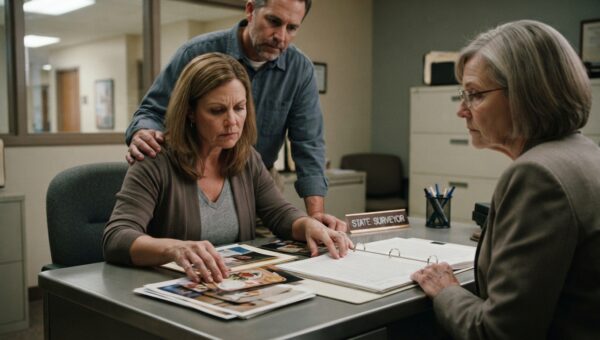
We didn’t waste time going back to the local precinct where the file had gathered dust. Instead, we took the ledger and the micro-cassettes straight to a state labor inspector in Columbus who had a reputation for not taking calls from local contractors. We sat across a metal desk in a room that smelled of stale carpet and fluorescent ballast while the investigator listened to Arthur’s voice fill the small office. He didn’t interrupt once. He just pulled a yellow legal pad toward himself and started writing down names, dates, and project numbers as the tape rolled on, his pen moving across the paper with a dry scratching sound that felt like justice finally catching its breath.
The state inquiry moved faster than anyone expected once the audio files were authenticated. Within three weeks, investigators served a warrant on the commercial warehouse site off Route 4, uncovering the exact secondary stash of architectural blueprints and safety logs Arthur had hidden in an abandoned tool locker just before he went into hiding. Greg Miller was picked up outside a supply depot in Cincinnati before he could catch a flight south, and the resulting structural audit forced the construction firm into a massive settlement that made the local evening news. Arthur’s name wasn’t mentioned as a runaway anymore. The headlines called him a whistleblower who had been driven underground by threats to his life, confirming what his daughter had known in her bones all along.
The state updated the missing person files with the new context, bringing a quiet, bitter sort of closure to a police department that had been too quick to close the book. I went back to my driveway in Dayton and spent two solid weekends welding a clean, solid patch into the floor of the old Ford, sealing the metal down right where the ammo can used to sit. I didn’t sell the truck for parts like I originally planned. I rebuilt the carburetor, put a fresh set of tires on the corners, and spent an afternoon sanding down the rust on the fenders before rolling a coat of primer over the bare spots. It runs rough in the mornings when the damp air settles over the Miami Valley, but the engine catches every single time you turn the key, holding a steady, heavy rhythm that you can feel right up through the floorboards.
These days, the truck sits parked by the fence where the gravel meets the grass, solid and quiet at last. Every now and then, I drive out to Kettering to help Evelyn with odd jobs around her house, hauling lumber in the bed or fixing a sagging porch post with tools that belonged to her old man. We don’t talk much about the dark months when nobody knew where Arthur was, or about the men who tried to bury his name under tons of cheap concrete. We just work side by side in the afternoon sun, listening to the hum of the road and the steady ticking of a gold union pocket watch resting safely inside its original velvet box on the mantelpiece, its brass casing polished bright enough to catch the light from across the room.