My feet felt like they were wrapped in wet wool as I walked down the grocery aisle that Tuesday morning, staring at three different kinds of canned tomatoes like they were written in ancient Greek. I dropped a jar of marinara right on the linoleum. It burst open with a wet, heavy smack, red glass and thick paste splashing against my sneakers.
A young girl stocking shelves jumped back with a little gasp. I just stood there blinking at it, my chest hollow and cold, unable to find the words to tell her I was sorry. By the time Arthur arrived ten minutes later, called by the store manager who had my emergency card in the files, I was shaking so hard I could barely hold the paper towel he shoved into my hand.
Five months of that foggy, dragging exhaustion had worn me down to a nub. I kept dropping coffee mugs. I forgot my own cousin’s middle name at Sunday dinner. Clara, my daughter-in-law, started finishing every sentence I started, her voice pitched high and careful like she was talking to someone who might break if she sneezed too loud. Arthur would just sit at the end of the dining table, rubbing the back of his neck with that heavy, tired sigh of his, looking like the weight of the entire world was pressing down on his shoulders.
He was running some kind of tech distribution outfit out in Grand Rapids that had been bleeding cash for two years, though I only knew that because I overhead him arguing on his cell phone late at night through the floorboards.
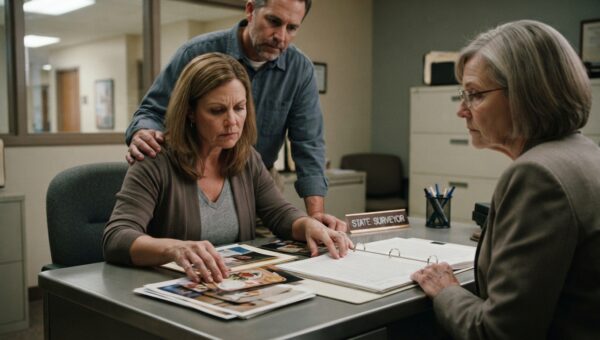
“It’s just her age catching up,” Arthur told the whole family at Sunday potluck, right over the baked ham, like I wasn’t sitting three inches away from him eating my green beans. “We have to be realistic about the progression. Oakridge has an opening in the north wing starting next month.”
I tried to object, my tongue feeling thick and clumsy behind my teeth, but Clara reached out and patted my hand with that awful, sticky pity. “It’s for the best, Mother. You won’t have to worry about cooking or bills anymore.”
He had already paid the four thousand five hundred dollar non-refundable deposit out of a joint savings account we had set up back when his father passed away.
I remember looking at the printed receipt he left on the kitchen counter, the numbers swimming in front of my eyes until the paper seemed to blur into the grain of the laminate. I didn’t have the strength to fight him. My arms felt like lead pipes, and my head felt like it was stuffed with cotton wool every single minute of the day. I figured he was right. I figured my brain was simply turning to mush and there wasn’t a damn thing I could do about it.
Then came Thursday evening, and the kitchen rug betrayed me. I caught the fringe on my slipper while turning toward the refrigerator with a carton of milk, and I went down hard. My right hip hit the floor with a crack that sounded like a dry pine branch snapping in winter. The pain flared up white and hot, searing straight through my pelvis, pinning me to the floorboards.
Clara was at the grocery store, and Arthur was at his office forty miles away. I had to drag myself across the linoleum by my elbows just to reach the wall phone, leaving a little smear of milk behind me where the carton had split open.
The ambulance ride was a blur of flashing amber lights and the steady, annoying whine of tires on wet asphalt. The hospital waiting room smelled of floor wax and stale coffee. They wheeled me into a cramped examination cubicle under banks of buzzing fluorescent lights that made my eyeballs ache behind my head. A nurse with tired eyes and silver hair pulled back in a loose clip took my blood pressure three times, frowning at the wrist cuff like the machine was broken. An hour later, a doctor with shirtsleeves rolled up to his elbows and a stethoscope dangling from his pocket pulled the blue fabric curtain shut with a sharp metal ring.
“Who told you this was dementia?” Dr. Hayes asked, flipping through the fresh sheaf of lab printouts clipped to his board.
My heart gave a heavy, painful thud against my ribs. “My son. And the intake nurse at Oakridge. I’ve been dropping things. I forget words mid-sentence.”
Dr. Hayes let out a dry, humorless huff through his nose and tossed the papers onto the rolling metal tray beside my bed. “Your TSH levels are so low the lab computer flagged them twice to make sure it wasn’t a machine error. Your thyroid has basically gone to sleep, and you’re dealing with a severe B12 deficiency that’s starving your brain of oxygen. You aren’t losing your mind. Your metabolism simply shut down.”
He looked past me, his gaze locking onto the discharge packet Arthur was holding in his hand while hovering near the door. Arthur had just walked in five minutes prior, looking breathless and annoyed about missing his evening meetings.
“Cancel that,” Dr. Hayes said, pointing a finger right at the glossy Oakridge brochure sticking out of Arthur’s coat pocket. “Put her on a daily replacement hormone and some heavy vitamin therapy. In six weeks she’ll be sharper than you.”
Arthur’s mouth opened, but no sound came out for a second. “Wait. Are you sure? The memory care facility already ran their own, “
“They ran a checklist, not a panel,” Dr. Hayes interrupted, his voice dropping into that flat, unarguable tone doctors use when they’re done arguing with amateurs. “She’s coming home with you tonight with a prescription list, not a moving truck.”
The drive back in Arthur’s sedan was so quiet you could hear the grit of the road salt grinding underneath the tread. Arthur kept his eyes fixed straight ahead on the dark highway, his knuckles white against the steering wheel. The heater vents were blowing a dry, dusty heat that made my skin crawl. He didn’t say a single word about the lab results. He didn’t ask how my hip felt. He just pulled into my driveway, cut the engine, and stared out through the windshield at the porch light flickering against the siding.
“I can come back tomorrow and help you sort through the bedroom paperwork,” Arthur said, his voice tight and unnatural as he reached for the door handle.
“No need, Arthur,” I said, my voice sounding clearer in the cab than it had in months. “I’m going straight to bed. You go home to Clara.”
He hesitated for a second, his hand hovering over the latch, then muttered something about checking his emails and drove off into the dark. I watched his tail lights disappear down the gravel lane, the red glow fading into the mist hanging over the cornfields. I walked up my front steps without stumbling once. The hip hurt like hell, but my head felt different. The cotton wool was gone. In its place was a cold, bright clarity that felt like waking up from a very long, very bad dream.
I waited until Friday afternoon when I knew Arthur would be tied up at his warehouse across the county. The house was quiet except for the hum of the refrigerator and the ticking of the clock in the hall. I walked down the narrow hallway to the small study where my late husband’s heavy mahogany desk sat against the wall. The middle drawer was always locked, but Arthur had left his spare brass key ring on the kitchen hook three weeks ago when he helped me carry in groceries.
The key turned in the brass escutcheon with a clean, muffled click.
Inside lay a stack of documents held together by a heavy black binder clip. I pulled them out and carried them over to the lamp by the window where the afternoon sun was cutting a sharp line across the carpet. There were the estimates from Oakridge Senior Living, dated four months back, right around the time my fatigue had started getting heavy. There were transfer request forms for my investment account, filled out in Arthur’s sharp, sloping handwriting, with a signature line at the bottom that had been practiced three or four times to get the curves right. My signature. Copied from an old tax form.
Buried at the bottom was a printed email thread between Arthur and an intake coordinator named Brenda at the facility. “Mom’s cognitive slips are becoming a liability for the property transfer,” Arthur had typed on a Tuesday afternoon in October. “If we don’t get her into assisted living before the commercial debt restructuring goes through in March, the whole house title gets tied up in probate assessments.”
I sat there in the silence of the afternoon, the paper trembling slightly between my fingers, feeling not a single tear come to my eyes. Only a hard, steady burn settling deep in my chest. He hadn’t been worried about my memory. He had been clearing the board so he could mortgage my house to pay off his failed truck leasing venture.
When Arthur showed up at six o’clock for our weekly Friday check-in, bringing a sack of greasy takeout burgers he probably thought would soften me up, I was waiting for him at the kitchen table. The lab printouts were spread out on the left side of the wood, and his printed bank forms and email printouts were laid out neatly on the right.
He stopped just inside the doorway, the grease bag dangling from his fingers, his eyes darting from the papers to my face.
“Mother,” he started, his voice sliding into that familiar, soothing register he used when he wanted me to sign something without reading it. “I was just coming by to see how you’re feeling after the hospital. We need to talk about the transition schedule because, “
“Sit down, Arthur,” I said.
He didn’t move. “What is all this?”
“It’s the math,” I said, looking right into his eyes for the first time in six months without feeling a single ounce of fog in my head. “The thyroid is fine, Arthur. Dr. Hayes cleared me this morning. My blood was just starving for salt and vitamins because you and that nurse friend of yours decided I had dementia before I even dropped the first coffee mug.”
Arthur dropped the bag onto the counter. The grease stained the white paper in a dark blotch. “That’s ridiculous. I was only trying to protect you. You couldn’t even remember your own grocery list last month.”
“I remembered enough to look through your desk,” I said, sliding the printed email across the wood toward him. “You needed my house equity to cover your Grand Rapids debts before March. You thought if you locked me away in Oakridge with enough sedatives disguised as memory care pills, I’d never ask where the title went.”
He stood there by the refrigerator, his face flushing dark around the collar of his shirt, looking smaller than a grown man has any right to look. “Mother, let’s not get dramatic. Business has been terrible. I was going to pay it back once the commercial contracts cleared.”
“You aren’t paying back a damn thing because you aren’t touching my property,” I said, standing up from the chair. My hip gave a sharp twinge of pain, but I didn’t lean on the table. I held out a single sheet of paper with my signature crossed out in red pen. “Sign the cancellation form for Oakridge right now, Arthur. And then you are going to call your lawyer and revoke every single power of attorney you had me sign under the influence of that thyroid crash.”
He opened his mouth to argue, to give me that tired sigh he always used to shut down an argument, but he stopped when he saw my eyes. He knew. He knew the whole game was over. He knew and he stood there in my kitchen with his shoulders slumping down toward his belt.
“If you do this,” Arthur muttered, his voice dropping low and bitter, “the house goes into foreclosure anyway when my commercial loan defaults next month. You’ll lose everything.”
“Then I’ll lose it on my own terms,” I said, sliding the pen across the wood toward him. “Sign it, Arthur. And don’t come back through that back door unless you’re invited.”
He didn’t say another word. He picked up the ballpoint pen, his hand shaking slightly as he scratched his name across the cancellation line, tearing the corner of the paper before tossing it back onto the wood. He turned around without looking at me, his boots heavy and slow against the linoleum, and let the back screen door slam shut behind him.
I stood by the window for a long time after he left, watching his car back down the gravel drive and turn out toward the highway. The morning sunlight was just starting to cut across the kitchen table again, striking the empty coffee mug and the freshly signed document revoking his authority. My head was clear. My blood was moving. And for the first time in five months, the house belonged entirely to me.