$61,156. That was the exact figure remaining on our second small-business loan when Mark and I finally hung the last string of Edison bulbs across the old timber beams of the barn.
For as long as I could remember, that slice of Vermont hillside was my grandfather’s pride. It featured an 18th-century restored timber barn, a crystal-clear private lake, and acres of wild lavender and orchard trees that smelled like pine and summer rain after a heavy storm.
When Mark and I got engaged, it wasn’t even a question. We were going to get married right there under the big maple tree by the water.
Over two years, we poured our savings, blood, sweat, and calloused hands into converting the family ground into a fully functional wedding venue. We put in commercial-grade restrooms, a state-of-the-art catering kitchen, and professional lighting rigging so we could launch it as an official business venture afterward to pay off the debt.
Then came my cousin Chloe.
Chloe was the kind of person who viewed life as an all-you-can-eat buffet where everyone else picked up the check. When she found out about the venue, she didn’t just congratulate us. She practically moved herself into our lives, planning every detail around our hard work. She was getting married to her fiancé, Brad, exactly three months after Mark and I were set to tie the knot.
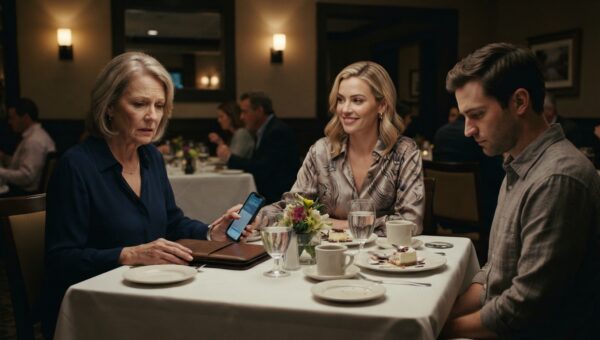
“Oh, it’s just perfect,” Chloe gushed during a family Sunday dinner, swirling her wine while Aunt Linda nodded approvingly from across the table. “It’s so wonderful that you guys built this for the family. It’s going to save Brad and me at least $25,000. Family perks are the best!”
Nobody said anything for a second, and honestly, that felt worse than shouting. My fork scraped against my ceramic plate with a sharp little sound that made Mark look up from his water glass.
I looked at my aunt, then at Brad, who just stared down at his potatoes like he wanted the floor to open up and swallow him whole. Chloe was smiling that bright, empty smile she used whenever she wanted something she hadn’t earned.
“Chloe,” I said, keeping my voice lower than I wanted to. “Mark and I took out commercial loans for this place. It’s not a public park.”
She just laughed, waving her hand in the air like I was telling a joke at Thanksgiving. “Oh, please. Grandpa would have wanted us to use it. Don’t be so cheap.”
That Sunday dinner was supposed to be a quiet celebration of our final landscaping pass, but instead, it set off a slow-burning fuse. Mark and I sat on our front porch later that night, watching the headlights sweep across the gravel lane as the last cars pulled away.
“She’s going to make a mess of the lawn,” Mark said quietly, rubbing his palms together. His hands were still stained with dark walnut oil from the arbor he built out of fallen oak.
“She thinks it’s hers already,” I told him, looking out toward the dark silhouette of the barn against the starlight. “I should have stopped her right at the table.”
“You did,” Mark said. “She just didn’t listen.”
The next week proved just how right he was. I didn’t think much of it until Thursday afternoon when my phone buzzed against the kitchen counter with a notification from a local wedding group page I monitored for venue advertising.
A screenshot had been sent to me by a friendly florist in town who knew our timeline. Chloe had posted in a regional planning group announcing her upcoming nuptials at our exact address, complete with a mood board featuring our private lake and restored timber structure. She had even listed herself as the event coordinator.
I called her immediately. It rang four times before she picked up, sounding breathless like she had been running.
“Hey!” she chirped. “Are you calling about the bridal suite furniture? Because I found some wicker chairs online that would look way better than your oak ones.”
“Chloe, take the post down,” I said. My fingers tightened around the ceramic receiver until my knuckles went stark white. “You didn’t ask us, and you certainly don’t have permission to book dates on our property.”
“Don’t be dramatic,” she shot back, her tone hardening instantly. “It’s family property. My grandfather’s blood is in that dirt just as much as yours.”
“Our sweat paid for the commercial kitchen and the septic line,” I told her, my voice rising. “Take it down today.”
She hung up on me. No goodbye, just a sharp click that left a ringing sound in my ear.
By the weekend, Aunt Linda was on the phone, calling to mediate in that sweet, poison-honey voice she used when she wanted someone else to give up their lunch money.
“She’s just excited,” Aunt Linda said, her voice crackling over the landline. “You girls always played in those barns together. Why are you acting like this over a little grass and a few chairs?”
“It’s not grass, Aunt Linda. It’s a business. We owe sixty thousand dollars to the bank,” I told her.
“Well, family helps family,” she sighed, as if I were the unreasonable one for wanting to pay my debts. “Just let her use it for the weekend. It won’t cost you a dime.”
“It costs us the venue launch,” I said, and hung up.
The cold war lasted for about twelve days. During that time, Chloe acted like nothing was wrong, assuming silence meant surrender. She figured she had worn us down through sheer stubbornness, the way she always got her way growing up.
Then came the afternoon of the unauthorized walkthrough.
Mark was out in the back orchard checking the irrigation lines when I heard the low rumble of an unfamiliar SUV coming up our long gravel drive. A sleek black crossover stopped right beside the barn doors. Chloe stepped out first, wearing large sunglasses and an expensive linen jumpsuit, followed by a man holding a professional camera gimbal and a woman with a clipboard tucked under her arm.
I walked out from the garden shed with my pruning shears still in my hand, wiping dirt off my jeans.
“Can I help you?” I asked, stepping right into their path before they could cross the threshold into the timber room.
Chloe pulled her sunglasses down her nose, looking annoyed that I was interrupting her tour. “Oh, good, you’re here. This is Marcus, our lead photographer, and Sarah from boutique rentals. I wanted them to see how the lighting hits the main doors at four o’clock.”
The photographer looked back and forth between us, sensing the tension in the air immediately and lowering his camera.
“You don’t have permission to be here, Chloe,” I said plainly, my voice remarkably steady compared to how fast my heart was hammering against my ribs.
“Don’t start this again,” she huffed, turning to Sarah with a theatrical roll of her eyes. “My cousin is just having a little stress moment about her own wedding coming up.”
“Get off the property,” I said, pointing straight down the gravel lane toward the main gate. “Now.”
Chloe’s face flushed a deep, ugly red. “You are being completely ridiculous. I’m going to tell Mom about this.”
“Tell her whatever you want,” I said, stepping closer. “If you or your vendors step foot past this gate again without a signed contract and a paid deposit, I’m calling the county sheriff for trespassing.”
She stared at me like I had slapped her across the face. Nobody had ever stood up to her quite like that, not within the family anyway. She turned on her heel, muttered something about ungratefulness, and shoved past me toward her SUV, her photographer trailing behind her with an apologetic look.
That evening, the family group chat blew up. Aunt Linda posted three long paragraphs about Christian charity and sharing our blessings, while cousins I hadn’t spoken to in years chimed in with vague, pointed comments about people changing when money got involved.
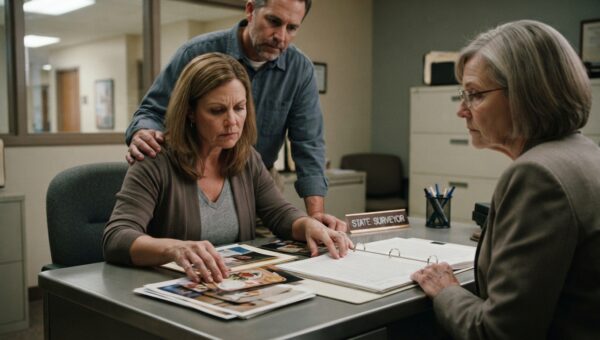
Mark didn’t say a word. He just walked over to the kitchen table, pulled out our heavy black binder of financial records, and laid it flat under the light.
“Print the formal contract,” he said quietly. “The commercial one with our standard rates and the exact date restrictions. Let’s see how much family love she has left when she has to write a check.”
The next morning, I sent Chloe an official email through our business portal. It wasn’t an angry message. It was a standard commercial venue agreement, complete with a $7,500 rental fee, a $2,000 security deposit for the grounds, and a strict liability clause holding her responsible for any damage to our commercial equipment.
She called within twenty minutes, her voice shaking with genuine fury.
“You’re charging me? Your own blood?” she screamed through the speaker.
“Business is business, Chloe,” I told her. “You said yourself this is a professional venue. The family discount is zero percent because you tried to book it behind our backs.”
“You’ll ruin the family!” she shrieked. “Everyone is talking about how selfish you are!”
“Then I guess you’ll have to find somewhere else to get married,” I said, and ended the call for good.
The fallout lasted all the way through spring. Aunt Linda wouldn’t return my phone calls, and at family gatherings, people looked at us sideways like we brought a plague to the dinner table. Chloe, true to form, ended up booking a local hotel ballroom that cost her even more than she had budgeted, mostly because her pride wouldn’t let her back down after she had already bragged to all her friends about a rustic Vermont wedding.
By June, the noise had finally faded away. The quiet came back to the hills, slow and heavy like the mist rising off the private lake at sunrise.
On the morning of our wedding, the air was crisp and smelled faintly of wild lavender and damp cedar. The sun broke over the top of the ridge, painting the old timber barn in a warm, honey-colored light that no camera filter could ever quite capture.
Mark stood beside me near the edge of the water as the early guests began to trickle in down the gravel drive, their cars kicking up dust in the golden morning light. Every wooden beam, every string of lights, and every square foot of green grass belonged entirely to us.
We had built it from nothing, and no amount of family entitlement could ever take that away.