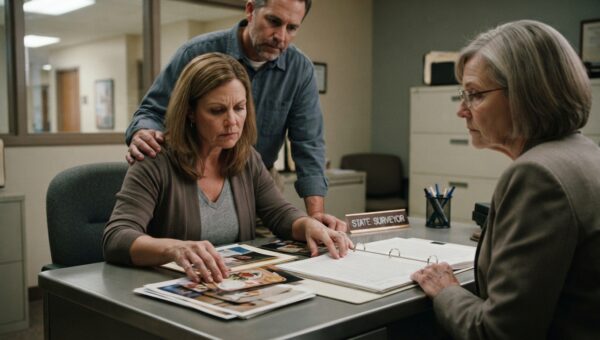
The fluorescent lights over my desk at the feed and seed office had this low, rhythmic hum that could drive a person crazy if they listened to it too long. I was halfway through checking three columns of ledger numbers when the telephone on the wall beside the filing cabinet started up. It was ten past eleven in the morning on a Tuesday.
Dale never called me at work unless something was on fire or a cow had gotten out on the paved road, so I picked up the receiver with one hand while I kept my pencil point right on the line of figures so I would not lose my place.
“Hello,” I said.
Dale did not even say my name. His voice sounded thin, stretched out like a piece of baling wire pulled too tight between fence posts. “My uncle just died,” he said, and for half a second I thought about Uncle Harlan out in Spartanburg, who had been coughing up blood behind his barn for six months. But then Dale kept going, the words tumbling over each other like gravel rolling down a tin chute. “And I inherited $125 million. Pack your things and leave before I get home.”
The line went dead with a hard click before I could even draw a breath to ask which uncle he was talking about.
I sat there in that little room with the smell of damp burlap sacks and crushed corn sitting heavy in the carpet, staring at the green plastic body of the telephone.
Dale had an uncle on his mother’s side named Luther Vance, a man who had spent forty years buying up timber tracts, scrap yards, and shuttered textile mills across three states while living in a tarpaper-roofed house that smelled of boiled cabbage. People in the county said Luther had more money buried in coffee cans than the bank held in its vault, but nobody ever expected him to leave a dime to his blood kin, let alone enough to buy half of Columbia.
I laid the receiver back on the cradle, pulled my cardigan straight across my shoulders, and finished the third column of figures. It took me seven minutes. Then I walked out to my old Honda Civic and drove thirty miles back to the house we had spent twelve years paying for.
When I pushed the front door open, the place was already different. Dale had his leather duffel bag sitting right in the middle of the linoleum, packed so full the zipper was straining at the teeth.
He was standing by the kitchen island with a fountain pen in his hand, looking at me like I was a stray dog that had wandered onto the porch and tracked mud across the floor. He had that look on his face he always got when he won a poker hand at the Elks lodge, that sharp, pinched grin that showed all his front teeth.
“You heard me then,” Dale said. He didn’t look up from the papers spread out across the laminate. “I called the lawyer an hour ago. The courier brought these right over from the courthouse. You sign the bottom line here and you take your clothes out of the closet. I am not splitting nine figures with anybody, least of all a woman whose daddy died owing back taxes on forty acres of scrub oak.”
The divorce papers were right there where he left them, three thick sheets of heavy bond paper with the blue backer already folded neat.
I looked down at the kitchen counter. There was a small grease spot near the coffee maker that I had meant to scrub off on Sunday, but Sunday had gotten away from me.
I didn’t yell. I didn’t throw the sugar bowl at his head, though my hand twitched once toward it. I just reached out, took the pen right out of his fingers, and flipped to the signature page.
“You want the car too?” I asked. My voice sounded flat, almost like it belonged to someone else standing across the room watching us.
“Take the Civic,” Dale said, waving a hand like he was swatting a horsefly. “I am buying a new Lincoln this afternoon. Just get out before the afternoon mail comes. I want this house empty.”
I signed my name at the bottom of the third page, right on the dotted line where the notary stamp was already purple and wet. I didn’t even read the property division clauses because I knew what they said; he had left me the car and three hundred dollars in our joint checking account, which was about what was left after we bought the winter heating oil. I handed the pen back to him, handle first.
“Enjoy your fortune,” I said.
Dale let out a short, barking laugh that sounded like an engine backfiring in a cold garage. “Don’t trip on your way down the steps,” he told me.
I carried two suitcases out to the Honda, laid them in the trunk, and drove straight down to my sister Clara’s place outside of Batesburg. Clara didn’t ask many questions when she saw me standing on her porch with my canvas bag; she just poured me a cup of black coffee in a chipped mug and let me sleep on her spare bed under the patchwork quilt our grandmother had pieced together back in sixty-four.
For the next two days, the world went quiet. I spent my time helping Clara clear out her vegetable garden and listening to the cicadas beating against the screen door. I didn’t watch the news. I didn’t turn on the radio. I just let the silence settle over me like a heavy wool blanket after a long day in the fields. I figured Dale was sitting in our living room with a bottle of bourbon, counting zeroes on a piece of paper and wondering how soon the bank would let him buy the country club.
Then came Thursday afternoon.
Clara was out on the back steps shelling butterbeans when her landline telephone started ringing inside the kitchen. She went in to get it, and after a minute I heard her voice get sharp and high, the way it got whenever the feed store shorted her on chicken scratch. She came back out to the porch a minute later holding the receiver out toward me like it was a snake she didn’t want to touch.
“It is your mother-in-law,” Clara said, her mouth pressed into a hard, straight line. “She says she has called your cell phone twelve times and it goes straight to voicemail. She sounds like she swallowed a live bee.”
I took the phone. Before I could even say hello, Helen Vance was screaming right into my ear through the static of the long-distance line.
“Get back here this instant,” Helen yelled, her voice cracking right in the middle of the sentence. “Dale is sitting in the dark with the county sheriff standing on the front porch and nobody knows what any of this legal gibberish means. You have to fix this, Martha. You were always the one who kept the books. You know where the filings are.”
I pulled the receiver an inch away from my ear. “Fix what, Helen? Dale told me to leave before he even took his coat off.”
“It is a mistake,” Helen wailed, and I could hear the sound of someone crying in the background, probably Dale’s sister Brenda. “The letter from the probate court came certified this morning. It is not one hundred and twenty-five million in cash, Martha. It is debt. It is fourteen million dollars in back corporate liabilities and speculative short positions on three bankrupt cotton mills in Georgia, and because Dale signed the sole acceptance waiver as the only living heir without a spouse to share the corporate liability shield, the whole thing is tied right to his personal social security number. They are seizing the house. They are freezing his accounts. They took the Lincoln out of the driveway forty minutes ago.”
I looked out across Clara’s yard where the yellow mustard weeds were blowing in the heat.
“Well,” I said softly. “He told me he won the lottery.”
“He didn’t read page four,” Helen sobbed, the fight completely gone out of her voice now, leaving just that thin, desperate whine of a woman whose neighbors were watching the sheriff paste a yellow notice to her son’s front door. “The executor says there’s a handwritten codicil from Luther himself at the bottom. The old man specifically targeted anyone who tried to take the money without clearing his accounts first. He said a greedy nephew would sign his name without reading the fine print just to get his hands on the total sum.”
“Luther was always a smart man,” I said.
“Martha, please,” Helen begged. “Come back. Talk to the lawyer. If you file a motion to contest the divorce decree on the grounds of duress, we might be able to drag the marital assets back under the protection umbrella before the bankruptcy judge signs the order tomorrow morning. Dale is sitting on the kitchen floor crying like a baby. He doesn’t even have money for groceries.”
I looked down at my hand resting on the wooden porch railing. My skin looked clean. There was no ink on my fingers from the ledger, no grease from the seed house, no weight holding my shoulders down toward the dirt.
“No, Helen,” I told her, and my voice didn’t shake once. “Dale wanted a clean break. He made sure the papers were signed and sealed before the sun went down on Tuesday. I wouldn’t want to interfere with his good fortune.”
I didn’t wait for her to answer. I pressed the little silver button on top of the phone and hung it up on the cradle.
That evening, the sun went down behind the pine ridge like a pool of hot grease, turning the whole sky the color of a bruised plum. Clara handed me a fresh cup of coffee, and we sat together on the porch without talking while the crickets started up in the high grass. The signed divorce decree was tucked away neat and flat inside the bottom drawer of the bureau upstairs, right underneath my winter socks. There were no locks on that drawer, and there weren’t any keys. There was just the quiet, empty space around me, big and wide enough to breathe in for the first time in twelve years.