PART 1
The brass plaque on the granite boulder at Riverside Park spelled my mother’s name with an extra letter, but Julian did not care about that when he unveiled it. He cared about the cameras from the local paper and the way the city council members were patting his shoulder. He stood at the podium in his tailored blazer, looking every bit the grieving, devoted son who had stayed behind while I supposedly turned my back on the family.
I stood near the back of the crowd with my hands in my jacket pockets, watching my thirty-nine-year-old life as a municipal senior planning analyst get quietly rewritten twenty yards away. Julian cleared his throat, adjusting his microphone with practiced solemnity. He told the gathered crowd about the grueling final years of our mother’s life, speaking in a low, trembling voice that sounded rehearsed for a morning talk show. He talked about sleepless nights, heavy medical bills, and how he had single-handedly carried the financial and physical burden of her care while I pursued my comfortable career in another department of the same city hall.
Not a single word of it was true.
When we were in our twenties, I gave up my own full scholarship to an out-of-state university so I could stay local, take night classes, and work two jobs to help support our mother after her first stroke.
Julian went to college on a partial athletic scholarship that quickly dried up because he dropped classes to chase failing restaurant ventures. Yet somehow, over the last decade, Julian had perfected a narrative where he was the martyr and I was the ghost. I let it slide for years. I had a teenage daughter to raise on my own, a quiet municipal job to protect, and an exhausting aversion to public family fights. I told myself that letting Julian have his little theatrical stories was cheaper than arguing.
Then the mayor took the microphone and announced that Julian had been appointed as the sole administrative director of the new municipal historical restoration grant attached to the park plaque. An initial disbursement of $74,850 was already cleared for release to fund the bronze landscaping and memorial benches.
That was the moment the stomach drop hit me. Not because Julian was standing up there basking in applause, but because I recognized the grant routing number the mayor rattled off.
It was the exact same sequence I had processed through the city’s digital workflow system three days earlier on a routine administrative desk check. Only, when it crossed my desk, the primary signature block did not bear Julian’s name alone. It bore mine as well.
My phone buzzed in my coat pocket right as the applause started to fade. I pulled it out and looked at the screen. It was an automated notification from the municipal electronic document routing clerk, confirming that my digital co-guarantor authorization for the seventy-four-thousand-dollar park restoration fund had been successfully processed and verified.
I stared at the glowing letters on my screen while Julian stepped down from the podium to accept handshakes. I had never opened that document. I had never clicked the verification link. My electronic stamp had been applied to a municipal funding agreement that listed me as a financial backer for a project run entirely by my brother.
The crowd surged forward to congratulate Julian, blocking my path to the front. I turned around and walked out of the park before the speeches were even finished, my boots crunching on the gravel path. My hands were steady, but the cold realization settling into my chest had nothing to do with family rivalry anymore. Julian was not just rewriting history. He was using my professional credentials to sign off on public money.
PART 2
I spent the rest of that afternoon at my desk in the municipal planning office, staring at the audit trail on the internal server. Municipal software leaves tracks whether people know how to read them or not. Every electronic signature carries a metadata tag showing the exact IP address, the browser type, and the precise network gateway used to authorize the transaction.
When I pulled up the routing logs for the park grant, the digital fingerprint pointed straight to an external fiber line registered to a commercial broadband account downtown. It was the same internet provider servicing Julian’s struggling farm-to-table bistro, the one that had been facing foreclosure notices and supplier liens for the past eighteen months. He had logged into the employee portal using my internal credentials during a family dinner at my house two weeks prior, when I had stepped away from my laptop to check on dinner in the oven.
I felt a dull, heavy anger settle in my ribs. I did not call him. I did not send an angry text demanding an explanation. Instead, I opened a separate digital folder and started pulling every piece of verifiable documentation I could lay my hands on.
Later that evening, I drove out to our late mother’s house. The place had been sitting empty since her passing eighteen months ago, while Julian and I sorted through the estate administration. Julian still held the physical keys, but I had kept a spare set from the days when I drove out twice a week to stock her refrigerator and pay her home health aides out of her own modest savings account.
The house smelled of old wool and stale peppermint, exactly the way it had when she was alive. I walked straight to her bedroom, passed the mahogany dresser, and knelt down in front of the cedar chest at the foot of the bed. Inside sat the metal lockbox where she kept her physical records.
The key was where she always hid it, tucked behind a framed photograph of our grandfather.
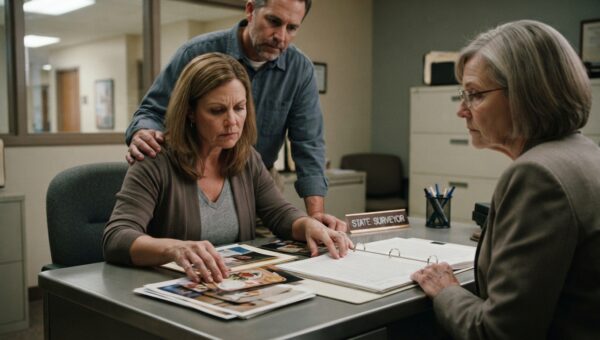
I popped the latch and lifted the lid. Beneath her old marriage certificate and faded insurance papers was a heavy cardboard accordion folder labeled bank statements and medical ledgers. I sat cross-legged on the braided rug and pulled out the statements from her final three years.
Julian had spent years telling everyone that he covered her private nursing costs out of his own pocket. But as I flipped through the canceled check copies and monthly bank ledger pages, the truth stared back at me in black and white. Month after month, large sums were electronically transferred from her account directly to Julian’s commercial restaurant routing number. She had not been funding him; he had been draining her accounts under the guise of managing her care, leaving her estate nearly empty by the time she passed.
And now, with his restaurant drowning in debt, he had pivoted to the city’s historical restoration fund, forging my signature to ensure a financial cushion that would keep his failing business afloat for another six months.
I took out my phone and photographed the ledger pages, making sure the dates, routing numbers, and signatures were sharp and clear. Then I closed the lockbox, put everything back exactly as I found it, and sat in the dark living room for a long time. The anger was gone now, replaced by a cold, methodical clarity. Julian thought he could hide behind public applause and sentimental speeches. He forgot that I worked in the department that audits the very paper he was trying to sign.
PART 3
The following Tuesday morning, I bypassed the family drama entirely and walked down the second-floor corridor of city hall to the comptroller’s office. I did not make an appointment. I simply placed a manila folder on the desk of the senior municipal auditor, a woman named Miller who had spent twenty years tracking down municipal discrepancies with the enthusiasm of a bloodhound.
Inside the folder were two things: the digital server logs proving that my electronic signature on the grant agreement had been forged from an IP address linked to Julian’s restaurant, and copies of the bank ledger pages from my mother’s cedar chest showing the unauthorized fund transfers from her accounts to his business entity.
Miller put down her red pen, opened the folder, and spent twenty minutes reading through the printouts in absolute silence. She did not look up until she reached the last page.
“Marcus,” she said quietly, peering over her reading glasses. “If this IP trace holds up under forensic review, this isn’t just a grant misallocation. This is official document forgery attached to municipal funds.”
“I know,” I told her, my voice even. “That is why I am filing a formal administrative audit request and requesting an immediate suspension of the grant disbursement pending a full ethics board review.”
“You realize who runs the park committee liaison office this month, don’t you?” she asked.
“Julian Vance. My brother.”
“And he’s going to make a lot of noise about this,” she warned.
“Let him make noise,” I said. “Noise doesn’t clear an audit trail.”
The fallout did not take weeks. It took forty-eight hours. By Thursday afternoon, the city comptroller’s office had frozen the $74,850 disbursement pending an internal fraud investigation. The preliminary audit report confirmed that the co-guarantor signature was fraudulent, and because the grant application relied on that fraudulent authorization, the entire funding package was pulled from Julian’s oversight.
Julian didn’t call me to yell. He didn’t show up at my desk. Instead, he tried to corner me in the municipal parking garage on Friday evening just as I was getting into my sedan.
He looked frantic, his blazer unbuttoned and his hair uncombed, all the polished charm from the park dedication completely gone.
“What the hell did you do, Marcus?” he demanded, stepping into my path so I couldn’t shut the car door. “The comptroller’s office just slapped a freeze on the entire park account. They’re auditing my business accounts, too. Do you have any idea what this does to my reputation in this town?”
I stopped with my hand on the door frame and looked at him. Really looked at him. I saw the panic of a man who had spent his entire adult life building a house of cards on other people’s sacrifices.
“You used my name without my permission, Julian,” I said, my voice quiet in the concrete echo of the garage. “You forged a municipal document using my credentials to bail out a restaurant that should have failed five years ago. And you stood up in front of a crowd and lied about what happened to our mother.”
“I was protecting her legacy!” he snapped, his voice cracking with defensive fury. “I’m the one who stayed! I’m the one who dealt with the town!”
“You drained her accounts, and you tried to drain the city,” I said, opening the car door the rest of the way. “The audit board has the bank ledgers from her cedar chest, and they have the server logs from your restaurant’s IP address. It’s over, Julian. Stop acting like the victim.”
He opened his mouth to say something else, some old practiced line about how I never understood the family, but the words caught in his throat. He saw the expression on my face, the absolute finality of it, and he stepped back, letting the door swing shut between us.
ENDING
The following Sunday afternoon, my teenage daughter and I walked down to Riverside Park. The crowds from the dedication ceremony were long gone, leaving the gravel paths quiet under a pale autumn sky.
We stopped in front of the granite boulder. The bronze plaque was still there, still misspelling our mother’s name with that clumsy extra letter because the city foundry had already cast it and no one wanted to pay for a replacement.
My daughter reached out and traced the raised bronze letters with her fingertip. “Does it still bother you that they spelled it wrong?” she asked softly.
I shook my head, keeping my hands in my pockets as the cool wind rustled the maples overhead.
“No,” I told her, looking out across the calm surface of the river. “Let them keep the spelling. The plaque doesn’t write the history. The records do.”
We stood there together in the quiet for a few minutes, listening to the water lap against the stone wall, before turning around and walking back up the path toward home.