PART 1
I found the first wooden survey stake on a Tuesday morning in late April, driven deep into the soft loam right at the edge of the russet apple grove. It had bright orange vinyl flagging tied around the top that fluttered in the river breeze coming off the Hudson.
I pulled it out of the ground with my spade, threw it into the back of my utility cart, and kept moving.
Our family has owned these one hundred and twenty acres for four generations, and people from the township occasionally wander off the public trail near the northern ridge. I figured an apprentice from the county road department had made a mistake marking the easement.
Three days later, I found four more stakes forming a straight, deliberate line straight through the heart of the 15-acre heritage orchard.
I am forty-four years old. For twenty-two of those years, I have lived in the stone cottage near the gatehouse and worked as the estate’s head groundskeeper and horticultural director. I know every single graft, rootstock, and windbreak on this property. My grandfather, Arthur Vance, planted twenty rare heirloom apple varieties here back in the 1950s, trees you cannot find anywhere else in New York state. When our parents died six years ago, my younger brother Julian took over the business side of the family trust from his office in Manhattan.
I stayed on the land with dirt under my fingernails, running the crew, pruning the canopies, and keeping the arboretum alive.
Julian had always looked down on what I did. To him, spending twelve hours in the rain digging drainage ditches or grafting scions was just manual labor. He wore three-thousand-dollar suits, drove an imported sedan, and spoke about the estate as an underperforming balance sheet. I let him talk that way because I hate family drama. I figured as long as he handled the taxes and the insurance from the city, and I kept the grounds thriving, we could live in peace.
That peace ended on Friday afternoon when an email popped up in the general estate inbox on the desktop computer in the potting shed.
The estate uses an old administrative email address that forwards copies of incoming mail to both Julian’s laptop and the office computer in the barn.
The message was from a commercial broker named Miller at Hudson Valley Commercial Realty. The subject line read: *Vance Property Subdivision – 15-Acre Parcel Purchase Agreement Status.*
I opened it.
Miller wrote: *Julian, the buyers have signed off on the revised parcel map for the lower orchard. We have the escrow deposit ready for the full $417,000 purchase price. We are just waiting on the certified title clearance from your office confirming the groundskeeper release before closing on the twelfth.*
I sat there on the wooden stool in the potting shed, staring at the screen. The air smelled of damp potting soil, peat moss, and cedar shavings.
Julian had not mentioned a sale. He had not mentioned a subdivision. He was preparing to sell off fifteen acres of grandfather’s living legacy to a commercial buyer for $417,000, and he had told the broker that I had already signed away my rights.
I picked up the landline in the barn and dialed Julian’s mobile number.
He answered on the second ring, his voice loud against city street noise. “Marcus. Make it quick, I have a client lunch in ten minutes.”
“Julian, why is a commercial broker asking for title clearance on the lower orchard for $417,000?”
The line went completely quiet for three long seconds. When Julian spoke again, his voice had flattened into the cold, patronizing tone he had used on me since we were boys.
“You should not be snooping through estate administration, Marcus. That is my domain. I am the managing trustee.”
“It came to the barn computer,” I said. “What is he talking about? You cannot sell the heritage orchard. The family trust protects the entire botanical footprint.”
“The trust gives me sole executive power over non-essential capital assets,” Julian said smoothly. “The orchard costs four times what it produces in cider apples. It is a drain on our liquidity. I have a buyer putting up four hundred and seventeen thousand dollars cash for commercial storage units. It saves the estate’s balance sheet.”
“Those trees are irreplaceable,” I told him, my hand gripping the plastic phone receiver so hard my knuckles went white. “Grandfather planted them. I have spent my entire adult life keeping them alive. You cannot subdivide this land.”
“It is already done, Marcus. I filed the preliminary boundary partition with the county last month. You are a groundskeeper. You cut the grass and prune the hedges. I manage the assets. Learn your place and stay out of it.”
He hung up.
I did not yell. I did not throw the phone. I stood up, walked out of the barn, and looked across the valley toward the lower orchard. The white blossoms were just starting to open against the grey spring sky.
Julian thought I was just an employee he could order around. But our grandfather Arthur had known both of us very well before he died, and he never left anything to chance.
PART 2
I did not sleep that night. I sat at the kitchen table in my cottage, reviewing every old folder I had kept from our father’s probate proceedings.
Julian had been named managing trustee because he had a finance degree and an office in the city. The trust paid me a modest curator salary and allowed me to live on the grounds rent-free. Over the years, whenever property tax assessments arrived or roof repairs needed authorization, Julian would send me single-page signature forms. I had signed them trusting that he was protecting the land just like I was.
Now I realized he had used my trust against me. He had told the broker that I had signed away my curation protections, probably slipping an administrative waiver into one of those routine maintenance packets over the past two years.
At daybreak, I walked down to the historic 1912 glass greenhouse at the center of the arboretum.
The structure had been restored three times over the past century, but the heavy granite foundation at the northeast corner was original. My grandfather Arthur had loved practical secrets. When I was fourteen years old, he had taken me into that greenhouse, tapped the hollow corner block under the old brass potting sink, and told me that whatever happened to the family, the truth of the Vance land would always stay rooted where the work was done.
I took a crowbar, a heavy chisel, and a soft mallet from my tool cart.
The brass sink had not been moved in thirty years. I crawled underneath the cast-iron drainage pipe, cleared away decades of dry moss and spiderwebs, and worked the chisel into the mortar seam along the face of the corner stone. The mortar was old lime mix; it crumbled into chalky dust under the blade.
After twenty minutes of careful prying, the rectangular granite face slipped forward.
Behind it sat a heavy, water-sealed copper box about the size of a shoebox.
I pulled it out, carried it over to the potting bench, and wiped the grey dust from the lid. The latch was stiff with green oxidation, but it gave way with a firm snap.
Inside lay two items: an original physical safety deposit box ledger from the old Hudson Valley Merchants Bank, and a thick legal envelope with my grandfather’s neat, sharp cursive written on the front: *Botanical Curatorship and Orchard Covenant – To Be Opened Only in Defense of the Living Collection.*
I pulled out the folded document inside. It was a formal handwritten codicil and trust amendment dated August 14, 1984, signed by my grandfather Arthur Vance and witnessed by the county notary of that era.
I read through the three pages standing by the glass wall while the morning sun came through the panes.
Grandfather had anticipated this exact situation forty years ago.
The 1984 amendment explicitly stated that the 15-acre heritage orchard section was permanently deeded as an indivisible botanical conservancy. Under section four, the document stated in clear, unmistakable legal language that no portion of the heritage orchard could ever be subdivided, rezoned, mortgaged, or sold without the joint physical signature and sworn botanical authorization of the estate’s Head Curator.
Furthermore, the codicil specifically stated that the role and authority of Head Curator belonged to the family member who held active physical residence and daily stewardship on the land, independent of whichever family member held administrative or financial trusteeship.
Julian had the power to balance the checkbook. He had the power to pay the utility bills. But he had zero legal authority to sell a single square foot of the heritage orchard without my explicit, notarized botanical consent.
He had lied to the commercial broker. He had lied to the title company. And he had tried to bulldoze seventy years of living history for $417,000 because he thought I would never look deeper than the dirt beneath my boots.
I carefully packed the documents into my leather satchel, locked the greenhouse, got into my truck, and drove straight into town to see Eleanor Vance-Morrison, our grandfather’s retired estate attorney, who still kept a private practice near the county courthouse.
PART 3
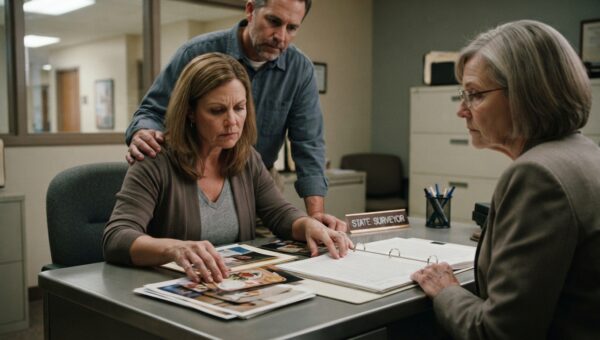
Eleanor put on her reading glasses and spent twenty-five minutes examining the 1984 codicil, checking the embossed notary seal, and comparing the ledger entries against the county land registry database on her computer.
“Marcus,” she said, looking up over her spectacles. “This codicil is fully valid. Arthur filed the original recording reference in the county deed book back in 1984, but when your father consolidated the modern estate trust in 2002, the clerical indexing dropped the cross-reference. Julian either found the gap during a title search and thought no one would notice, or he assumed the physical papers were lost forever.”
“He told a broker he already had my clearance,” I said. “He is set to close the sale on the twelfth for $417,000.”
“He cannot close it,” Eleanor said firmly. “Not legally. If he attempts to sign a transfer deed without your co-authorization as Head Curator, he is committing outright title fraud.”
“What do we do?”
“We file an emergency notice of lis pendens and an immediate injunction with the county clerk this afternoon,” she said, reaching for a fresh legal pad. “And then we notify the title insurance company and the buyer’s broker that the property has an encumbered conservancy title.”
By three o’clock that afternoon, Eleanor had filed the emergency injunction at the county title office. She sent formal, certified copies of the 1984 codicil along with the injunction notice to both Julian’s Manhattan office and Miller at Hudson Valley Commercial Realty.
The fallout was immediate.
At six o’clock that evening, while I was staking newly planted saplings near the northern nursery, Julian’s black sedan came roaring up the gravel driveway. The tires threw stones against the wooden fence as he slammed on the brakes outside my cottage.
Julian got out of the car, slamming the door behind him. His tie was loosened, his face flushed red with fury, and he held a sheaf of legal papers in his right hand.
“What the hell have you done?” he shouted, storming toward me across the grass. “Miller called me an hour ago. The buyers pulled their escrow deposit. The developer is threatening to sue me for breach of contract and legal expenses!”
I did not drop my shovel. I planted it into the soil, stood straight, and met his eyes.
“I protected the orchard,” I said quietly.
“You ruined a four-hundred-and-seventeen-thousand-dollar transaction!” Julian yelled, waving the papers in my face. “Do you have any idea what kind of financial pressure I am under in the city? My investment firm had a disastrous quarter. I needed that capital injection to clear personal obligations and keep my firm solvent! You are sitting up here playing farmer while real life happens in the real world!”
“This is the real world, Julian,” I said, my voice steady. “This land does not exist to bail you out of bad bets in Manhattan. Grandfather built this place. He knew you would try something like this eventually. That is why he wrote the 1984 covenant.”
“It is an obsolete piece of paper from forty years ago!” Julian spat. “I am the managing trustee! I will have you removed from this property by tomorrow morning!”
“You will not,” I replied. “Eleanor filed the original codicil with the county court today. Under grandfather’s trust, the Head Curator cannot be removed without a unanimous judicial review based on gross negligence. And you are no longer operating without oversight. The court clerk has already scheduled a trustee status hearing for next month.”
Julian stared at me. For the first time in our lives, the sneer left his face. He looked at the shovel in my hands, at the neat rows of thriving apple trees behind me, and finally realized that the brother he had treated like an uneducated laborer held the legal foundation of the entire estate in his hands.
He did not say another word. He turned around, walked back to his car, and drove down the long lane toward the front gate.
ENDING
The legal consequences moved swiftly over the next three months.
Because Julian had executed a commercial sales agreement and accepted broker representation without verified title authority, the prospective developer filed a formal claim against him personally. Julian was forced to pay nearly $45,000 in broker penalties and legal fees out of his own pocket.
More importantly, the county surrogate court reviewed the 1984 codicil and Julian’s conduct as managing trustee. The judge ruled that Julian had breached his fiduciary duty by attempting to misrepresent estate assets and bypass the mandatory curator protections.
Julian was not sent to prison, but the court permanently revoked his unilateral authority. The judge established an independent oversight committee composed of Eleanor Vance-Morrison, a neutral certified public accountant, and myself. Julian remains a residual beneficiary of the trust income, but he no longer has the power to sign checks, enter contracts, or touch a single acre of the Vance property.
He has not visited the estate since the day he shouted at me in the driveway. He sends his formal financial inquiries through Eleanor’s office.
Last week, we finalized the paperwork turning the entire 15-acre heritage orchard into a permanently deeded independent botanical conservancy. No one—not Julian, not me, and not any future heir—will ever have the legal power to subdivide those trees for commercial development.
Yesterday afternoon, I walked through the lower grove. The russet apples were beginning to swell on the branches, green and firm under the summer sun.
I stopped by the oldest tree in the center of the row, the one grandfather Arthur planted with his own hands sixty-five years ago. The bark was rough, weathered, and deeply rooted into the Hudson soil.
I ran my hand along the lower graft where the rootstock met the trunk. It was solid, living, and safe. Julian had spent his whole life believing that power came from titles, suits, and signatures on commercial contracts. But standing there in the quiet orchard with the river breeze rustling the leaves, I knew the truth.
True stewardship is not about what you can sell. It is about what you have the strength to protect.