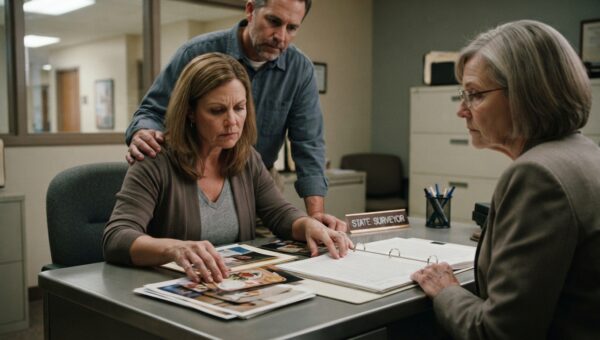
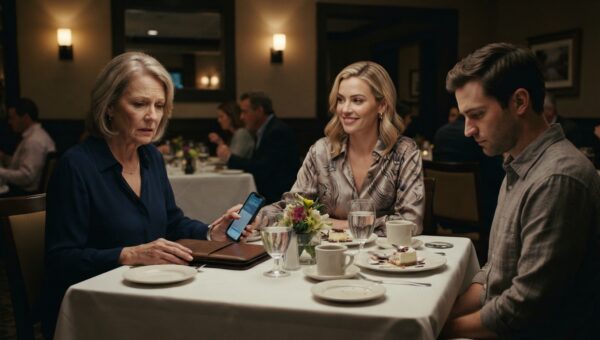
The steam was still coming off the rim of Mark’s coffee mug when Chloe laid out the terms of my existence. It was 7:15 on a Tuesday morning, the kind of gray October morning in central Iowa where the light doesn’t really break so much as it just gives up on being dark. I had my hand on the handle of the pantry door, reaching for the oat bran, when she cleared her throat in that sharp way she had whenever she wanted the room to stand at attention.
“Doreen,” Chloe said, and she didn’t look up from her tablet where she was scrolling through some kitchen remodel designs. “Mark and I sat down last night to go over the ledger for the property taxes and the new roof estimate. We think it’s only fair that you start contributing a standard monthly rent for the back room. Say, twelve hundred a month, starting November first.”
My hand stayed on the pantry door handle. I didn’t turn around right away because I wanted to make sure I had the words lined up right in my head. Twelve hundred dollars. That was more than my late husband Arthur and I used to pay on our first mortgage in Des Moines when we were twenty-two.
I turned around slowly and looked at my son. Mark was sitting right across from her at the island, his fingers hooked around his coffee mug, staring down at the dark liquid like it held the secrets of the universe.
He didn’t look up. He didn’t clear his throat. He just studied his coffee like he was waiting for the earth to swallow him whole.
“Rent,” I said, and the word felt strange on my tongue, dry and flat like a stale saltine. “You want rent for the spare bedroom where I keep my sewing machine and my old dresser?”
Chloe finally set the tablet down on the quartz counter with a little click. “It’s not just a spare bedroom anymore, Doreen. It’s living space. We’re carrying two mortgages between this house and the commercial property Mark is managing, and things are tight. You’ve been living here rent-free for two years since you sold the farm. It’s time to chip in. Or, honestly, if your savings are tied up in those CDs, you could just sign over a lump sum now. We’d take forty thousand and call it square.”
Forty thousand dollars. That was exactly what was left of the emergency money Arthur had insisted on keeping in a separate credit union account when we sold the acreage.
Arthur had always said a widow needed a wall around her so nobody could ever corner her in her own kitchen.
I looked at Mark again. His shoulder was hitched up near his ear, tight as a wire. “Mark,” I said softly. “Are you saying this too?”
Mark swallowed hard, his Adam’s apple bobbing once under his collar, but he didn’t raise his eyes. “Mom, Chloe’s just trying to balance the books,” he muttered, his voice barely louder than the hum of the refrigerator. “Things are a little complicated right now with the cash flow.”
Something inside my chest didn’t shatter or break. It just settled. It went cold and heavy and still, like a pond freezing over in November. I let go of the pantry door handle and folded my hands in the pockets of my cardigan.
“I see,” I said. “Well, let me get back to you on that.”
I didn’t argue. I didn’t raise my voice. I didn’t remind them that I had given them thirty thousand toward their down payment when they bought this oversized brick house in the suburbs three years ago, thinking it would be a landing pad for all of us. I just walked out of the kitchen and down the hall to my room, closing the door behind me with a quiet click.
The truth was, I hadn’t been sitting on my hands for the last two years. When Arthur passed away and I sold the old place in Boone County, I didn’t put every penny into their hands the way Chloe had hinted I should. I kept forty-eight thousand six hundred dollars tucked away in a high-yield account with my name alone on it. And three days before that morning breakfast conversation, I had been scrolling through internet listings on my little iPad when I saw a neat, single-story patio home down in Mesa, Arizona, listed for a price that made me blink twice. Two bedrooms, a tiny gravel yard with a lime tree, and a price tag of one hundred sixty-five thousand.
I had called the agent, a sharp-talking woman named Brenda, and put down a binder using my old farm sale earnings. By Thursday afternoon, before Chloe even finished her tablet scrolling, the wire transfer was ready.
I didn’t pack boxes right away. I took my time. I walked over to the closet and pulled down my winter coats, carrying them out to the trunk of my Buick one by one while Mark was down at the office and Chloe was at her yoga class. I didn’t leave a note on the counter. I didn’t slam the bedroom door. I just packed my clothes, my sewing machine, and the framed photograph of Arthur holding our grandson on the porch swing before he got sick.
By Saturday morning, the movers I hired from the local classifieds were loading my small dresser into a pod parked out on the street. Mark came out the front door just as the driver was locking up the rear latch. He looked stunned, his hair sticking up on one side like he had just rolled out of bed.
“Mom?” Mark said, jogging down the walkway in his stocking feet. “What is this? Where are your things going?”
I sat behind the steering wheel of my Buick, the engine idling with a steady, low hum that sounded like freedom. I rolled the window down two inches.
“I found a place where the rent is already paid for, Mark,” I told him, keeping my voice level and quiet. “You and Chloe won’t have to worry about my room anymore.”
“Wait, Mom, hold on,” Mark said, reaching out to touch the side mirror as if he could hold the car in place with his bare hand. “Chloe didn’t mean it like an eviction. She was just stressed about the quarterly taxes. We can talk about this inside over coffee.”
“No,” I said. “You had your coffee on Tuesday morning, Mark. That was enough.”
I put the car in reverse, watched him step back off the rubber mat, and drove away without looking in the rearview mirror once.
The next three weeks in Mesa were the quietest I had known since Arthur died. The air out there was dry and smelled faintly of creosote and warm dust whenever the desert wind picked up. I spent my mornings sitting on the small back patio with a ceramic mug of instant coffee, watching a little green hummingbird dart in and out of the blossoms on my neighbor’s pomegranate tree. I didn’t have to listen to Chloe sighing over kitchen tile prices or watch Mark hunch over his coffee cup like a whipped dog. I had my own front door key, my own furniture, and forty-two thousand dollars still sitting safely in the credit union.
Then came a Tuesday afternoon, exactly twenty-two days after I walked out of that suburban kitchen.
I was sitting at my little laminate kitchen table sewing a hem on a pair of slacks when my phone started vibrating against the wood. It buzzed once, twice, three times in rapid succession, a frantic stutter that made the metal thimble jump. I didn’t pick up until it went straight to voicemail.
A few minutes later, the notification light blinked red. I pressed play and put the speaker up to my ear.
“Mom? Mom, it’s Mark,” his voice came through the small speaker, tinny and ragged, with a breathless edge to it that I hadn’t heard since he was ten years old and lost his bike down by the creek. “Mom, please pick up if you’re there. We’re… look, the bank called this morning about the second mortgage. They’re starting foreclosure proceedings, and the commercial loan just defaulted because the partner pulled out. Chloe is… she’s packing a bag to go stay at her sister’s in Dubuque, and I don’t know what to do with the utilities. They’re shutting off the water tomorrow morning. Please, Mom. Just call me back. We need to talk about that savings account. We need your help.”
The voicemail cut off with a sharp electronic beep.
I sat there at the table for a long minute, looking out through the sliding glass door at the bright Arizona sun baking the gravel in the tiny backyard. My thumb traced the edge of the silver thimble Arthur had bought me in Dubuque forty years ago.
My phone rang again five minutes later. Caller ID showed Mark’s cell number, glowing bright against the small screen.
I reached out, pressed the red decline button, and then went into the settings and blocked the number. Not because I hated him, and not out of some petty desire to watch him burn. But because Arthur was right when he told me that a cushion was there to keep you from getting backed into a corner where you had to say yes to things that would destroy you.
I stood up, walked over to the kitchen counter, and poured myself a fresh cup of water from the filter pitcher. I carried it out to the back patio, sat down in the aluminum lawn chair, and watched the little green hummingbird hover right over the edge of the terracotta pot by my knee. The air was warm and still, and for the first time in my life, nobody was asking me to pay for the ground I was standing on.