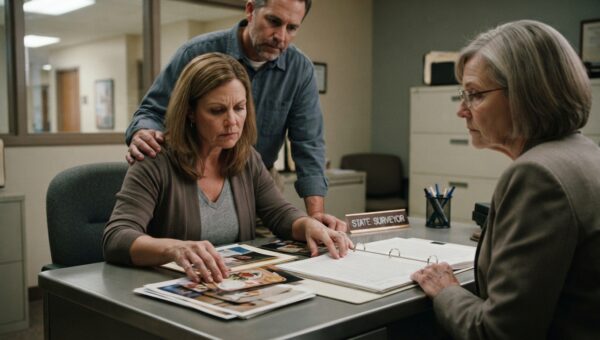
Forty-two thousand dollars was the exact figure missing from the quarterly ledger when I finally sat down at the kitchen table with our father’s bank statements spread out under the desk lamp. For months, David had sworn up and down that the seventy-hour work weeks were the only thing keeping our family afloat while Dad recovered from the double bypass surgery that almost took him.
We believed him because we had to. Dad was too weak to walk down the hall without leaning on the wall, and I was working double shifts at the machine shop down on Fourth Street just to cover my own mortgage. David was the smart one with the business degree, the one who took over the checkbook when the hospital bills started piling in like winter cordwood. He handled everything. Or at least that is what he told us every time we asked about the trust fund Dad set up after Mom passed away.
The sharp pop of Clara’s little wooden gift box hitting the restaurant floor killed every conversation at table four. We were at Luigi’s, celebrating what we thought was the final payment on the old delivery van, or at least that is what Clara had told us over the phone earlier that afternoon. She was eight months pregnant, glowing in that tired, beautiful way women do right before the baby comes, and she had spent three weeks sanding and painting that oak box herself.
When it slipped from her fingers, the silence that followed was heavy enough to drop an ox. David snarled, his voice cutting through the clatter of silverware from the kitchen. I work over seventy hours every week. Haven’t you taken enough already? He kicked the box with the toe of his wingtip shoe. The lid flew off. Tiny white baby shoes rolled out across the linoleum, followed by a thick stack of folded legal papers.
Clara just stood there, her hands frozen over her rounded belly, her face turning pale as she looked down at the tiny shoes lying near our table legs. Nobody moved for a second, and honestly that felt worse than shouting. I crossed the space between us, dropped to one knee, and reached out to scoop up the baby shoes before some waiter stepped on them. That is when I saw the red stamp bleeding through the corner of the top document.
PAID IN FULL. Except it was not a truck loan or a credit card receipt. It was a deed transfer notice for Dad’s second parcel of riverfront land, signed with a shaky hand that looked nothing like Dad’s normal cursive. Dad leaned forward, still thin and hollow-cheeked from the hospital stay, and stared at the paper in my hand. His breath hitched. I picked up another sheet, the bank header stark and unmistakable, showing an empty balance where thirty years of savings used to sit. I looked up at David, and the words just came out before I could bite them back. Son.
David’s face didn’t go white; it hardened into something ugly and mean. He snatched the papers out of my hand with a motion so fast it knocked the water glass over, sending a small tide across the red-checked tablecloth. You don’t know what you’re looking at, he snapped, his voice shaking just enough to give him away.
You’ve always been jealous that Dad trusted me with the books. Clara was crying now, quiet, gasping little breaths that made her shoulders jump. She kept whispering his name, asking what was in the box, asking why he was acting like that. David didn’t look at her once. He grabbed her elbow, hard enough that I saw her flinch, and muttered that we were leaving right now. Dad stood up then, slow and shaking like an old oak in a gale, and told David to sit back down. For thirty seconds, nobody breathed. Then David let go of Clara, grabbed his car keys off the table, and walked out without looking back at either of us.
The ride home in my truck was so quiet you could hear the gravel popping under the tread. Clara sat in the passenger seat with the tiny white baby shoes clutched in her lap like they were fragile glass, staring straight ahead at the tail lights on the highway. I didn’t push her to talk. I just dropped her and Dad off at the small house on Elm Street, where the porch light had burned out three weeks ago and nobody had bothered to change the bulb. Dad sat at the kitchen table while I went out to my truck and brought in the rest of the documents I had managed to gather from the floor before David could tear them all up. We didn’t turn on the overhead light. We just used the amber glow from the microwave clock, which read 9:14, to look at the numbers David had tried to hide.
The bank notices weren’t mistakes or simple overdrafts. They were formal liquidation records dated all the way back to the second week Dad was in the cardiac ward. While Dad was unconscious on a respirator, David had been moving money out of the primary medical trust and into a commercial account that didn’t exist three years ago. The signatures weren’t even good forgeries. They were rushed, the loops too sharp, the ink too fresh. Dad traced his finger over his own name on a mortgage release form, his hand trembling so hard the paper rattled against the formica. He didn’t cry. Dad was never a man for crying. He just looked at me with those tired, sunken eyes and said he trusted the wrong boy. That realization didn’t sound like anger; it sounded like a door clicking shut in an empty house.
By Thursday morning, I had the rest of the bank statements printed out from the branch downtown, thirty-two pages of itemized betrayal that laid out every bad stock play and high-interest loan David had taken out to cover his losses in some speculative land deal out near the county line. I drove straight to David’s office behind the lumber yard, my boots crunching on the wet gravel in the parking lot. He was sitting behind his desk with a cup of cold coffee, looking like he hadn’t slept since the night at Luigi’s. When I dropped the thick stack of ledgers onto his desk, the sound was heavy, like a sack of seed hitting a barn floor. He didn’t look up right away. He just stared at the brand logo on the top folder like it was going to save him.
You’re making a mountain out of a molehill, David said, his voice dropping into that smooth, reasonable tone he always used when he was trying to talk the bank teller out of a late fee. I was investing. The market dipped, sure, but the return was supposed to cover Dad’s care tenfold by the time the winter contracts cleared. It was temporary. It wasn’t temporary when you forged Dad’s name while he was on a breathing tube, I told him, and my own voice sounded lower and flatter than I expected. You took the land he worked forty years to clear, and you nearly took the roof over Clara’s head before that baby even has a crib to sleep in. David stood up then, his chair scraping loud against the concrete floor, but he didn’t have anything left to say. He knew the numbers didn’t lie, and he knew I wasn’t going to let him talk his way out of this one with a cup of coffee and a handshake.
Clara made her decision before I even got back from the lumber yard. When I pulled into the driveway on Elm Street, her small blue sedan was already packed to the roof with boxes and two suitcases resting on the hood. She wasn’t crying anymore. There was a hard, clear look in her eyes that told me she was done waiting for things to get better on their own. She looked at Dad, who was standing on the porch holding a roll of packing tape, and asked if she could stay in the spare room upstairs until the apartment downtown was ready. Dad didn’t just say yes; he walked down the steps, took the heavy suitcase from her hands without a word, and carried it inside like it was the most important thing he had touched in years. We called the county clerk’s office before noon and filed the emergency injunction to freeze every remaining asset in the family trust, locking David out of the accounts before he could move another nickel.
By the end of the following week, the lawyers had sorted out the worst of the paperwork, transferring what was left of the property titles back into Dad’s name with strict dual-signatory clauses that even a slick accountant couldn’t crack. David called three times on my cell phone, but I let every call go straight to voicemail, listening to his voice grow thinner and more frantic with each message until he finally stopped trying. We didn’t gloat, and we didn’t hold any family meetings to hash it out over Sunday pot roast. Some things are too broken for a meal to fix, and we all knew it. Clara moved into the sunlit two-bedroom apartment over on Jefferson Street, where the windows look out over the old brick courthouse and the morning light comes in clean and steady.
The nursery doesn’t look like much yet, just a fresh coat of pale yellow paint on the walls and a small rocking chair by the window. Yesterday afternoon, Dad and I carried the heavy oak pieces up the narrow stairs and set about putting together the furniture. We didn’t use any fancy tools, just a pair of pliers and a standard screwdriver, tightening the bolts until every joint held firm and true. It isn’t the fragile gift box from the restaurant floor, and it isn’t the kind of life David promised her when they first got married down at the county seat. It is a sturdy, permanent frame built to last through whatever comes next, and as I watched Dad test the corner of the crib with his palm to make sure it didn’t wobble, I knew we were finally going to be all right.