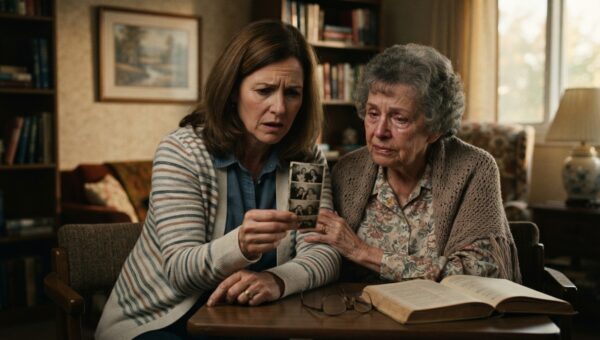
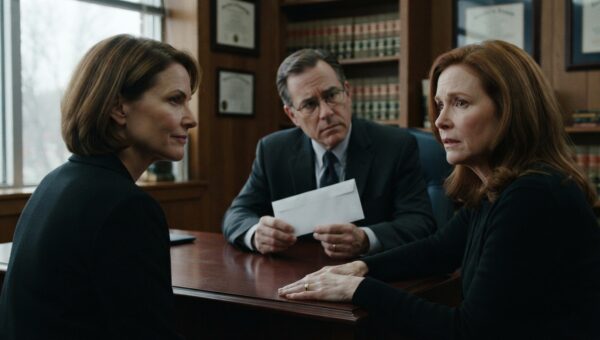
“We have to think about what is best for the family as a whole,” Mama said, and the way she smoothed the front of her apron told me she had rehearsed that exact sentence three times in the mirror before I hobbled into the kitchen.
My right knee still felt like someone had driven a rusted railroad spike straight through the joint.
Every step I took required three seconds of silent mental negotiation, leaning hard on an aluminum walker that screeched against the linoleum. Three weeks had passed since the orthopedic surgeon stitched me back together, three long weeks of lying in my old childhood bedroom staring at the popcorn ceiling while the world went on without me. I thought coming downstairs for Sunday dinner was a milestone. I thought it meant I was rejoining the land of the living.
Instead, I walked straight into an ambush that had been cooking while I was still full of hospital morphine.
The roast beef sat right there on Mama’s good ceramic platter, surrounded by gray canned gravy and overcooked carrots. Wesley was already cutting himself a massive slab, his elbows jutting out wide over the edge of the table the way they always did when he wanted to take up as much space as possible.
He was thirty-two years old and still wore gym shorts to Sunday dinner like he was twelve.
“Sit down before you fall over, Daria,” Mama said, her voice dripping with that sticky, weaponized sweetness she only used when she was about to take something from me.
I lowered myself into the wooden chair by the refrigerator, the one with the short leg that always needed a folded napkin tucked underneath. My breath came shallow because of the pain, but also because of the heavy, stagnant air in the room. It was the same air I had breathed through every holiday growing up, the kind that smelled faintly of lemon bleach and unsaid resentments.
Mama didn’t pass the potatoes. She didn’t ask how the physical therapy was going or whether the incision was still weeping under the bandages. She just reached over to her oversized leather handbag resting on the spare chair, unzipped it with a sharp metal rasp, and pulled out a long white envelope.
She slid it across the grain of the laminate table. It didn’t stop near my plate. It kept going until it bumped right against Wesley’s knuckles.
I knew what the thickness of that envelope meant before I even saw the corner of the bank routing number through the window. That was my personal injury settlement check. Forty-eight thousand dollars, deposited straight from the insurance adjuster after the delivery truck blew the red light on Route 4 and crushed my sedan. Forty-eight thousand dollars meant to cover six months of lost wages, follow-up surgeries, and the physical therapy I desperately needed to walk right again.
“Wesley still has a future,” Mama said. She looked right at me with those pale, unblinking eyes that had watched me raise myself through high school while she worked night shifts at the diner. “You are laid up here, Daria. You have your disability coming in, small as it is, and you don’t have rent to worry about while you are under my roof.
Wesley needs a stake for his new truck dealership partnership. It is only right.”
My tongue felt thick in my mouth, like a dry piece of flannel.
Every instinct in my body screamed at me to stand up, to smash my ceramic coffee mug against the wall, to scream until the neighbors called the county sheriff. I wanted to lunge across the table and rip that paper out of my brother’s doughy hands.
I stayed completely quiet.
I did not yell. I did not cry. I just looked from Mama’s smug, tight-lipped expression over to Wesley, who was already peeling the flap open with his thumb like he was unwrapping a birthday present he had specifically ordered.
“Thanks, Ma. Thanks, Daria,” Wesley mumbled, not even looking up as he tucked the check into his back pocket. “You were always a bit clumsy anyway. Probably wouldn’t have known what to do with this much cash at once.”
That was the moment the ground dropped out from under whatever was left of my family. I didn’t say a word. I just reached down slowly, my fingers brushing against the heavy black smartphone resting in the deep pocket of my zip-up hoodie. My thumb felt along the side of the case, finding the raised edge of the power button, clicking it three times to bring up the voice recorder app that had been running silently in my pocket for the last twenty minutes.
It was still recording. It had captured every single word.
The next fourteen days were the longest stretch of my entire life.
Mama thought my silence meant submission. She thought the surgery had broken my spine in more ways than one. Every afternoon, she would shuffle into my bedroom with a tray of weak tea and stale saltines, chatting in that high, bird-like voice she reserved for people she pitied.
“You are looking so confused today, sweetheart,” she would say while setting the tray down on my nightstand. “Are you sure you remember what day it is? It is Thursday. It is always Thursday when the physical therapist doesn’t come.”
I would just stare out the window at the overgrown hydrangea bushes in the yard and nod slowly, letting my mouth hang open just a fraction to play the part she had written for me.
“I worry about your judgment, Daria,” she said on Tuesday of the second week, leaning over to fluff my pillows with hands that smelled of lavender soap and old paper. “You always were so flighty. After the wreck, it is just… well, Dr. Evans agrees with me. You need someone to manage your affairs. You can’t even remember to take your afternoon pills without me standing right here.”
I didn’t tell her that Dr. Evans had actually told me my knee was healing right on schedule during my last checkup on Friday. I didn’t tell her that I kept my pills in a locked metal box under the bed because I noticed the hydrocodone count was dropping by two every time Wesley came over to raid the pantry.
Instead, I just let her talk. I recorded every visit. I left my phone tucked under the corner of the mattress on voice memo whenever I went down to the kitchen for water, capturing Mama on the landline phone in the hallway talking to her lawyer friend down at the county seat.
“She is entirely non-compos mentis,” Mama’s voice crackled through the tiny speaker when I reviewed the files later that night with my headphones on. “She doesn’t even know who the president is half the time. She cries over old magazines. We need the emergency conservatorship papers filed before she signs away what is left of her settlement on foolish medical gadgets.”
The sheer audacity of it took my breath away. She wasn’t just stealing my settlement check for Wesley’s sham truck business; she was locking down my legal identity so she could control every insurance payout, every disability check, and eventually force me into that miserable state-funded nursing home off the highway where the linoleum always smelled like disinfectant and despair.
On the fifteenth day after that Sunday dinner, the blue sedan from the county process server pulled up into our gravel drive.
I was sitting on the front porch with my leg propped up on a plastic lawn chair when the young man in the faded windbreaker walked up the steps with a thick manila envelope tucked under his arm. He looked tired, the kind of tired that comes from driving back roads all morning in an air-conditionless Ford Taurus.
“Daria Miller?” he asked, holding out a clipboard.
“That’s me,” I said, taking the pen from his calloused hand.
“You’ve been served. Court date is set for next Tuesday at ten in the probate division. Sign right there on the line.”
He handed me the envelope and walked back down to his car without another word. I didn’t rush. I sat there in the afternoon heat, listening to the cicadas buzzing in the oak trees, and slid my thumb under the heavy brass clasp of the envelope.
Inside were twelve pages of court-stamped petitions, affidavits, and emergency motions. But what caught my eye immediately were the four specific statutory declarations signed by my mother under penalty of perjury.
Lie number one: That I had suffered severe, permanent cognitive decline following the automobile accident and could no longer recognize immediate family members.
Lie number two: That I was completely dependent on round-the-clock nursing care and unable to feed, bathe, or clothe myself without assistance.
Lie number three: That I had expressed a desire to gift my personal injury settlement funds to my brother Wesley voluntarily to support his business enterprise.
Lie number four: That I was a danger to myself and prone to violent outbursts when left unattended for more than an hour.
I turned the pages slowly, feeling a cold, steady anger replace the pain in my knee. They hadn’t just built a narrative; they had constructed a complete cage out of ink and perjury, signed and notarized by a small-town attorney who had known Mama since they went to high school together back in seventy-four.
They never knew about the cloud backup.
That evening, while Mama and Wesley were out at the local diner celebrating what they assumed was an uncontested legal victory over a broken woman, I sat at the laminate kitchen table with my laptop open. My fingers flew across the keyboard. I didn’t use any fancy legal jargon. I just let the evidence speak for itself.
I had thirty-four distinct audio files, each one stamped with the exact date, time, and GPS coordinates from my phone’s metadata. I had the bank routing transfer slips showing where Wesley had deposited the $48,000 check into a commercial account bearing his own name and his girlfriend’s LLC. I had the text messages Mama sent to her lawyer friend bragging about how easy it was to “manage” me while I was stuck in a leg brace.
I organized them into a clean, digital folder labeled *Evidence of Fraud and Perjury – Estate of Daria Miller*. Then I exported the entire archive onto three separate thumb drives and uploaded the master files straight to the probate court clerk’s secure electronic portal, copying the judge’s clerk and the state adult protective services liaison directly on the transmittal notice.
I didn’t call Mama to argue. I didn’t warn Wesley. I just waited for Tuesday morning.
The probate courtroom on the second floor of the county courthouse smelled like old floor wax and damp wool carpets. The walnut paneling was peeling near the baseboards, and the ceiling fan wobbled lazily above the judge’s high oak bench, making a rhythmic clicking sound that matched the thumping of my heart.
Mama and Wesley walked in twenty minutes late. Wesley was wearing a cheap sports coat that looked like it had been pulled out of the back of a thrift store rack, smelling strongly of stale cologne and cigarette smoke. Mama wore her church pearls and a navy blue dress that made her look like an extra in a courtroom drama.
They didn’t even look at me sitting alone in the second row with my cane leaning against my knee. They sat down at the petitioner’s table, whispering behind their hands and smiling like they were attending a wedding where they were going to collect all the gifts.
Judge Harrison entered through the side door five minutes later, his black robe swishing against the floor. He looked tired, peering over his half-moon reading glasses at the stack of papers in front of him.
“Case number 24-PR-882, In re Guardianship of Daria Miller,” the bailiff droned, his voice echoing off the high plaster walls.
Mama’s lawyer, a man named Mr. Vance who had gray hair like a cotton ball and teeth that were too white, stood up smoothing his tie. “Your Honor, we are here today to petition for an emergency permanent guardianship on behalf of the mother, Mrs. Evelyn Miller. As detailed in our affidavits, the ward is entirely incapable of managing her financial affairs or her medical decisions following a severe traumatic accident. Her cognitive faculties have, “
“Mr. Vance,” Judge Harrison interrupted, his voice dry as autumn leaves. He didn’t look up from the tablet screen resting on his desk. “Did you personally verify the medical claims made in paragraph four of your filing?”
Mr. Vance blinked, his confident smile wavering just a fraction. “Well, Your Honor, we relied upon the sworn statements of the mother and the preliminary medical intake notes from, “
“You relied on hearsay and outright fabrication,” Judge Harrison said, his tone dropping an octave. He tapped his finger against the glass of his screen. “I have just spent the last hour reviewing the evidentiary submission uploaded by the respondent at 4:14 AM yesterday morning. It includes thirty-four time-stamped audio recordings, certified bank transfer ledgers from First National, and written communications that directly contradict every single material fact in your petition.”
The courtroom went dead silent. You could hear the old fan clicking overhead, loud as a grandfather clock.
Mama’s head whipped around so fast her pearls clicked against her collarbone. She stared at me, her mouth parting in a small, horrified O.
“Your Honor, I object!” Mr. Vance stammered, grabbing the edge of the table. “Those recordings were obtained without, “
“Without your clients’ knowledge, yes,” Judge Harrison said sharply, cutting him off. “However, in matters involving alleged cognitive incapacity where the ward herself is recording her own home environment to protect her civil liberties, the rules regarding party admissions and prevention of fraud apply with full force. Furthermore, Mr. Vance, your client swore under penalty of perjury that Miss Miller could not recognize family members or manage her own affairs. Yet on track twelve, recorded last Thursday afternoon, Mrs. Evelyn Miller is distinctly heard coaching her daughter to sign over insurance settlements while explicitly discussing how to divide the remaining assets between her brother’s failing business ventures.”
Wesley went completely gray in the face. He leaned over and whispered something frantic to Mama, but she didn’t hear him. She was staring at me now with pure, unadulterated venom, her eyes bulging behind her spectacles.
“The petition for guardianship is dismissed with prejudice,” Judge Harrison said, striking his gavel once. The sharp wooden crack made me flinch, but it felt like the sweetest sound I had ever heard. “Furthermore, based on the documented financial diversion of forty-eight thousand dollars in personal injury settlement funds without the respondent’s informed consent, this court is issuing an immediate emergency injunction freezing the account ending in 4482 and ordering the full restitution of all transferred funds back to Miss Miller’s individual account within forty-eight hours, failing which contempt proceedings will commence against Wesley Miller.”
Mr. Vance sat down heavily, burying his face in his hands.
Mama half-rose from her chair, her hands trembling as she pointed a manicured finger straight at me across the aisle. “You ungrateful little viper,” she hissed, her voice cracking in the quiet room. “After everything I did for you, after I let you sleep under my roof, “
“Order in the court,” the bailiff warned, stepping forward.
Judge Harrison didn’t even bother looking up again. “Mrs. Miller, if you or your son speak another word in this courtroom without your attorney present, I will hold you both in direct contempt. This hearing is adjourned.”
The walk out of the courthouse was the first time in four weeks I didn’t need to lean quite so hard on my cane.
The afternoon sun hit the concrete steps of the county seat, warm and blinding after the dim chill of the courtroom. Mama and Wesley hurried down the walkway ahead of me, their shoulders hunched, avoiding the eyes of the couple smoking by the iron handrail. Wesley was talking fast, gesturing wildly with his hands, while Mama walked with her chin tucked into her chest, looking older and smaller than she had ever looked in my life.
They didn’t offer me a ride back. They didn’t look back once.
When I finally got back to the house, my house, the one left to me by my grandfather before Mama ever moved in, I didn’t go inside right away. I stood on the top step of the porch, looking out over the overgrown hydrangea bushes.
The front door clicked shut behind me as I turned the deadbolt for the very last time. Inside, the quiet was heavy, but it wasn’t the suffocating silence of an ambush anymore. It was just peace.
I walked over to the kitchen table, pulled my phone out of my pocket, and tapped the screen once to stop the voice recorder that had been running since we left the driveway.
I laid the phone flat on the laminate surface, right where the short leg needed a napkin, and listened to the little red dot disappear.