The heavy card stock sat right on top of my mail pile like an expensive little threat. It had been exactly three years since Julian packed his bags, and exactly one year since the rumor mill in our county settled down enough for me to walk through the grocery store without people lowering their voices behind the canned goods. I picked up the cream envelope with two fingers, noticing right away the careful, looping calligraphy of Brenda’s handwriting.
Brenda, who had spent ten years sharing my coffee, holding my coat, and listening to me cry over negative pregnancy tests in the damp autumn of 2019. Brenda, who eventually decided my empty nursery was just an invitation to step in and fill it herself.
I slit the top open with a butter knife because I didn’t want to tear the paper. Inside was a thick card embossed with pale gold ducks and a handwritten note scrawled across the bottom margin in purple ink. Come celebrate our little mir.. Sorry you couldn’t give him a son. I read those fourteen words three times before I set the card down on the laminate table. It rested right beside two manila folders I had picked up from the county records office and the lab downtown just forty-eight hours earlier. The first folder contained a certified copy of Julian’s childhood medical files from St. Jude’s.
The second held a three-page genetic paternity report stamped with a notary seal. I looked at Brenda’s smug little note, then at the medical charts, and I didn’t feel a single drop of anger. I just felt a cold, clean quiet settle into my chest.
People in our town still remembered how Julian left. He had packed his Dodge Ram in the middle of a Tuesday afternoon while I was at my shift at the clinic, leaving a yellow legal pad on the kitchen island. He wrote that a man needed a legacy, that a house with only a dog and two empty bedrooms wasn’t a home, and that Brenda understood his need for a proper family. For months, the consensus at the diner was that I was the broken clock that couldn’t tick. Brenda played the part of the sympathetic savior to perfection, rubbing her growing belly at the hardware store counter and letting everyone murmur about how nature finds a way when the right woman comes along.
Julian walked around town with his chest puffed out like he had invented fatherhood, accepting handshakes from men who didn’t know any better.
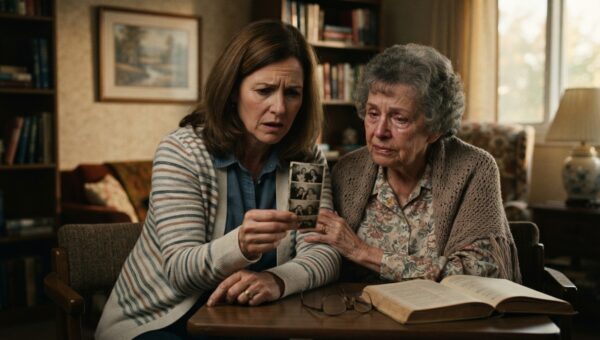
The first crack in their little fairy tale didn’t come from bitterness or stalking. It came from an insurance audit and a dusty box of family papers left behind in my attic when Julian’s mother passed away two winters ago. I had been clearing out the back eaves, tossing old tax forms into Hefty bags, when I found a manila envelope labeled with Julian’s birth name and a hospital name three counties over. I didn’t open it that afternoon. I tossed it into a trunk and forgot about it until last month, when a routine medical questionnaire for my own health insurance asked for a detailed family history of congenital conditions. I dug the old box out, slit open Julian’s childhood file, and found the pediatric endocrinologist’s report from 1984.
The words in that forty-year-old report were medical, dry, and absolute. A severe bilateral mumps orchitis complicated by childhood trauma, resulting in permanent, irreversible azoospermia. Sterile from the age of seven. I sat on the attic floor for an hour with that yellowed paper in my hand, listening to the mice scuttling behind the insulation. Julian hadn’t just forgotten to tell me about his medical history; he had lived his entire adult life in a heavy, defensive denial, blaming every negative test on my body while his own chart sat gathering dust in a box he assumed I would never look inside. He was entirely, biologically incapable of fathering a child. Not with me, not with Brenda, not with anyone on this earth.
When the realization finally clicked, I didn’t call a lawyer to scream. I called a private genetic registry service that handled legal identity disputes, using a discarded coffee mug Julian left behind on my porch after a property dispute six months prior, paired with a sample I legally obtained through a court-ordered estate inquiry involving his younger brother, Marcus. Marcus, the quiet, miserable brother who worked forty hours a week at the grain elevator and spent every Sunday afternoon sitting in his truck outside the bowling alley staring at nothing. The second DNA report arrived in my mailbox on Tuesday morning. The probability of paternity for the child Brenda was carrying wasn’t Julian. The genetic markers matched Marcus down to the nineteenth decimal place.
The kitchen was quiet except for the hum of the refrigerator. I picked up Brenda’s baby shower invitation again and traced the gold duck with my thumb. She thought she had won. She thought she had secured the house, the truck, the social standing, and Julian’s weekly paycheck by anchoring him with a child he was too proud and too stupid to question. She didn’t know that Marcus had been drinking behind the grain silos every Friday night for eight months, terrified of what would happen when the baby came out looking nothing like Julian’s side of the family. She didn’t know that I had the exact blueprint of their entire pathetic deception sitting right here under a coffee mug.
Three days later, I drove my sedan out to the Oak Creek Country Club. It was a tacky place with green indoor-outdoor carpeting around the buffet tables and white plastic lattice arches rented from the party store in town. The parking lot was full of pickup trucks and SUVs with local dealership stickers. I parked near the back by the dumpster, turned off the ignition, and sat there for a minute watching the guests carry pastel gift bags through the double doors. I wore my black linen dress, the simple one I bought when my mother passed, with a silver chain around my neck. I looked like a woman coming to pay her respects at a boring funeral, which, as it turned out, was fairly accurate.
Inside, the room smelled like warm ham, cheap chardonnay, and too many scented candles burning near the fruit punch bowl. Brenda was sitting at the head table in a pale yellow dress that cost more than my first set of tires, her hand resting ostentatiously on a belly that looked about eight months along. Julian was standing right behind her chair with his hand on her shoulder, looking every bit the proud patriarch of a dynasty built entirely on sand. When I walked through the door, the ambient noise in the room dropped down about three notches. People stopped chewing their ham sandwiches. Heads turned like we were back in church and someone’s dog had wandered up the center aisle.
Brenda spotted me before Julian did. Her smile didn’t drop; it just stretched a little tighter across her teeth like dry leather. She probably thought I had finally snapped, that I came here to throw a glass of punch or make a scene in front of the county commissioner’s wife. She tilted her chin up, patting her hair with a manicured hand. “Well,” she said across the room, her voice carrying that sweet, poison-tipped cadence everyone in town knew too well. “Look who decided to crawl out from under a rock. Did you bring a gift, or just your usual sour face?”
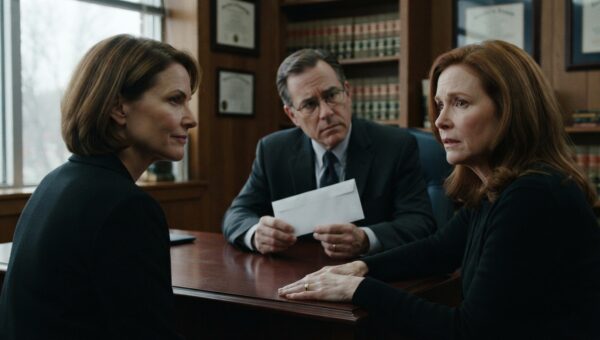
A few people near the bar laughed, a nervous, jagged sound that died out almost immediately when I didn’t blink. I didn’t stop walking until I reached the edge of the head table. I reached into my black leather tote bag, pulled out the two manila folders, and laid them right down on the damask tablecloth beside a silver bowl full of mints. The plastic seal on the lab report was clean and unbroken. Julian frowned, taking a half-step back from Brenda’s chair. “What is this nonsense, Clara?” he asked, his voice dropping into that loud, defensive baritone he used whenever someone asked him to pay for a repair he messed up. “You can’t just barge in here. Get out.”
I didn’t raise my voice. I didn’t need to. The room was so still you could hear the ice melting in the punch bowl. “I wouldn’t miss this for the world, Julian,” I said, keeping my hands flat on the table. “Brenda sent me a very specific invitation. She said to come celebrate their little miracle. And she was right. Modern science is just full of miracles these days.”
Julian reached out and slapped his hand down over the top folder, his face turning the color of a bruised plum. “I’m calling the sheriff,” he muttered, his fingers shaking against the cardboard. “You’re unstable. Everyone here knows you’re just bitter because you couldn’t keep a home together.”
“That’s the funny thing about homes, Julian,” I said, looking right past him toward the side door where Marcus was standing half-hidden behind a fake ficus tree in a green plastic pot. Marcus looked like he hadn’t slept since November. His shoulders were jammed up to his ears, and his eyes were fixed on the floorboards like he wanted the wood to open up and swallow him whole. “Houses only stand if the foundation isn’t built on a lie. Why don’t you ask your brother about miracles?”
Brenda finally stood up, her yellow dress straining across her waist. “Get her out of here,” she hissed at Julian, her face losing all its color under the amber chandelier lights. “She’s crazy. She’s making things up.”
“I’m not making anything up, Brenda,” I said, tapping my fingernail against the corner of the St. Jude’s medical file. “This is Julian’s pediatric endocrinology record from 1984. It turns out he’s been completely sterile since he had the mumps at age seven. The doctor noted it three separate times. He couldn’t have fathered a child if his life depended on it. Not with me, and certainly not with you.”
The silence in the community room was absolute. Someone down by the gift table dropped a small glass votive, and the sharp little *clink* sounded like a pistol shot. Julian didn’t look at me. He slowly turned his head to look down at Brenda, his jaw working like he was chewing on gravel. “What is she talking about?” he whispered, his voice cracking on the last word. “Brenda? What is she talking about?”
Brenda opened her mouth, but no sound came out. She just backed up until the back of her knees hit the folding chair, her hands flying up to cover her throat.
I didn’t stop there. I slid the second folder across the table, right under Julian’s nose. “And that second file is the DNA paternity profile for the baby you’re carrying in that expensive dress, Brenda. It seems the biological material didn’t come from the man whose name is on the mortgage. It came from the man standing by the fake tree who looks like he’s about to throw up his breakfast.”
Marcus didn’t wait for anyone to look at him. He shoved his hands deep into the pockets of his flannel shirt, turned on his heel, and walked straight out the side fire exit without looking back once. The heavy metal door slammed behind him with a dull thud that rattled the plastic lattice arches.
Julian stared down at the two folders, his hands hovering over the paper like he was afraid they were going to bite him. All the arrogant bluster he had carried around town for three years simply evaporated into the stale air of the country club. He looked older, smaller, and suddenly very foolish standing there in his pleated khakis with half the county watching every twitch of his face. Brenda slumped down into her chair, her hands over her face, while her mother started crying into a paper napkin three seats down.
I didn’t stay for the screaming match. I didn’t need to hear Julian demand answers he wasn’t equipped to handle, and I certainly didn’t need to watch Brenda try to spin a new story out of the wreckage. I just turned around, picked up my tote bag, and walked back out through the double doors into the bright afternoon sun.
The parking lot was quiet and empty except for my sedan and a couple of delivery vans parked by the kitchen entrance. I walked over to the public green recycling bin sitting by the side of the brick wall, opened the heavy plastic lid, and dropped the remaining duplicate copies of the lab reports right inside where they belonged. I got into my car, rolled both front windows all the way down so the cool March breeze could hit my face, and turned the key in the ignition. As I pulled out onto the highway and left the country club behind in my rear-view mirror, I didn’t look back once.