The green ledger sat right beside my water pitcher on the laminate table, turned open to the page where I had been keeping track of the tiny white pills the night nurse left in a paper cup. For three years, Cedarbrook assisted living had felt like a slow fading, a place where days blurred together until I could not tell a Tuesday from a Thursday.
My son Denver used to visit twice a year, parking his old Ford by the maple tree outside, staying for twenty minutes before making some excuse about traffic on the interstate. I never blamed him much. I was just an old woman taking up space in a room that smelled faintly of lemon bleach and old floor wax. But then the routine cracked.
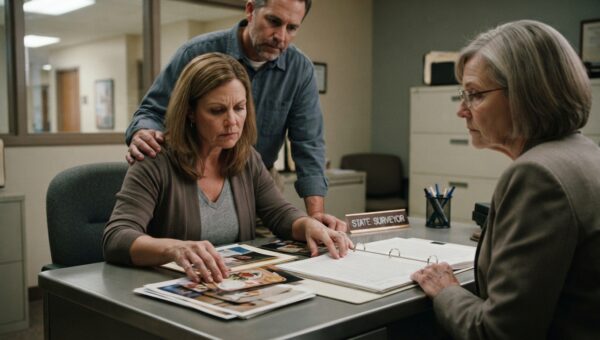
It started on a Tuesday morning when the breakfast tray arrived twenty minutes late, the eggs cold and gray against the ceramic. Denver walked through my door at 8:14 in the morning, carrying a worn leather briefcase and wearing a jacket he had not zipped all the way up against the October chill. He did not kiss my cheek the way he usually did. Instead, he pulled the metal folding chair right up beside my mattress, opened his briefcase, and laid out three photocopies of my bank statements from First Ozark State.
I stared at the figures, my throat tightening. My balance was sitting at $86,214.10. It should have been $86,400 even, minus the monthly room fee.
“Who signed for this withdrawal on the fourth, Mama?” Denver asked, his voice shaking just enough for me to notice the tremor in his thumb.
“I didn’t sign anything,” I said, my fingers gripping the edge of my flannel blanket. “I haven’t left this floor in a week.”
He didn’t answer me right away. He stood up, walked to the hallway door, and checked the corridor to make sure the afternoon shift change was still keeping the nurses busy at the main desk. Then he pulled a second set of papers from his leather bag, this one covered in neat rows of blue ink where he had copied down every single entry from the binder the charge nurse kept behind the glass partition. He had spent the last four days talking to the front desk clerks while I sat in the sunroom, acting like a confused old mother just happy to have her boy around.
But Denver wasn’t visiting out of guilt anymore. He looked angry, the kind of cold, quiet angry I hadn’t seen in him since his father passed away.
The trouble really began about six months ago when the new facility director, a man named Mr. Vance with slicked-back hair and a sharp gray suit, took over Cedarbrook. Almost immediately, the afternoon nurse started bringing me an extra white pill with my evening tea. She called it a relaxant for my joints. I remember telling her I didn’t need it, but she just smiled that tight, professional smile they teach in administration courses and told me the doctor ordered it for my own good.
“Drink it down, Martha,” she had said, pressing the paper cup into my palm. “You’ll sleep better.”
And I did sleep. I slept so hard that by morning my tongue felt like cotton and my thoughts moved through molasses.
I kept forgetting where I put my reading glasses, or whether I had already eaten my oatmeal. I thought it was just old age catching up to me all at once, the way it does when you cross eighty. But then a young nurse’s aide named Chloe quit her job on a Friday night without giving notice, and everything changed.
Denver had received an envelope in his apartment mailbox three weeks ago, postmarked from the county seat. Inside was a single sheet of paper with a handwritten note and a list of internal logs from Cedarbrook’s pharmacy dispensary. The note was brief.
“Your mother isn’t losing her mind,” Chloe had written in hurried cursive. “They’re pushing the evening sedative dosage past the legal limit to keep the third-floor residents docile while Vance moves power of attorney through the regional office. Check her bank logs. They’re draining the leftover estate accounts.”
Denver didn’t call me when he got that letter. He didn’t want to panic me over the phone where the facility staff might overhear through the room intercoms. Instead, he spent ten days driving down to the county courthouse, pulling public records, hiring an independent elder law attorney in Springfield, and arranging for a licensed physician to meet him at a private clinic across the state line. He had been quietly building a wall of proof while I sat in my room, swallowing pills I didn’t need and watching the shadows crawl across the carpet.
Last Thursday, the tension in the room finally broke all the way. The afternoon sun was cutting a sharp orange line across the foot of my bed, and the hallway outside was dead quiet except for the squeak of a linen cart passing by. Denver sat on the edge of my mattress, right where the springs sagged a little from thirty years of use, and he took my hand in his. His palm was warm and rough, nothing like the soft, cold hands of the aides who came in to check my pulse.
“Mama,” he said, and his voice dropped so low I had to lean forward to catch the words. “I pulled your records. They’ve been double-dosing you to keep you quiet. I rented a truck. I’m taking you.”
I just stared at him, my brain struggling to line up the pieces. “A truck?” I whispered.
“A sixteen-foot box truck,” he said, giving my hand a hard squeeze. “Parked behind the maintenance shed. We have forty minutes before the night shift supervisor does her rounds. Get your coat.”
For a second, I looked at the little plastic cup on my bedside table, still holding the evening pill the new nurse had left five minutes before Denver walked in. The realization hit me like cold well water. I wasn’t losing my memory. I was being chemically locked inside my own head so I wouldn’t notice them stealing the last bit of independence I had left. The fear I had been carrying for months evaporated all at once, replaced by a hot, fierce anger that straightened my spine.
“I’m not leaving my good winter coat in the closet,” I said, sliding my feet off the bed and onto the cold linoleum.
Denver let out a short, sharp breath that sounded almost like a laugh. “Leave the coat, Mama. I bought you a new one.”
We didn’t use the front lobby. Denver had timed the shift change down to the minute. We slipped down the service stairwell behind the laundry room, my tennis shoes making no sound on the concrete steps. The air in the hallway smelled of damp towels and industrial floor soap. When we pushed through the heavy metal exit door, the cool October wind hit my face like a slap, sharp and clean and real. The rented truck sat idling near the loading dock, its diesel engine rumbling softly in the twilight.
Denver opened the back roll-up door, hoisted my small suitcase inside, and offered me his arm the way his father used to when we walked down to the county fair. I climbed up into the passenger seat of that big white truck, smelling the exhaust and the faint scent of pine air freshener hanging from the rearview mirror. As we rolled past the brick pillars of Cedarbrook’s entrance gate, the front desk receptionist looked out from her window, but she was busy scrolling on her phone and didn’t even turn her head as we disappeared down the highway.
We drove north for an hour through the dark Ozark hills, past pastures where black cattle stood huddled against the fence lines under a rising moon. Denver didn’t turn on the radio. He just kept both hands on the wheel, his knuckles white against the black rubber. We pulled into the driveway of a small, white-sided farmhouse outside of Marshfield at exactly 7:15 in the evening. The porch light was on, casting a yellow glow over a wooden rocking chair and a clean welcome mat.
Inside, the house smelled of brewed coffee and cedar shavings instead of bleach and old carpet. An independent doctor Denver had retained from Springfield was waiting for us in the kitchen, sitting at a round oak table with a fresh clipboard and a blood pressure cuff.
“Welcome home, Mrs. Miller,” the doctor said, standing up to shake my hand. “Let’s get that IV line started and flush those sedatives out of your system. You’re going to have a clear head by morning.”
By Friday afternoon, the legal papers were already filed with the state department of health and the county prosecutor’s office. Our attorney, a sharp-eyed woman named Mrs. Gable who didn’t take any nonsense, used Denver’s meticulously copied medication charts and the leaked internal emails to freeze Cedarbrook’s financial access to every resident account under Vance’s administration. State inspectors arrived at the facility unannounced before the weekend was over, shutting down the third-floor dispensary and launching a full criminal investigation into the management team. Vance was suspended by Monday evening, his desk cleaned out by two state troopers while the local news crews stood outside the gates with their cameras rolling.
The state medical board later confirmed what Chloe the whistleblower had risked her license to tell us: the facility had been systematically over-sedating more than twenty residents to manipulate power-of-attorney transfers and drain their remaining life savings before families could intervene. My $86,214.10 was recovered in full, transferred back into a secure account managed jointly by Denver and myself under strict legal oversight.
Now, three weeks after we left that place behind, the fog in my mind has finally cleared away. I sit on the sunlit front porch every morning just as the mist is lifting off the creek in the valley below. A steaming ceramic mug of real, unmedicated tea rests on the small wooden table beside my rocking chair, the steam rising slow and straight into the quiet air. I don’t have a pill chart to check anymore. I just watch the redbirds darting through the oak trees at the edge of the yard, listening to the gravel crunch under my son’s boots as he walks out from the barn to check if I need anything else. I don’t look back at Cedarbrook, and I don’t need to. The gate is open, and the road ahead of us belongs to the living.