PART1
The blood hit the kitchen tile before I fully understood my father had actually slapped me.
My daughter, Chloe, still wearing her hospital wristband from the ER, screamed like the whole house had caught fire.
‘Mom!’ I pushed myself up on one elbow. The room swam. My cheek burned, split open where my father’s wedding ring had caught my skin.
Across from me, my mother stood with her arms crossed over her chest, looking down at our duffel bags and plastic bins piled on the concrete porch outside the screen door.
‘Pay her rent or get out,’ my mother said, her voice completely flat, like she was talking about the weather. ‘Your father and I didn’t work forty years to turn our retirement home into a charity ward for irresponsible adults.’
‘She was vomiting blood for six hours, Mom,’ I managed, tasting copper in my mouth. ‘The doctor said it was an ulcer flare from stress. I missed two shifts at the clinic. I just need a week to catch up on the back rent for my apartment, just until Friday—’
‘Excuses,’ my father barked, stepping into the doorway. He was sixty-eight, with thick gray hair and the heavy shoulders of a man who spent his life managing a commercial warehouse.
He pointed a thick finger at Chloe, who was clutching my sleeve so hard her knuckles were white. ‘You chose that deadbeat mechanic. You chose to have a kid you couldn’t afford. We told you when you signed the lease on that duplex that we wouldn’t bail you out again. The locks are already changed at your place anyway. The landlord called us when the direct deposit bounced yesterday.’
I stared at him, the room tilting slightly. I hadn’t known about the deposit bouncing. I had checked my banking app at the hospital waiting room, but the signal had been dead.
‘You called my landlord?’ I whispered.
‘Of course we did,’ my mother said, turning back into the kitchen and letting the screen door swing shut. ‘We co-signed the initial guarantee three years ago when you left your husband. We have a right to know when you are defaulting on obligations that could damage our credit.’
My father didn’t move. He stood in the doorway, blocking the path back inside. He looked down at me with cold, disappointed eyes, the same look he had given me when I brought home a C on a math test in middle school.
‘Maybe now you’ll learn to manage your responsibilities,’ he said.
Then he reached out, shoved our largest plastic bin off the porch so the lid cracked and half our winter clothes spilled into the wet grass, and latched the screen door.
We sat on those bins for two hours while the autumn sun went down. Chloe stopped crying after a while and just leaned her head against my shoulder, shivering in her thin pink hoodie. My cheek throbbed, swelling up high enough that I couldn’t quite close my jaw right.
I didn’t call friends. I didn’t have many left after three years of working forty hours a week at the medical clinic while raising Chloe alone, constantly apologizing for not having time or money to get coffee.
My brother, David, lived two hours north, but when I called his voicemail three times, he didn’t pick up. He had his own life, his own mortgage, his own kids. He stayed out of the line of fire between me and our parents.
At eight o’clock, a beat-up gray Ford Ranger pulled into the gravel drive.
It was Marcus, the mechanic my parents despised. He wasn’t a deadbeat; he was a guy who worked fifty hours a week at an independent transmission shop and had spent his Saturdays helping me fix the alternator on my ten-year-old Sedan. He took one look at my swollen face, the pile of plastic bins in the wet grass, and Chloe asleep with her head in my lap.
Marcus didn’t yell. He didn’t pound on my parents’ front door. He just got out of his truck, walked over, and knelt down in the gravel.
‘Can you stand?’ he asked quietly.
‘My face hurts,’ I said, and for the first time since the hospital, my voice cracked.
‘I know,’ he said, his hands gentle as he helped me lift the heavy plastic bin. ‘We are going to my place. It’s small, and the couch is lumpy, but the locks work and nobody is going to hit you there.’
As we loaded the bins into the truck bed, I looked up at the lighted kitchen window of my childhood home. My mother silhouette moved past the blinds, wiping down the counters. They had won. They had cast us out into the cold because we were inconvenient, because poverty was an embarrassment to them, because they believed their money and their rules gave them the right to break us.
They thought that would be the end of it. They thought I was too tired, too broke, and too broken down to fight back.
They had no idea what was sitting in the bottom of the black waterproof briefcase in my trunk.
PART 2
The next three days were a blur of cold tea, frozen ibuprofen, and the steady hum of Marcus’s box fan rattling in the corner of his small living room. Chloe slept on his spare cot, her breathing finally deep and even.
On Wednesday morning, my cheek had turned a bruised, ugly shade of purple and yellow, but the fog in my head had cleared. I sat at Marcus’s small wooden kitchen table with a mug of black coffee and the black waterproof briefcase I had grabbed from my apartment floor right before the landlord’s eviction notice was taped to the door.
My parents thought I was just their clumsy, dependent daughter who couldn’t keep her finances straight. They forgot that for four years, right after college, before I got married and moved away, I had worked as the office manager and head bookkeeper for my father’s commercial warehouse business.
When my father had his first minor heart scare five years ago, he had asked me to help him organize his personal accounts, his estate documents, and the commercial property titles so ‘everything was clean for David and Sarah.’ He trusted me with the passwords because I was quiet, because I was efficient, and because he never imagined I would look at anything other than what he pointed me toward.
I opened the briefcase. Inside was my old laptop, a thick stack of printed bank reconciliations from five years ago, and a red leather notebook where I had jotted down account numbers during my time working for him.
I plugged the laptop into Marcus’s slow Wi-Fi and opened the local county property tax portal.
It took me twenty minutes to find what I was looking for.
My parents’ house, the four-bedroom suburban brick home where I had grown up and where they had just locked us out, wasn’t owned outright by them. In fact, according to the county recorder’s office, it carried a commercial second mortgage taken out eighteen months ago. And the guarantor on that commercial loan wasn’t a bank. It was my father’s business partner, a man named Arthur Vance, who had been retired in Florida for three years.
Worse than that, I pulled up my grandfather’s old estate trust documents—the ones I had helped file back in 2018. My grandfather had left his original five-acre timber parcel, along with a significant cash reserve, specifically to be split evenly between my brother David and me upon our mother’s sixty-fifth birthday.
Mother had turned sixty-five six months ago.
According to the bank records I accessed using my old administrator override credentials—which my father had never bothered to revoke—that cash reserve of $114,500 had been completely drained from the trust account three days before Mother’s birthday. It hadn’t gone to David. David didn’t even know the trust existed in its current form.
It had been transferred directly into my father’s private development LLC account, the same account he used to fund his speculative real estate flips. The account he used to maintain his spotless public image at the country club.
My phone buzzed on the table. It was a text message from my mother.
*If you are planning to contest the rent or make a scene at our house, don’t bother. We have notified the police that you are trespassing if you come within five hundred feet of the property. Grow up, Sarah.*
I stared at the screen for a long time. My cheek throbbed in rhythm with my pulse. She didn’t call to ask how Chloe was doing after the ER. She didn’t ask where we were sleeping. She just wanted to make sure her perimeter was secure.
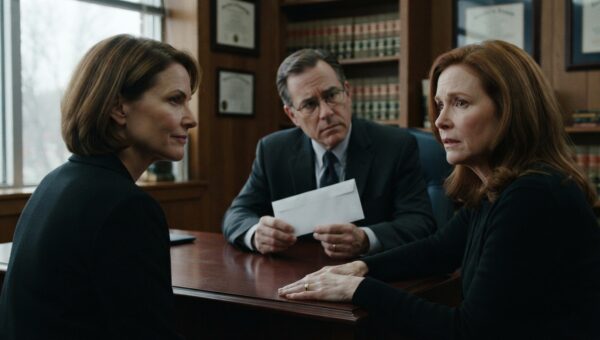
I didn’t reply to the text. Instead, I picked up my phone and dialed a local attorney whose card I had pulled from a legal aid directory the night before—a woman named Miller who specialized in elder financial abuse and fiduciary fraud.
‘Ms. Miller?’ I said when a crisp voice answered. ‘My name is Sarah Evans. I need to schedule an emergency consultation regarding the systematic looting of a family estate trust, and I have the electronic ledger logs to prove it.’
PART 3
Two weeks later, the gray Ford Ranger pulled up to the curb outside my parents’ immaculate brick house at two o’clock on a Tuesday afternoon.
I wasn’t wearing my old faded jeans and a hoodie anymore. Marcus had lent me twenty dollars for a thrift store blazer, and I had used concealer to hide the last yellowish-green shadows of the bruise on my cheek. I wasn’t shaking. The terror of being homeless and broke had hardened into something cold and clear, like winter ice.
I wasn’t alone. Walking beside me up the paved walkway was Ms. Miller, carrying a leather portfolio, and two local sheriff’s deputies whom we had met at the county courthouse thirty minutes prior.
My father was out on the front lawn trimming his hedge with an electric trimmer. The buzzing stopped the second he saw us. He set the trimmer down on the grass, his face darkening with instant, familiar fury as he recognized me.
‘I told you you were trespassing,’ he shouted, stepping onto the driveway and pointing a shaking finger at my face. ‘I called the sheriff on you myself last week! Officers, arrest this woman! She’s harassing us!’
The two deputies didn’t move toward me. Instead, the older deputy, a gray-haired man with a tired expression, stepped forward and pulled a folded document from his breast pocket.
‘Are you Arthur James Evans?’ the deputy asked.
My father blinked, his hand dropping. ‘Yes. What is this about? My daughter is a vagrant and—’
‘Mr. Evans,’ Ms. Miller said smoothly, stepping past me and opening her leather portfolio. ‘You are being served with a temporary restraining order regarding the liquidation of the Robert Vance Family Trust, along with an emergency freeze on all commercial accounts associated with Evans Development LLC, pending a full forensic audit.’
My mother appeared behind the screen door, pushing it open with a look of sharp irritation that instantly dissolved into blank shock when she saw the uniforms.
‘What are you talking about?’ my mother demanded, stepping onto the porch. ‘Arthur, what is she doing here? What did she do?’
‘She stole our bank records,’ my father roared, his face turning a dark, mottled red. He took two aggressive steps toward me, his hand raised just like it had been outside the kitchen door two weeks ago. ‘She hacked into my business files! She’s a thief! Arrest her right now!’
‘Step back, sir,’ the second deputy said, his hand resting casually on the strap of his holster. ‘Keep your hands to yourself.’
My father stopped, chest heaving, glaring at me with pure venom. ‘You ungrateful little b—’ he started, before choking on the word as he looked at the deputies. ‘You think you’re smart, don’t you?’ he hissed at me. ‘You think because you dug up some old paperwork from when you worked in my office that you can ruin everything I built? That money was mine. I funded that trust in the first place!’
‘You didn’t fund it, Dad,’ I said, my voice steady, carrying clearly across the quiet suburban lawn. ‘Grandpa left it for David and me. And you didn’t just borrow against it. You stripped it clean to cover the default on your commercial second mortgage with Arthur Vance—the mortgage you defaulted on because your warehouse expansion failed last year.’
My father went completely still. The color drained from his face so fast he looked gray, like old concrete.
‘How did you…’ he whispered.
‘I worked your books for four years,’ I said quietly. ‘You taught me how to read every line item, every transfer, and every hidden ledger. You just forgot that I was paying attention.’
Ms. Miller stepped forward, handing my father the thick packet of legal paperwork.
‘You have seventy-two hours to account for the one hundred fourteen thousand, five hundred dollars transferred out of the trust account on May twelfth,’ Ms. Miller said calmly. ‘If the funds are not restored to an escrow account supervised by the court, we will proceed with criminal charges for grand larceny and breach of fiduciary duty.’
My mother grabbed the doorframe, her knuckles turning white. She looked from the legal papers in my father’s trembling hand to my face, her mouth opening and closing without sound. For the first time in her life, she didn’t have an instruction, a rule, or a condescending remark to offer.
I turned around, walked back down the paved driveway, and got back into Marcus’s truck.
ENDING
We didn’t go back to Marcus’s lumpy couch.
With the court order in place and the trust accounts temporarily frozen under judicial oversight, the emergency disbursement clauses kicked in, returning my grandfather’s initial winter timber distribution directly to the primary beneficiaries. My share was enough to clear my back rent on the duplex, pay off Chloe’s ER deductible, and put down a deposit on a small, bright house three towns over with a big bay window in the kitchen.
My father didn’t go to prison, but he had to sell the commercial warehouse and refinance his brick home under court supervision, downsizing to a modest condo while my brother David—who finally answered his phone after receiving a certified copy of the audit—cut all ties with them completely.
A month after we moved into the new house, I was standing in the kitchen unpacking boxes when the doorbell rang.
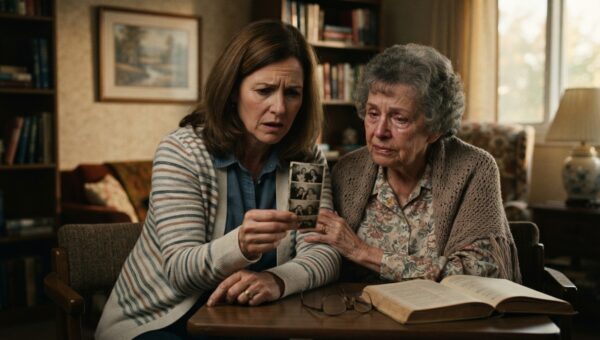
I opened it expecting the mail carrier. Instead, there was a plain cardboard box sitting on the welcome mat. Inside was a single item: my old childhood photo album, the one left behind in the garage bin that rainy night, with the cover slightly warped from the damp grass.
There was no note. No apology. Just the cardboard box.
I picked it up, carried it inside, and set it on the clean laminate counter. Then I walked over to the kitchen window, pushed it open to let the crisp afternoon air in, and watched Chloe chase a yellow butterfly across the front lawn.