PART 1
The moving truck had barely pulled away from the curb when Vanessa taped the white sheet of printer paper to the inside of my third-floor bedroom door. I had spent the morning lugging my heavy oak dresser up two flights of narrow stairs because Noah was too busy with his weekend golf tournament to help, and my back was throbbing from baseboard to shoulder blade.
I wiped the sweat from my forehead with the hem of my apron and smoothed the paper with my palm. The heading was printed in harsh, all-caps computer font: HOUSE RULES. Underneath were six numbered bullet points, typed out with the cold precision of a corporate memo.
Rule number one: Monthly rent payment of three thousand dollars, payable on the first.
Rule number two: Complete cleaning of all four stories of the residence every Tuesday and Thursday morning.
Rule number three: Lawn maintenance, including edging and weeding, to be completed weekly.
Rule number four: Daily school transportation for the twins, including afternoon pickup and homework supervision.
Rule number five: No personal kitchen appliances or unauthorized food storage on the upper floors.
Rule number six: Inmates of this household do not receive free meals without prior arrangement.
I stood there in the quiet hallway of their grand suburban colonial, listening to the hum of the refrigerator downstairs and the muffled sound of my son Noah talking on his phone in the home office.
They had invited me to move in three weeks ago after my knee surgery, telling me it was time for family to stick together, that a widow shouldn’t live alone in an empty house across town.
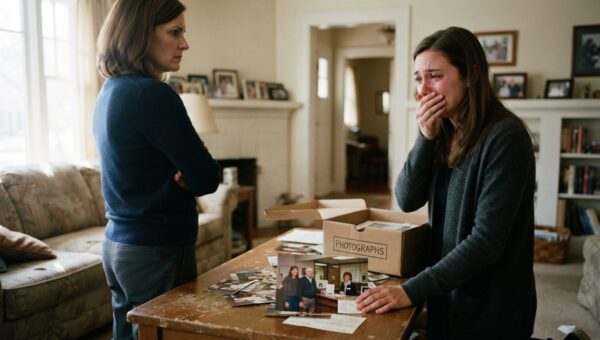
Ten minutes later, the kitchen door swung open and Vanessa walked in carrying a bag of groceries. She looked at me standing in the hallway, her expression tightening into that familiar look of pinched irritation she always wore when I was in her field of vision.
“Did you read the paper on the door?” she asked, dropping her canvas tote onto the granite island.
“I read it, Vanessa,” I said quietly, walking down the stairs into the kitchen.
“Good. Noah and I aren’t running a charity ward,” she said, her voice sharp as she began putting away cartons of organic milk. “Prices have gone up, and having a full-time resident means extra utilities, extra water, and extra wear and tear on our floors.
If you’re going to live under our roof, you pay your way. We are not carrying a useless freeloader.”
I didn’t answer her. I didn’t remind her whose insurance had paid off the mortgage on my previous house three years ago, or whose savings account had funded Noah’s initial seed money for his commercial landscaping startup back when they were newly married and broke. I simply smiled, reached out for my apron hanging on the pantry hook, and walked over to the counter where I had left a tray of homemade apple pie, spiced with cinnamon and baked the way Noah had loved since he was seven years old.
Vanessa looked down at the golden crust, her lip curling in mild disgust. Without a word, she picked up the ceramic dish by its edges, walked two steps to the silver trash can under the sink, and tipped the entire pie straight into the dark plastic liner.
A soft thud echoed against the metal as the crust broke apart, right in front of Noah, who had just wandered into the kitchen holding his coffee mug.
Noah blinked, looked down at the trash can, and then looked at me. He didn’t say a word to his wife. He just rubbed the back of his neck, muttered something about needing to check an email, and walked back toward his office.
PART 2
The afternoon sun was warm against the back of my neck as I walked down the brick driveway and out onto the quiet suburban street. The air smelled of cut grass and damp autumn leaves. Across the asphalt, beneath the shade of a massive old sycamore tree, my longtime neighbor Margaret was standing near her front porch, looking at a small wooden sign stuck into her flower bed.
The sign read FOR SALE BY OWNER.
I crossed the street and walked up Margaret’s steps. She looked up, her face wrinkling into a familiar, weathered smile.
“Martha! I heard you moved in with Noah and Vanessa across the street,” Margaret said, wiping her hands on a floral gardening towel. “How is the big house treating you?”
“It’s large, Margaret,” I said, leaning against the wooden porch railing. “Very large. And very busy.”
Margaret looked at me for a long moment, taking in the tired set of my shoulders and the quiet look in my eyes. She had known me for twenty-two years. She remembered when Noah used to scrape his knees on our sidewalk and when my husband Tom was still running his concrete business out of the industrial park downtown.
“You don’t look happy, Martha,” Margaret said softly. “You look like someone who forgot where she left her keys.”
“Margaret, do you remember when Tom passed away five years ago?” I asked, looking across the street at the towering brick colonial where my son and his wife were currently arguing over laundry schedules.
“Of course I do. We all worried about you out here alone,” she said.
“Tom left things in order,” I said quietly. “Not just the house across town that I sold last month. The commercial warehouse property on industrial parkway. The one the logistics firm has been leasing for twelve thousand dollars a month for the last ten years.”
Margaret’s eyebrows went up. “The old Miller warehouse? I thought Tom sold that before he retired.”
“No,” I said, a small, cold smile touching the corners of my mouth. “We kept the title in a family trust. And when I sold my primary residence last month for four hundred and fifty thousand dollars cash, I didn’t put the money into a savings account. I put it into an escrow account controlled entirely by my own signature.”
Margaret stared at me, understanding dawning slowly in her eyes. “And Noah and Vanessa?”
“They think I sold my house because I ran out of money after my medical bills,” I said. “They think I’m a dependent old woman with no options and no assets. Vanessa just handed me a bill for three thousand dollars a month to live in my son’s guest room.”
Margaret let out a short, sharp whistle. “Good grief, Martha. What are you going to do?”
I looked down at the wooden porch boards, then back across the street where a delivery truck was idling in Noah’s driveway.
“Margaret,” I said, pointing at the white sign in her flower bed. “How much are you asking for this place?”
PART 3
The closing took place on a rainy Thursday morning at the title office downtown, just two weeks after I moved into Noah’s guest room. I signed three separate documents in clear, steady cursive, transferring the full purchase price of two hundred and eighty-five thousand dollars directly from my private escrow account into Margaret’s bank. The keys to the cozy, single-story red brick bungalow with the wraparound porch were handed to me across a polished mahogany desk by a young clerk who didn’t know anything about family politics.
I didn’t pack my bags right away. I stayed in that third-floor room for four more days, playing my part to perfection. I cleaned the baseboards with a damp rag, swept the massive hardwood staircase twice a day, and listened to Vanessa complain about my folding technique while she sat at the kitchen island scrolling through her tablet.
On Sunday evening, Noah and Vanessa called a family meeting in the formal dining room. They sat together at the head of the long mahogany table, looking severe and important. I stood near the doorway, holding a small manila folder against my apron.
“Mom,” Noah said, clearing his throat and trying to look authoritative. “Vanessa and I went over the household ledger for the last two weeks. You haven’t paid the three thousand dollars for this month, and the kitchen floors were still dusty near the pantry yesterday morning. We need to talk about whether this living arrangement is working out.”
Vanessa crossed her arms, nodding in agreement. “We have standards, Martha. If you can’t meet the financial and domestic obligations outlined in the house rules, we’re going to have to look at alternative living arrangements for you. Perhaps a managed senior facility across town.”
I didn’t raise my voice. I didn’t shake or look down at the floor. I walked slowly to the table, laid the manila folder flat on the wood, and slid it across the polished surface toward my son.
Noah frowned, picking up the folder and opening the metal clasp. He pulled out three sheets of paper. The first was the deed to the red brick bungalow across the street, registered in my name alone. The second was the certified accounting ledger of the commercial warehouse lease, showing three hundred and eighty thousand dollars in liquid reserves currently sitting in my private account.
The third paper was a copy of Vanessa’s typewritten house rules, with a single handwritten note scrawled across the bottom in red pen: *Lease terminated effective immediately.*
Noah’s face went from pale to a dull, sickly gray. He stared at the bank balance figures, his mouth opening and closing twice before any sound came out.
“Mom…” he whispered, looking up from the paper. “What is this?”
“It’s my notice, Noah,” I said calmly. “I’m moving out. My new house is right across the street, and the movers are coming tomorrow morning at eight o’clock.”
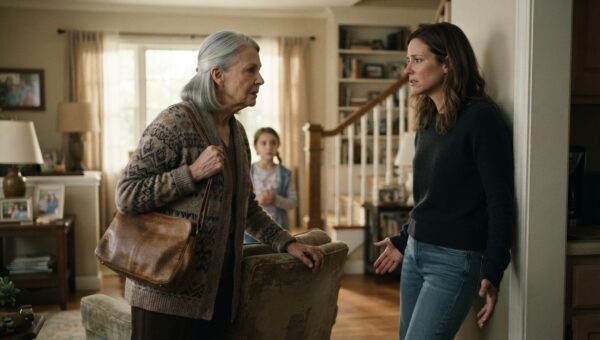
Vanessa leaped to her feet, her chair scraping loudly against the hardwood floor. “You can’t just leave! Who is going to watch the twins on Tuesdays? Who is going to help with the mortgage—”
“Stop right there, Vanessa,” I said, my voice dropping into a register that made both of them freeze. “You told me I was a useless freeloader. You threw my baking in the trash. And you charged me three thousand dollars a month to scrub your floors. You can clean your own four-story house from now on.”
ENDING
The moving truck arrived right on schedule at eight o’clock the following morning. I walked out the front door of Noah’s colonial with my two canvas suitcases and my wooden rocking chair, refusing to let Noah carry a single item down the steps.
As the truck pulled away and drove the hundred yards across the street to my new driveway, I stopped on the front porch of my red brick bungalow and turned around. Noah was standing at the edge of his lawn, watching me with his hands shoved deep into his pockets, looking smaller than he ever had in his life.
I unlocked my front door, stepped into my own bright, quiet hallway, and locked it securely behind me. Later that afternoon, I set a fresh batch of apple pie into the oven, the sweet smell of cinnamon drifting out the kitchen window and out over the quiet street where nobody was going to tell me what I owed.