My mother always kept the back bedroom window locked, even during the heavy heat of July when the upstairs air turned thick and smelled of dust and old cedar. I figured it was just an old habit from the days before screen doors had latches, one of those little quirks eighty-nine-year-old women pick up after living alone for three decades in a house that creaked whenever the wind came off the ridge.
When we finally cleared her things out last Tuesday, the air in that room felt heavy, like it was holding its breath. The wallpaper was that faded yellow floral pattern with little faded blue cornflowers, curling slightly at the seams near the baseboard where the floor heater used to push dry air up through the floorboards.
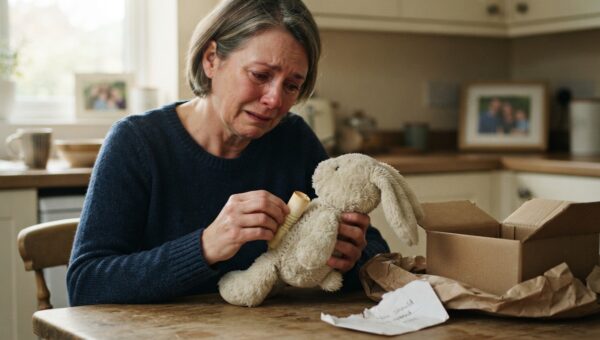
I had a scraper in my hand and a roll of heavy-duty contractor trash bags by the door when I started on the north wall. I wasn’t planning on stripping the whole room down to the lath, but the paper was so loose in the corner behind the old oak dresser that it just peeled away in long, gray strips with hardly any steam at all. Underneath was the brown plaster, rough and uneven, and jammed right into a vertical crack near the stud was a thick, yellowed envelope. It didn’t look like mail.
It looked like something someone had shoved into a hiding spot in a hurry, folding the top flap over twice just to keep it shut without bothering with glue.
My name was written across the front in my mother’s old hand, back when her writing still had that sharp, slanted loop to the capital letters before her arthritis made everything small and cramped. It said my name, and underneath it, in pencil that had faded almost to the color of dust: Open only when I am gone.
The scraper slipped out of my hand and clattered against the pine floorboards, and for a second the only sound in the whole house was the hum of the old refrigerator downstairs kicking on. My hands were shaking so bad I had to sit down right there on the dusty rug with my back against the bedframe to get the flap open. The paper inside was thick and yellow, folded twice, covered in ink that looked like it had been written with a fountain pen that was running out of breath.
“If you’re reading this, I’m gone,” it started. My throat went dry. “When you were six weeks old, a woman came to our door. Crying. She begged me to take you. Your father was dangerous. She didn’t have anywhere to go and she knew I couldn’t have children of my own, and she knew I’d keep you safe until the grass grew over the fence.”
I had to stop reading for a minute because my eyes wouldn’t focus on the lines. Forty-one years. For forty-one years I had walked around thinking I was just their regular kid, born in the county hospital fifty miles west like the birth certificate said, never knowing the ink on that paper had traded hands in an empty hallway while the wind blew snow against the front porch.
The letter kept going down the page, the lines getting a little more crooked near the bottom. “She visits every birthday.
Sits in a car across the street. She never comes to the door, not since that first night, but she watches to make sure you’re still walking in the light. If you ever see her, don’t be hard on her. She paid for you with her whole life.”
My birthday was three days ago. We had cake at the kitchen table, just me and my husband, and he gave me a sweater that was a size too big because he never can remember if I take a medium or a large. I sat there on the floor of that empty bedroom with the paper in my lap, feeling like the floor was dropping an inch every time I took a breath.
I didn’t call my husband right away. I got up, wiped my palms on my jeans, and walked downstairs to the old desk in the den where we kept the binder with all the internet router codes and the password for the security cameras we put in after the porch pirates started hitting the mailboxes down on the highway. We had the system put in four years ago when my mother’s eyesight started going and we wanted to check if the delivery drivers were actually leaving packages by the screen door or just tossing them into the hydrangeas.
It took me twenty minutes to figure out how to export the old files from the cloud drive onto a thumb drive, mostly because the software kept timing out on our slow internet. I set the date back to my birthday last year, then the year before that, and kept scrolling back until the thumbnails started populating in a little grid across the screen.
There it was. Every single year, right around 2:00 in the afternoon, the same light blue Honda Civic would turn off the county road, roll down our gravel lane very slow, and park right under the big maple tree on the corner of the property line. It never moved for two hours. Sometimes the brake lights would flash once or twice as if the driver was shifting into park, and then it would just sit there, windshield reflecting the gray November sky, until the sun dipped behind the ridge and the headlights flickered on to turn around.
Last year was different. On the footage from my fortieth birthday, the blue Honda stopped by the mailbox instead of the tree. A figure got out, wearing a dark wool coat that looked too heavy for the mild afternoon, walked up the three concrete steps, and placed a small flat box wrapped in brown paper right on the welcome mat before turning around without even knocking.
I remembered that box. It came with no card, just a white ribbon tied in a double knot, and inside was a thin $180 gold bracelet with a tiny heart charm that I put in my jewelry box and never wore because I thought it was a mistaken delivery from an online store that used the old address.
My heart was beating in my ears like a drum in a tin shed. I looked at the date on the bottom right corner of the monitor. Today’s date. The time was 1:45 in the afternoon.
I didn’t think about what I was doing. I didn’t grab a coat or lock the front door behind me. I just walked out into the hallway, let the screen door bang shut against the frame with a dry rattle, and stepped off the concrete porch onto the gravel.
The air outside had that sharp, metallic bite of late autumn, the kind of cold that smells like woodsmoke and damp leaves rotting in the ditches. I walked down the long driveway, past the empty space where my mother’s Buick used to sit before we sold it to the salvage yard in town, and out to the edge of the asphalt where the county road curves toward the creek.
The blue Honda was parked right where the security camera said it would be, fifty yards down under the low-hanging branches of the neighbor’s walnut tree. The engine wasn’t running, but the front wheels were turned slightly toward the shoulder as if the driver was ready to pull out the second someone looked her way.
I didn’t stop at the passenger side. I walked right up to the driver’s side window, my boots crunching loud on the roadside gravel, and tapped twice on the glass with my knuckles.
The woman inside jumped so hard her shoulder hit the door frame. For a second she didn’t look at my face; she just stared down at my hands the way people look at things they’ve lost in a fire. Then she reached up with a gloved hand and rolled the window down using the old-fashioned crank handle that clicked four times before the glass dropped low enough for the damp air to rush between us.
She looked old, older than my mother had been when I was a teenager, with hair the color of pewter pulled back into a messy bun that was coming loose at the nape of her neck. Her skin had that thin, pale look of someone who spent most of her life indoors, but her eyes were the exact same shade of gray as mine when I looked in the mirror after washing my face.
She didn’t try to roll the window back up. She didn’t look away down the road toward the bridge. She just gripped the steering wheel with both hands until her knuckles showed white through the thin leather of her gloves, her breath pluming white in the cold air between us.
“I didn’t mean to stay so long,” she said. Her voice was raspy, like she hadn’t spoken to anybody since morning, but the accent was flat and local, straight from the valley where the river splits. “I just wanted to see if you still had that little dimple on your left cheek when you laughed.”
I stood there on the cold asphalt with the wind blowing a loose strand of hair across my forehead, looking at the tiny silver charm hanging from the rearview mirror, the exact match to the one in my jewelry box upstairs. My brain felt hollow, like all the years I spent wondering who I was had just been cleared out by a gust of wind, leaving nothing behind but the sound of the tires humming on the highway down the hill.
“You left the bracelet last year,” I said, and my own voice sounded small, like it belonged to someone else standing behind me in the grass.
“I couldn’t leave nothing,” she whispered, and a tear finally broke loose from the corner of her eye, cutting a clean track down the dust on her cheek. “Not after forty-one years of watching you grow up through a windshield.”
She reached out across the passenger seat, her hand trembling as she pushed the latch on the door and shoved it open three inches against the damp weeds by the ditch.
“I’m your…” she started, her voice catching on the word like it was a dry bone in her throat, and she didn’t have to finish the rest because the whole road seemed to tilt into place around us.
I reached down, took her cold, ungloved hand in mine, and pulled the door the rest of the way open.