I left my hymnbook shut on the second verse.
The church was too warm that Sunday, smelling faintly of lemon oil on the oak pews and damp wool from the coats hanging in the vestibule. When the choir director stepped up to the wooden lectern with the weekly bulletin, I figured it was just the usual announcements about the roof fund or the Wednesday night potluck.
My mind was already halfway out the side doors, planning out the groceries I needed to pick up before the market closed at noon.
Then he cleared his throat and read off a special note of gratitude from the trustees. Twenty-seven thousand five hundred dollars. An anonymous gift routed through the county family shelter, designated specifically for the choir’s community outreach program. And then, because small-town boards never quite understand the meaning of anonymity, he thanked the benefactor by name.
Dr. Celia Monroe.
My daughter.
The name dropped into the quiet sanctuary like a heavy stone hitting ice. Nobody else in the pews turned around to look at me, mostly because nobody in that parish had heard me say Celia’s name out loud since the autumn of 2015. They all just assumed she had moved away after college, drifted off to some big city hospital or research lab where daughters go when they stop needing their mothers.
They didn’t know she was right here in town, running a pediatric dental practice three blocks off the square, with a plaque on the wall and a name on a donor list that was larger than my entire yearly property tax.
I didn’t open the book for the final hymn. I just sat there staring at the red ribbon marker hanging over the edge of the hymnal, watching the ink smudge where my thumb had pressed against the paper.
Eleven years.
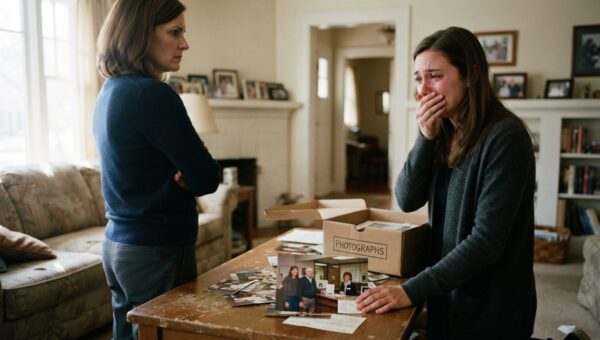
Eleven years since I stood in her tiny apartment on Market Street and told her that marrying Arthur was the worst mistake she could possibly make. Arthur, who came with a quiet voice, worn-out work boots, and two kids under six whose mother had cleared out of their lives two winters prior. I remember the exact smell of that apartment, cheap instant coffee and boiled diapers. I remember standing by their particle-board kitchen table with my coat buttoned all the way up, refusing to sit down because I didn’t want to get comfortable with a future I knew was going to break her.
“You’ll spend your life cleaning up somebody else’s mess,” I told her. My voice had that hard, ringing certainty that teachers and mothers use when they think they’re being wise instead of cruel. “He’s got baggage, Celia, and he’s got two kids who aren’t even yours to raise. You’ve got a scholarship to dental school sitting on your desk. You throw that away for a man with a broken household, and you’ll be begging me for grocery money by the time you’re thirty.”
She didn’t cry. That was the thing about Celia even then; she just looked at me with those dark, level eyes she got from her grandfather, the kind that made you feel like you were standing naked in an east wind. She didn’t raise her voice. She just picked up her acceptance letter from the kitchen counter, slid it back into its envelope, and laid it neatly beside the sugar bowl.
“I’m marrying him on Saturday,” she said. It wasn’t a fight. It was a weather report. “And I’m not going to dental school on your timeline, Mom. I’m going when we can afford it.”
I walked out that door and didn’t look back. I sent back the wedding invitation unopened, with the stamp still fresh in the corner. When the Christmas cards arrived in December with childish handwriting scrawled across the return address, crayon drawings from two little boys who didn’t know I existed, I dropped them straight into the kitchen trash without pulling them from their envelopes. When people at the post office asked how Celia was doing down in Louisville, I told them she was busy with her studies and left it at that, guarding my pride like a dog with a dry bone.
And now here was the bulletin. Twenty-seven thousand five hundred dollars. Not spare change from a dentist just starting out, but serious, hard-earned money given away to a shelter that kept families from sleeping in their cars.
When the final prayer ended and the organist cranked out the postlude, I didn’t wait for the pews to clear. I pushed out the side exit into the gray November air, got into my sedan, and drove straight to the brick medical building on 4th Street before my common sense had time to talk me out of it.
The waiting room of Celia’s office smelled like mint paste and old paperback books. There were three small wooden tables with bead mazes on top and a low bench where a little girl with a pink cast on her arm was turning the pages of a dog-eared magazine. The receptionist behind the high glass partition looked up from her computer screen as the bell above the door jingled.
She didn’t smile the way receptionists are supposed to. She just stopped typing, her fingers hovering over the keys, and stared at me through the smudged glass. She was a woman about my age with silver hair pulled back into a tight bun, wearing a navy cardigan that looked like it had seen ten winters of heavy use.
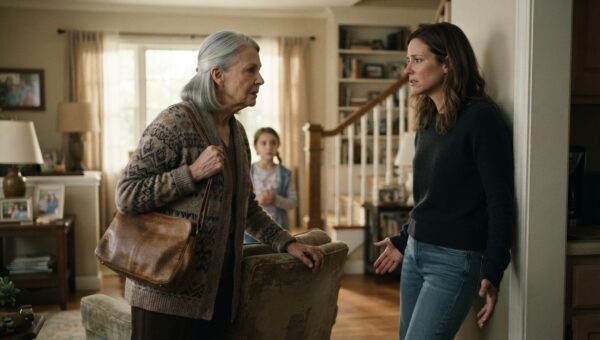
I walked up to the counter, my fingers digging into the strap of my leather handbag. “I need to see Dr. Monroe.”
The woman didn’t blink. She didn’t reach for the appointment book. She just tilted her head slightly, studying my face the way a toll-booth operator studies an expired ticket.
“She’s between patients,” the receptionist said, her voice entirely flat. “She knows you’re here. She looked out the window from her office upstairs about two minutes ago when you pulled into the lot.”
I swallowed, the back of my throat feeling dry as sawdust. “I just want to talk to her for five minutes. I heard her name at church this morning.”
The receptionist tapped a single fingernail against the edge of the keyboard. A slow, rhythmic sound that felt like a clock ticking down in an empty room.
“She asked whether you came to apologize or…” The woman paused, letting the sentence hang in the air between us like a dropped dish. “…or if you brought another list of reasons why she shouldn’t have built this place.”
The silence in the waiting room stretched so long that the little girl with the pink cast looked up from her magazine to see what was wrong with the grown-ups. I stood there with my coat unbuttoned, my boots still damp from the church parking lot, feeling every single one of my seventy-two years pressing down on my shoulders. I didn’t have a speech prepared. I hadn’t rehearsed an excuse or a clever line to smooth over eleven years of locked doors and returned envelopes.
“Tell her I didn’t bring any lists,” I said. My voice came out smaller than I meant it to, thin and raspy around the edges.
The receptionist studied me for another three seconds, then picked up her desk phone, pressed a single button, and said two words into the receiver. “She’s coming back.”
She buzzed the side door open without another word.
I pushed through the heavy wood and walked down the short hallway toward the back office. The carpet was industrial gray, worn thin in the center where years of hurried feet had worn a path between the examination rooms and the sterilization sink. Through the open doors on either side, I could see the high-backed chairs, the silver trays of small mirrors and hooks, and the cheerful animal posters taped to the walls to keep children from bolting out the door. It was an orderly place. A clean, quiet, functioning place that didn’t look like anybody’s messy afterthought.
Celia’s office at the end of the hall had a glass-paneled door with her name stenciled in black lettering. The door was cracked open about four inches.
I stopped outside, my hand hovering near the brass knob. I could see her profile through the gap. She was sitting at a heavy oak desk that looked too big for the small room, reviewing a stack of patient charts with a red pen in her hand. Her hair was darker than mine had been at her age, pulled back in a practical clip, and she wore a simple navy blouse under her white coat. She didn’t look like the girl I had lectured across the particle-board table in 2015. She looked like a woman who had fought for every square inch of the floor she was standing on, and won.
“Celia,” I said softly into the gap.
She didn’t jump. She just laid the red pen down on the desk very deliberately, closed the chart she was working on, and looked up toward the door. She didn’t invite me in, but she didn’t tell me to leave either.
I pushed the door open the rest of the way and stepped inside. The room smelled of fresh coffee and old paper.
“I heard about the donation,” I said, my hands trembling slightly against my coat buttons. “At St. Jude’s this morning. The choir director read your name out loud before the offertory.”
Celia leaned back in her chair, the leather creaking under her weight. She folded her hands over the closed chart. Her eyes were just as dark and steady as they had been the day I told her she was ruining her life.
“They weren’t supposed to read the name,” she said. Her voice was level, almost conversational, which somehow felt worse than if she had started shouting. “I told the shelter director it should stay anonymous. But small towns don’t know how to keep secrets when the numbers get that high.”
“Twenty-seven thousand five hundred dollars is a lot of money to give away quietly, Celia.”
“It’s the exact amount it cost to keep the lights on at the shelter on 8th Street for three months back in the winter of 2016,” she said, looking right past my shoulder toward the window where the afternoon sun was catching the brickwork of the hardware store across the alley. “Arthur and I didn’t have two dimes to rub together that year. The custody battle for the boys was dragging through probate court, my student loans were deferred twice, and our landlord was threatening to throw our boxes on the curb because we were three weeks behind on the oil bill. If that shelter hadn’t given us a warm room and two cots for the boys while Arthur worked double shifts at the freight yard, we wouldn’t have made it through January.”
She paused, picking up the red pen again and rolling it between her fingers.
“You told me I’d spend my life cleaning up somebody else’s mess,” she continued, her voice dropping an octave, losing none of its quiet weight. “You were half right, Mom. It was a mess. There were nights when the boys were crying for their mother, and Arthur was sitting at the kitchen table with his head in his hands because he thought he was dragging me down with him, and I was studying organic chemistry by the light of a single desk lamp until my eyes burned. But it wasn’t somebody else’s mess. It was our life. And we built it piece by piece, without you, without your advice, and without a single safety net.”
The words sat between us like broken glass on the floor. I wanted to tell her about the Christmas cards I had thrown away, about the stubborn pride that kept me locked in my empty house on Maple Street while she was out there fighting for every inch of her family. I wanted to explain that I was just scared, scared she was going to throw away her future the way my own sister had done thirty years before. But none of those explanations sounded like excuses anymore. They sounded like what they were: small, cowardly reasons for staying away because I couldn’t bear the thought of being wrong.
“I was wrong,” I said.
The words came out before I could check them, rough and dry, scraping against my throat like gravel. I hadn’t planned on saying them out loud. I had come here thinking I would offer some polite middle ground, some grandmotherly nod of approval that let me save face while sliding back into her good graces. But looking at her sitting behind that heavy desk, I realized there was no middle ground left.
Celia stopped rolling the pen. She looked at me for a long, quiet moment, her expression neither angry nor forgiving, just measuring the weight of what I had just given up.
“I know you were, Mom,” she said softly. “The hard part wasn’t that you thought I’d fail. The hard part was that you didn’t even stick around long enough to see if we could win.”
She stood up from the desk, smoothing down the front of her white coat, and walked over to the wall near the filing cabinet. That was when I saw it for the first time.
Hanging in a simple black wooden frame between two dental association certificates was a photograph I had never seen before. It wasn’t a professional portrait. It was a snapshot taken outside on a gravel driveway somewhere, the light yellow and low like October afternoon sun. Arthur was standing with one arm around Celia’s waist, looking older than he had in 2015, his face lined around the eyes with work and weather, but smiling with an easy, settled kind of grace. Between them stood two tall young men in college sweatshirts, both of them grinning up at the camera with teeth that looked straight and strong.
“That’s Leo and Sam,” Celia said, tracing the edge of the frame with her index finger without touching the glass. “Leo’s studying to be an accountant at state, and Sam just finished his first year of trade school down in Louisville. They call me Mom now. They’ve called me that since the second year we were married, long before the adoption papers went through.”
I stood by the doorway, my fingers still clutching my handbag, looking at the family she had built out of the wreckage I had predicted would destroy her. The sun caught the corner of the glass, throwing a bright, clean glare across the silver frame and the diploma hanging right beside it.
Celia turned back to face me, her hands tucked neatly into the pockets of her white coat. She didn’t offer to hug me, and she didn’t slam the door in my face. She just stood there in the quiet space of her office, waiting to see what I would do with the rest of the afternoon.
“I’m not going to pretend everything’s fixed just because you walked through that door today,” she said, her voice steady and clear. “The boys don’t know who you are, and Arthur has spent eleven years figuring out how to live without needing your approval. But if you want to come back to Sunday dinner next week, just to sit at the table, eat some pot roast, and listen to how the practice is running, there’s an extra chair.”
She walked back to her desk, sat down, and picked up her red pen again, opening the chart she had been reading when I first knocked on the glass.
I stood in the doorway for another ten seconds, listening to the faint hum of the sterilization equipment down the hall and the distant traffic outside on 4th Street. Then I turned around, walked back down the quiet gray corridor, and pushed open the front door into the pale November air, carrying the weight of an apology that had taken eleven years to leave my mouth.