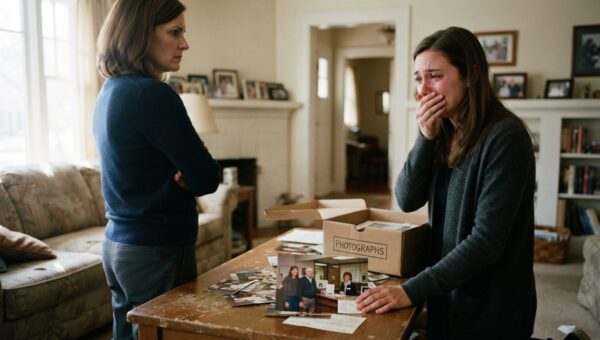
The notification light on my phone flashed three times before I even opened my eyes on that Tuesday morning in Dayton, but it was the silence afterward that felt heavy. I rolled over, staring at the ceiling fan ticking in the quiet room, wondering why my chest felt so tight. It was the same tightness I had carried around for three long years ever since the day I handed over my retirement savings to my sister Elena and her husband Marcus.
They had sat right at my kitchen table, crying and begging, swearing they would lose the roof over their heads if I didn’t step in. I had trusted them. I had given them every dollar I saved from thirty-two years at the county records office without asking for a single signature on paper. Family didn’t need lawyers. That was what I used to tell myself.
Three years went by in a blur of radio silence. They didn’t call for birthdays, and they didn’t invite me over for Sunday dinners anymore, but I kept telling myself they were just busy trying to get back on their feet. I figured the debt weighed on them. I figured they just needed time to breathe. So I waited. I kept my head down, paid my own bills, and minded my own business until the day I finally worked up the courage to ask for just a small portion of it back to fix the rotting roof over my porch.
I thought it was a reasonable request after giving them three quarters of a million dollars. I drove across town, knocked on their front door, and waited for Elena to open it.
When Elena finally pulled the door back, she didn’t look like a woman who had been saved from ruin. She looked cold, polished, and entirely unimpressed by my presence. Marcus stood right behind her, hands tucked into his slacks, wearing a smug little half-smile that made the hair on the back of my neck stand up. I didn’t yell. I didn’t cause a scene. I just asked them quietly if they could start making regular payments on the loan so I could handle the repairs on my house. Marcus let out a short, dry laugh that sounded like dry leaves scraping across concrete. He looked me dead in the eye and said those words that still echo in my head every time I close my eyes. “We don’t owe you anything.”
There was a long, brutal silence where the only sound was the hum of their fancy refrigerator through the open door. I just stared at him, my brain refusing to process what my ears had just heard. Then Elena stepped forward, her face completely empty of any sisterly warmth I thought had lived there. “You never made us sign anything.” That was the last I ever saw of them. They shut the heavy wooden door right in my face, locking the deadbolt with a loud, final click. I walked back to my old sedan in the driveway feeling like the biggest fool in the state of Ohio, my hands shaking so badly I dropped my keys twice on the gravel.
A few weeks after that awful afternoon, I ran into David at the local Kroger while I was standing in the produce aisle checking the price of tomatoes. David and Marcus had known each other through local real estate circles for years, and though David and I were never close, he always had a decent word to say whenever our paths crossed near the bakery counter.
He looked up from a bag of russet potatoes, stopped dead in his tracks, and stared at me like I was a ghost. He looked genuinely rattled, his face pale under the fluorescent store lights. He walked right over, lowering his voice before he even reached out to touch my sleeve. “Wait… you seriously don’t know?” My stomach dropped right down to my shoes. I just stared at him, unable to form a full sentence. “Know what?” David leaned in close, his breath smelling of stale coffee, and said those words that changed everything. “What happened to your sister and her husband after they took your money is… unbelievable.”
I dropped my basket right there on the linoleum, a few loose plums rolling out across the floor toward a display of canned peaches. I didn’t care about the fruit or the people staring at us from the next aisle over. I grabbed David by the sleeve of his windbreaker, my voice cracking before I could even get the words out. “Tell me right now, David. What are you talking about?” He looked around nervously, pulling me back toward the quieter aisle with the canned vegetables where nobody else was shopping at ten in the morning. He told me that Marcus hadn’t used a single cent of that money to save their house from foreclosure. In fact, their house hadn’t been in foreclosure at all. They had manufactured the whole crisis, crying poverty while secretly shifting funds around through a maze of corporate accounts.
David explained that they had taken my seven hundred and fifty thousand dollars and used it as seed money to buy up commercial frontage land over in Butler County. They had built a massive, luxury custom home and a strip of high-end retail spaces under a completely separate, shielded LLC designed to hide every asset from creditors and family alike. They had played me for a fool, using my blind trust as a loophole because they knew I was too proud of our shared blood to demand a lawyer’s signature. I stood there in the middle of the canned vegetable aisle, the store’s Muzak playing some quiet piano tune overhead, while the ground felt like it was shifting under my feet. It wasn’t just that they had stolen from me. It was that they had plotted it out like a couple of common grifters, laughing behind my back while I sat at home worrying about how I was going to pay my property taxes.
I didn’t go straight home. I drove out to the county records office downtown, a place I knew like the back of my hand after three decades of filing deeds and mortgages. I walked past the tall glass doors, nodded to the security guard at the front desk, and headed straight for the public terminal stations in the back corner. My fingers were stiff and cold as I typed in Marcus’s full legal name and the name of the obscure corporate shell David had mentioned. Page after page of digital documents loaded onto the screen, showing deeds, property transfers, and LLC filings dated right around the time I emptied my retirement account. There was the address of the commercial property. There was the blueprint for the luxury estate with its vaulted ceilings and custom stone masonry. And right at the bottom of the financial disclosures, there was the undeniable paper trail of untraceable cash injections that matched the exact amount I had wired from my savings.
I sat there in front of that glowing monitor for nearly two hours, scrolling through public records until my eyes stung from the glare. It wasn’t a rumor. It was all there in black and white, laid out by their own clumsy attempts to cover their tracks through public registries. They thought because there was no contract, there was no law. They thought they had outsmarted everyone, building their shiny new life on a foundation of stolen family loyalty and fabricated desperation. But greed makes people sloppy, and Marcus and Elena had been sloppy from the very beginning. They had injected three quarters of a million dollars of unverified liquid capital into commercial real estate all at once, waving away standard banking inquiries with fake tax declarations and whispered lies.
By three o’clock that afternoon, I couldn’t just stare at the screen anymore. I needed to see it with my own eyes, to know that the nightmare was real. I drove my old car forty minutes north into Butler County, following the directions David had rattled off in the grocery store. The neighborhood was quiet, lined with towering oak trees and newly paved asphalt that smelled faintly of hot tar and crushed stone. And then I saw it. Set back behind an iron security gate sat the massive custom home Elena and Marcus had built with my life savings. It was breathtaking, all glass and dark timber, sitting proudly on two acres of manicured lawn that probably cost more than my entire house.
Except the property wasn’t peaceful anymore. Two large federal vehicles were parked right across the circular driveway, their doors open and engines idling. Several men in dark blue windbreakers with bold yellow lettering across the back were moving back and forth between the front porch and a black SUV. Bright yellow federal seizure tape was strung tightly across the double front doors and wrapped around the brick pillars of the grand entryway. I pulled my car over to the shoulder fifty yards down the road, cutting the engine and just watching through the windshield. I watched a federal agent slap a large white notice of administrative asset forfeiture right onto the center of the glass front door, smoothing down the edges with the palm of his hand.
I didn’t feel a rush of anger. I didn’t feel a sudden surge of triumph either. I just felt a deep, hollow exhaustion settle into my bones, the kind of tiredness that only comes from realizing how little human decency actually counts for in this world. David had told me the sudden influx of unverified capital had triggered an automatic flag with federal financial authorities investigating asset laundering and tax evasion. They hadn’t just stolen my money; they had walked right into a trap of their own making, using hot cash to buy property while drawing the full, unforgiving weight of the federal government straight down on their heads. They had thought they were untouchable because they had outsmarted an old sibling with a handshake, but federal investigators didn’t care about handshakes. They cared about paper trails, and Marcus’s paper trail was a mile wide and glowing red.
I put my car in drive and turned around, heading back down the highway toward Dayton as the sun began to sink low behind the horizon, painting the sky in bruised shades of purple and gray. I went home, unlocked my front door, and walked into my quiet little kitchen. The house smelled faintly of old coffee and cedar, just the way it always had. I sat down at my laminate kitchen table, the very table where Elena had sat three years ago crying crocodile tears into her coffee cup, and I poured myself a glass of tap water. I didn’t call anyone. I didn’t reach out to mutual friends to ask for updates. I let the silence settle back into the rooms around me, heavy and unbroken, wrapping around me like an old winter coat.
Three days later, my phone buzzed on the counter while I was wiping down the laminate surface after lunch. I looked down at the screen and saw Elena’s name flashing there for the first time in three years. My heart did a strange little flutter, half out of old habit and half out of sheer disbelief that she would have the nerve to dial my number after everything that had happened. The voicemail notification popped up a second later, indicating she had left a frantic, trembling message. I stood there by the sink, the dish towel hanging limp in my hand, staring at the little glowing screen while the quiet hum of the refrigerator filled the kitchen.
I pressed play, and her voice spilled out into the empty room, sounding small, panicked, and entirely broken. She was crying, really crying this time, her words tumbling over each other in a desperate rush. She said they had frozen all their accounts, that Marcus was talking to criminal defense attorneys, and that they had nowhere to turn. She begged me, her voice cracking with ugly sobs, asking if I could just talk to someone, if I could help them bail out or lend a hand one last time because we were family and blood was supposed to mean something after all. She said they were desperate, that the federal marshals had seized everything, and that they had nowhere else to go.
I listened to every single second of it, standing there in the middle of my modest, quiet kitchen, listening to the sound of my sister’s world completely falling apart. When the message ended, the phone went quiet. I didn’t feel any urge to call her back. I didn’t feel any desire to yell at her or throw my own accusations in her face. I simply reached out, tapped the screen twice, and hit delete. The voicemail vanished into nothingness, clearing the notification light from my phone entirely. I blocked her number with two quick taps, then did the same to Marcus’s contact card, sending them both into the digital void where they belonged.
I walked over to the stove, turned on the burner under the small kettle, and waited for the water to heat up. I didn’t have their luxury home, and I didn’t have their commercial real estate empire, but I had my peace, and nobody could take that away from me with a handshake or a lie. I poured the hot water over a tea bag in my favorite chipped ceramic mug, watching the water turn a deep, comforting amber. I carried it over to the kitchen table, pulled out the wooden chair, and sat down in the absolute quiet of my own home. A steaming mug of morning coffee rested undisturbed on a clean, sunlit wooden table in my own modest home, symbolizing a life reclaimed through uncompromised peace.