The smell of damp wool and old cedar always lingers in our hallway whenever the autumn rain sets in over the river. Arthur kept his heavy winter work jacket hanging on the second peg from the end, right where it had stayed through thirty-four winters of shifting salt on the boots and wet leaves sticking to the porch steps. I was just tidying up the study on a Tuesday morning, moving a stack of tax ledgers off the walnut sideboard, when his leather briefcase slipped off the edge and tipped sideways onto the braided rug.
The brass clasp gave a dull snap, and the contents spilled across the wool in a fan of stiff envelopes and old receipt books.
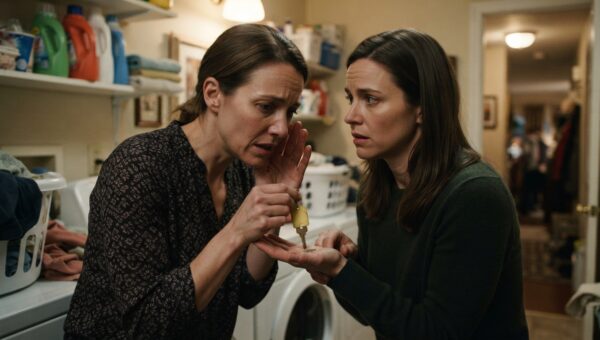
I knelt down to gather the loose papers before he came back from his morning walk down to the post office. That was when I saw the small velvet pouch tucked deep into the fabric divider of the inner pocket. It wasn’t the blue velvet box from our jeweler downtown. This one was faded black velvet with the gold-stamped letters rubbed half away. I pulled the drawstring loose and tipped it into my palm. A heavy gold band rolled out onto my thumb. I picked it up, expecting to see the initials we had carved on our wedding day back in the summer of ninety-two.
Instead, I turned the metal toward the light coming through the lace curtains. The engraving was crisp and neat, fresh as the day it left the bench.
It was Arthur’s ring size, down to the quarter-fraction. I went over to the cedar chest by the window where I kept my own keepsakes and slid his actual wedding band off my chain just to compare them. I held both rings up to the bright morning light. Same goldsmith stamp inside the shank. Same weight in my palm. Same brushed gold edges that we had picked out together from the catalog at Miller’s Jewelry when we were twenty-four years old.
Except one tiny difference caught the light and held my eye. The date inside the first ring said June 14, 1992, which was the Saturday we stood under the pines at St. Jude’s with my father watching from the front pew. The other ring said October 3, 1997. I sat down hard on the edge of the guest bed because my knees didn’t want to hold me anymore, and I started thinking about October 3, 1997.
It was a Friday. The leaves were just turning orange up on the ridge behind the mill.
Arthur had packed his tan canvas suitcase on Thursday night, telling me the regional paper association was flying him out to Denver for a three-day board meeting. He kissed the top of my head right there by the hall tree, smelling of his cedar shaving soap, and told me he would call as soon as he checked into the hotel. He called on Friday night from a lobby with a lot of clinking glass sounds in the background, telling me the keynote speech went well and that he missed me terribly. When he came home on Monday afternoon, he dropped a glass snow globe onto the kitchen counter with a plastic base that showed the Denver skyline under a fake plastic dusting of white flakes.
I still have that snow globe on the little oak bookshelf in the den, right behind the encyclopedia volumes we never open anymore.
I walked down the hall on stiff legs, my hand trembling slightly as I reached past the row of old gardening books. I picked up that heavy glass ball and gave it a sharp shake. The white flakes swirled up in a thick cloud, settling slowly around the tiny painted skyscrapers. As the water cleared, something dark caught my eye pressed right up against the bottom of the plastic skyline. A tiny piece of folded paper floated inside the glass, wedged tight against the base where the manufacturer’s seal had been sliced open and glued back down with clear resin.
I had dusted that shelf every Thursday morning for twenty-eight years, and I had never noticed the seam in the plastic. I took a pair of small sewing scissors from my basket and worked the tip gently into the glue line until the bottom plug gave way with a faint pop. Water spilled out over my knuckles, smelling faintly of old well water and dust. I pulled out the scrap of paper, unfolding it carefully so it wouldn’t tear in my wet fingers. The ink was faded blue ballpoint, written in Arthur’s steady, careful drafting hand from back when he still worked the floor at the engineering firm.
The note gave an address on a quiet side street in Portland, Maine, alongside a time and a brief sentence that made the room tilt sideways. It didn’t sound like the Arthur I married. It sounded desperate, almost frantic, penned by a thirty-year-old man who thought he was building an escape hatch he would never actually need to use. I stood there in the quiet hallway for a long time, listening to the old floorboards settle under my feet, realizing that the man who kissed my forehead on rainy mornings had spent a whole weekend three hundred miles away standing before another altar with a stranger.
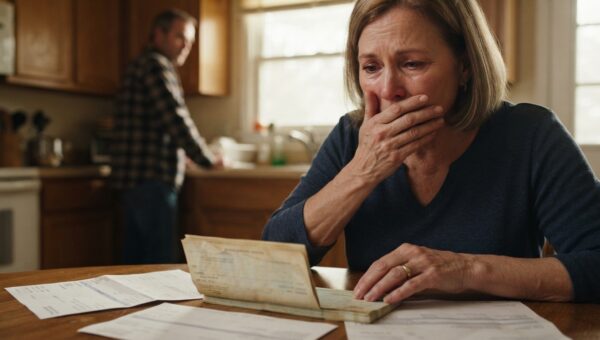
Three hours later, the attic stairs creaked down with a long, dry groan. I spent the morning dragging down the old metal storage boxes we packed away when we cleared out my mother’s estate, looking for the physical proof that should have been there in ninety-seven. It didn’t take long. In the bottom of a cardboard carton labeled tax returns, I found the credit card statements from that autumn. There were no hotel charges in Denver for those four days. Instead, there were fuel receipts from a roadside diner in New Hampshire, a motel charge two towns over from Portland, and a receipt for two custom gold bands from a small jeweler who had gone out of business back when the paper mill closed down.
I laid the receipts out on the kitchen table in a neat row, right beside the snow globe and the two identical rings. The kitchen was quiet except for the hum of the refrigerator and the ticking of the wall clock over the pantry door. I waited because I knew Arthur always walked three blocks past the hardware store on Tuesdays to check the bulletin board by the town hall.
The front door clicked open at precisely 4:15 in the afternoon. Arthur stepped into the entryway, shaking the light drizzle off his tweed cap and setting his canvas umbrella into the ceramic crock by the door. He walked into the kitchen carrying a small brown paper bag from the bakery with two cinnamon rolls inside, the way he always did on Tuesdays when the rain kept him from his garden.
“The baker was just pulling these out,” Arthur said, his voice warm and easy as he set the bag down on the edge of the counter.
Then he stopped. He saw the table.
He didn’t rush over or try to pick them up. He just stood by the kitchen island, his hands still halfway unbuttoning his wool coat, his eyes dropping from the two gold bands to the wet paper slip lying beside the empty snow globe. The color drained out of his face so fast it looked like someone had turned off a lamp behind his skin.
“You found it,” Arthur whispered. It wasn’t a question.
“You told me you were in Denver,” I said. My voice didn’t shake nearly as much as I thought it would. It sounded thin and dry, like old paper.
Arthur pulled out a kitchen chair and sat down very slowly, resting his heavy palms flat against the wood. “It wasn’t what you think. It was a mistake. A terrible mistake that lasted three days.”
“There are two rings, Arthur,” I said, pointing down at the table with one finger. “You didn’t just make a mistake. You planned it. You drove to Maine, you stood in front of someone, and you lied to my face every single day we’ve been married since.”
“She left,” he said, and his voice cracked on the words, thin and broken with twenty-eight years of secret panic. “By Monday morning, she knew it was wrong. We both knew it. We walked away from each other right there on the sidewalk and we never spoke again. I came straight home to you.”
“And you brought me a snow globe to prove how far you traveled,” I said.
“I was terrified,” he said, looking up at me with eyes that suddenly looked old and terribly small inside his head. “I didn’t know how to undo it without destroying everything we had. So I locked the ring in the briefcase and I put the note where I thought nobody would ever look.”
“You should have left it in Denver,” I told him.
I didn’t yell. I didn’t throw the bakery bag or slam the kitchen door the way people do in stories. I just walked over to the hall closet and pulled his tan canvas suitcase off the top shelf, carrying it back to the kitchen and setting it right on the floor beside his chair.
“You need to go,” I said.
“Where am I supposed to go?” he asked, looking up at me like a stranger who had lost his way in a town he used to know by heart.
“I don’t care,” I told him. “Call a motel. Call the lawyer. Just take your clothes and get out of this house before dark.”
He sat there for a long moment, staring at the second ring as if waiting for it to change back into something else, something innocent. Then he stood up without another word, went upstairs to the bedroom, and packed a single overnight bag while I waited downstairs by the sink.
When the front door closed behind him at 5:20, the house didn’t feel empty. It felt quiet in a way it hadn’t in thirty-four years, like a room where the windows had finally been pushed open after a long winter. I walked over to the windowsill, picked up the empty glass globe, and set it down where the afternoon sun could hit the clear, dry glass without a single hidden speck left inside to shadow the light.