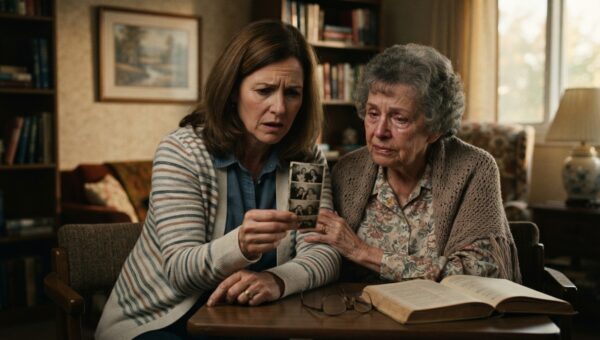
The cedar drawer on my bedroom dresser has always smelled faintly of dried lavender and old paper, but the night I finally decided to get out of bed, I didn’t care about the smell. I cared about the noise. It was 3:00 a.m. on a Tuesday, and the shower down the hall had started up with that familiar, hollow hiss of galvanized pipes rattling inside the wall.
For months, I had told myself it was just work stress keeping my son Mark awake at odd hours. Mark was an architect now, designing high-end office parks downtown, and everybody in parish told me how proud I ought to be of him. I reckon I was proud, right up until the night my common sense finally got the better of my hoping.
Mark and his wife Clara lived in a brick house out past the parish line, all neat flowerbeds on the outside and heavy silence on the inside. When Mark invited me to stay for a couple of weeks while my back porch was being rebuilt back home, I thought it would be a nice chance to see the young folks. But Clara had been acting peculiar from the first evening. She moved around the kitchen like she was walking on thin ice, her long sleeves pulled down past her wrists even when the humidity inside was thick enough to choke you.
I remember watching her drop a wooden spoon onto the linoleum on Thursday afternoon, and the way she flinched made my stomach turn over. She didn’t just bend down to pick it up. She ducked her shoulders like she was bracing for a blow that never came.
I didn’t think much of it then, because folks carry all kinds of private burdens. But that shower running at 3:00 a.m. every single night had been grinding on my nerves for weeks. It wasn’t normal for a man to wash off the day at three in the morning, seven days a week, without fail. So on that Tuesday, when the water started up again with that sharp hiss, I threw my wool blanket back and put my feet against the cold floorboards. My joints ached the way they always do when the damp gets into the parish, but I didn’t reach for my cane.
I just crept down the dark hallway in my bare feet, moving slow so the old wood wouldn’t give me away.
The bathroom door was cracked open about two inches, just enough to let a pale sliver of yellow light spill out across the dark carpet. I didn’t plan on looking. I honestly thought I was just going to knock and ask Mark if he needed some chamomile tea or a word of sense. But when I put my eye to that narrow gap, my brain kind of stopped working for a second. Mark was standing right inside the tub enclosure, fully dressed in his heavy gray work trousers and a dark shirt, holding a handheld shower nozzle. Clara was huddled on the porcelain floor beneath him, soaked through to her skin, shivering so hard I could see her shoulders jumping.
The water coming out of that nozzle wasn’t warm. I knew it wasn’t warm because Mark had the lever turned all the way to the right, down into the blue zone, right where the parish well water comes up freezing cold from the limestone shelf.
Mark looked down at her with a face I had never seen on my own flesh and blood. It wasn’t anger. Anger has some heat to it. This was worse. This was cold, calculated machinery. He leaned down and whispered something right into her ear, so low I barely caught the shape of the words through the rushing water. Then he straightened up and struck her right across the face with an open hand, sharp enough to snap her head sideways against the tile.
Clara didn’t scream. She didn’t fight back, and that was the part that made my chest seize up. She just curled herself tighter into a ball, lifting her wet arms to shield her head while Mark turned the valve off and walked out of the bathroom without a backward glance. I had to scramble back into the guest room before he passed my door, my heart hammering against my ribs like a trapped bird. I sat on the edge of that twin bed in the dark for two hours, staring at my suitcase propped against the closet door. The memories started coming back whether I wanted them to or not, unspooling like old ribbon. I remembered my own kitchen thirty years ago, and a man who believed that quiet women were better women. I had stayed back then for the sake of peace, telling myself it would get better once the mortgage was paid off. It never got better. It just got quieter until I didn’t have a voice left to lose.
By sunrise, my bags were packed and zipped tight. I carried them down the stairs without making a sound, leaving my linen sheets folded neatly on the mattress. Mark was sitting at the kitchen island with a cup of black coffee and an architectural drawing spread out before him, looking every bit the successful young professional the parish admired. He looked up, surprised to see me ready to travel. “Leaving so soon, Mama?” he asked, his voice smooth and easy. I didn’t scream at him. I didn’t even drop my jaw. I just looked straight into his eyes and told him I had things to tend to at home. He didn’t argue. He just smiled that polite parish smile and went back to his blueprints.
I drove out of that driveway just as the sun was clearing the live oaks, the tires humming a steady, heavy tune against the asphalt. Three hours later, I pulled into a roadside motel with a fading neon sign and sat in the parking lot with the engine idling. The thought that had been circling my mind since 3:00 a.m. finally settled deep in my bones, heavy as lead. I could leave. Clara couldn’t. And I knew I couldn’t pretend I hadn’t seen what was happening behind those locked doors. If I drove home and kept my mouth shut to preserve family harmony, I would as good as be holding the shower nozzle myself.
I didn’t go home. I went straight to the parish courthouse and sat down across from a young legal aid attorney named Mr. Thibodeaux who looked like he hadn’t slept since last Tuesday. I didn’t give him a polite version of the story. I told him every single detail, from the 3:00 a.m. water pipes to the red mark on Clara’s cheek and the exact way Mark held the sprayer. Mr. Thibodeaux listened without blinking, his pencil scratching against a yellow legal pad until the lead snapped. He told me straight out that without an eyewitness willing to sign an affidavit, Clara would likely stay trapped in that house until something broke for good. He asked me if I was ready to sign my name to a sworn statement that would permanently burn every bridge I had left with my son. I picked up his pen without a second thought and signed my name right at the bottom of the page.
Two days later, we executed the plan while Mark was downtown at a site meeting for his new office park. I drove back to the house with Mr. Thibodeaux and a parish deputy whose uniform looked two sizes too small for him. Clara answered the door in a dry sweater, her eyes hollow and wide like a trapped rabbit when she saw me standing on the porch. She tried to push the door shut, but I put my hand right against the wood and pushed it back open. “Clara, pack a bag,” I told her, my voice shaking despite myself. “You’re coming with me right now.” She started to cry then, silent, racking tears that shook her whole frame, whispering that Mark would find us anywhere we went.
We didn’t have much time before Mark’s lunch break, so I walked straight past her into the bedroom and started throwing clothes into a canvas duffel bag. Clara stood in the doorway, paralyzed by the fear Mark had built into her brick by brick over the last four years. “He said nobody would ever believe me,” she finally whispered, her voice cracking on the words. I walked over and grabbed her by the shoulders, looking right into her wet eyes. “He didn’t count on me standing in the hallway at 3:00 a.m.,” I said. “Now move.” We had her things loaded into the trunk of my sedan just as a dark sedan turned down the street. It was Mark, coming back early from his meeting to check on things.
He slammed his car door and walked up the gravel path, his face darkening when he saw the deputy standing by my bumper. “What is the meaning of this?” Mark shouted, his parish charm melting away to reveal the cold bully underneath. He tried to step past the deputy to grab Clara’s arm, but I stood right between them. “Don’t you touch her,” I said, my voice dropping down to a parish whisper that carried more weight than any shouting. Mark looked at me like he was seeing a stranger, his mouth working for a parish minute before he found his voice. “She’s my wife,” he snarled, pointing a finger at Clara. “She has nowhere to go without me.”
Mr. Thibodeaux stepped out from the side of the house with the emergency protective papers already signed by a parish judge. He handed them directly to Mark, whose face went completely slack as his eyes scanned the legal wording detailing my eyewitness testimony. Mark started to sputter denials, his voice climbing an octave, calling us crazy, claiming we were making the whole thing up out of malice. But the deputy put a heavy hand on his belt and told Mark to step back from the vehicle. I didn’t look back at my son as I got into the driver’s seat and turned the ignition. The engine caught with a steady roar, drowning out whatever else he was trying to yell down the driveway.
We drove two parishes over to a quiet, sunlit apartment complex near the coast where Mr. Thibodeaux had arranged temporary housing through a local women’s shelter. By evening, the boxes were set against the baseboards and the front door was locked tight with a heavy deadbolt I checked twice myself. Clara sat at the small kitchen table with both hands wrapped around a warm ceramic mug of tea I had made for her, watching the steam rise toward the ceiling. Neither of us said much for a long time, because some things don’t need a lot of talking to explain them. We just sat there in the quiet room, listening to the hum of the refrigerator instead of running water, knowing that the past was finally locked outside where it belonged.