The telephone on the small metal desk inside my desert barracks didn’t ring with the usual steady cadence of official military traffic. It had a frantic, clipped chatter to it, vibrating against the smooth laminate surface at precisely 2:17 a.m. local time, which put it past five in the morning back in North Carolina. I picked up the receiver before the second ring finished its pulse.
The air conditioning unit in the wall rattled a dry, hot breath across the room, but the voice on the other end was small and thin, barely carrying over the background hum of an overhead light.
“Dad?”
My chest tightened into a hard knot before she even said my name. Lily had that specific hitch in her breathing when she tried not to cry, the one she got whenever she scraped her knee on the gravel drive behind the Sterling house and tried to tough it out because Rowan hated noise.
“I’m right here, Lil,” I said, my voice dropping instantly into that low, steady register I used when things went sideways in the field. “Talk to me. Where are you?”
“In the hospital,” she whispered, and the sound of it felt like someone had taken a cold blade and pressed it right against my ribs. “Dad… my uncles hurt me with a tire iron, and Mom just watched.”
The words didn’t make sense for a second. They bounced off the walls of the barracks room while my brain tried to force them into a shape I could recognize.
Rowan and Jaxsoh Sterling didn’t lose their tempers. They measured their lives in property lines, acreage, and the polish on their boots. They were the kind of men who treated my daughter like an unwelcome tenant because my military paychecks didn’t come with enough land attached to them.
“Who did this, baby?” I asked, keeping my tone level even though my knuckles were turning white around the plastic handset.
“Rowan’s boots,” she sobbed softly, the sentences breaking apart. “I spilled orange soda on his leather boot by the back steps. Jaxsoh grabbed my arm. They dragged me out to the gravel. Mom stood right by the screen door and didn’t say nothing. She just told me to stop making a fuss.”
The details came out in jagged pieces between her gasps for air. Injuries to both forearms where the metal had caught her when she tried to shield her face.
A fractured left femur from where Jaxsoh had dropped his weight onto her leg. Two broken fingers on her right hand that looked like crooked twigs under the hospital lights.
“I’m coming home, Lily,” I told her, and I didn’t care about leave paperwork or the chain of command right then. “You hold on for me. Dad is on his way.”
The cross-country flight was a twelve-hour blur of stale cabin air, unswallowed coffee, and a cold, heavy fury that settled deep in the marrow of my bones. By the time my boots hit the linoleum floor of the pediatric ward in Asheville, my uniform was wrinkled and my eyes felt like they were full of sand. The room smelled like rubbing alcohol and cheap lemon disinfectant. Lily was laid out in a mechanical bed with her left leg hoisted up in a metal traction rig, white bandages wrapped thick around her small arms like cast-off cotton.
When she saw me walk through the door, her lower lip started to tremble, and she reached out her good hand with the fingers splinted.
I sat down in the orange plastic chair beside her bed and took her small hand very gently in mine. “I’m here,” I said, and for a long minute, neither of us said anything else.
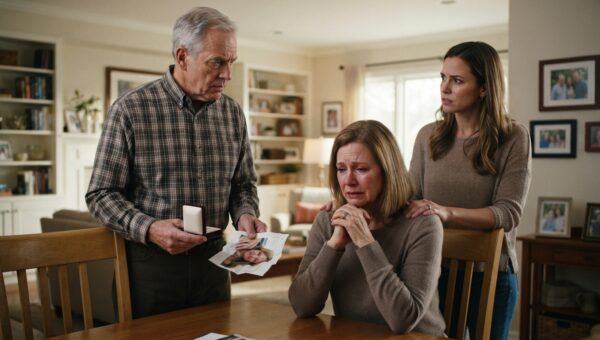
Elena was sitting in the corner chair, her hands folded tightly in her lap like she was waiting for a bus that was running late. She wouldn’t look me in the eye. Her hair was pulled back into its usual neat clip, and she had on her church cardigan, the gray one with the pearl buttons.
“Marcus,” she said, her voice dry and defensive before I even turned my head toward her. “The girl was being clumsy. Rowan was furious about the leather. You know how he gets when people don’t respect his things. It got out of hand, but the doctors are taking care of her, and we don’t need any military fuss.”
I looked at my wife, at the woman I had married twelve years ago before the distance of the service turned her back into a Sterling. I didn’t yell. I didn’t flip the small plastic table beside the bed or reach for her throat the way every screaming instinct in my blood told me to do. I just looked at her until her eyes darted away toward the linoleum floor.
“Get out,” I said quietly.
“Now, Marcus, don’t be dramatic, “
“I said get out of this room before I forget I’m wearing this uniform,” I whispered.
Elena gathered her purse with jerky, offended movements and walked out into the corridor without looking back at her daughter once.
For the next four days, I didn’t leave that room. I slept sitting upright in the hard plastic chair with my arms crossed over my chest, waking up every time the monitors beeped or Lily murmured in her sleep. I spent those four days playing the long game the way the army taught me. I didn’t make empty threats to the Sterling family. I didn’t call Rowan to curse him out over the phone because a hot-headed confrontation would have given them time to scrub their phones, coordinate their stories, and lawyer up behind their grandfather’s old municipal court connections.
Instead, I worked the room like a combat patrol leader. I made friends with the night-shift pediatric nurse, a sharp-eyed woman named Brenda who handed me copies of the official intake logs and trauma reports without me even having to ask twice. I requested the formal pediatric assessment notes that detailed the distinct crescent bruising pattern on Lily’s ribs and the blunt-force trauma to her forearms, consistent with a heavy steel rod. I logged every conversation, every doctor’s visit, and every time the hospital social worker came by to ask careful, guarded questions about how a nine-year-old girl sustains bilateral defensive fractures on a Tuesday afternoon.
On the fourth morning, while Lily was resting under a light dose of pain medication, my phone buzzed against the table with a secure notification from an app I only used for encrypted family comms.
It was from Brooke.
My sixteen-year-old niece, the quiet one who usually sat at the end of the long dining table at the Sterling estate staring at her sneakers, had sent a digital file. The message attached to it was just three words: *I saved this.*
My thumb hovered over the screen for a second before I tapped download. The progress bar crawled across the OLED display in the dim morning light of the hospital room. Then the video started playing with no sound at first, just the harsh, blown-out glare of the floodlights over the gravel driveway behind the main house.
The camera was shaky, obviously filmed from the dark safety of the upstairs landing window through the dirty screen. You could hear the faint, muffled sound of cicadas and then Rowan’s voice carrying clear over the crunch of tires.
“Pick it up,” Rowan yelled, his large frame blocking the center of the frame as he pointed down at a wet stain on the toe of his boot.
Lily was crouched on the gray stones, her small shoulders shaking. Jaxsoh was standing right behind her with a heavy, twenty-inch tire iron resting casually across his palm like a baseball bat.
“I didn’t mean to, Uncle Rowan,” Lily’s voice drifted up, small and terrified.
“You don’t mean anything,” Rowan spat back, stepping closer. “You’re just a visitor here, eating off our plates.”
That was when Jaxsoh stepped forward and swung the heavy end of the iron down toward the gravel, striking the stones right beside her knee to make her flinch. The video caught every second of it. It showed the exact moment Jaxsoh raised the tool and brought it down across her forearm as she threw her hands up to protect her head. And right there, standing frozen on the back porch step with her hand on the screen door handle, was Elena. My wife didn’t scream. She didn’t lunge forward to push her brothers away. She stood there watching with a blank, indifferent expression, and then she leaned down and whispered something to Lily about respecting the household before pulling the door half shut so she wouldn’t have to hear the crying.
I sat there in the orange plastic chair for a long time after the video looped back to the beginning. My brain didn’t race. It went cold and clear, like water in a canteen left out in the desert frost. The evidence was complete. The medical trauma logs matched the physical injuries down to the millimeter. The neighbor’s commercial security camera across the lane captured the timestamp of the vehicles. And now I had the unvarnished digital truth straight from the upstairs window, showing premeditated assault, willful child endangerment, and the silent, complicit blessing of a mother who had chosen her family name over her own blood.
I didn’t call Rowan. I didn’t call Elena. I dialed a direct, secure line to an old friend in the military legal division who knew state troopers in western North Carolina, and from there I patched straight through to the Asheville District Attorney’s office and the state child protective services emergency response unit.
“First Sergeant Vance,” I said when the duty officer picked up on the third ring. “I’m sitting at room 412 at Memorial Hospital, and I have a complete package ready for download. I want two patrol units and an emergency custody warrant dispatched to the Sterling estate on Miller Lane right now.”
Two hours later, the hospital room door swung open, but it wasn’t a nurse. Two county sheriff’s deputies in dark green uniforms stood in the doorway, accompanied by a female social worker with a thick leather binder tucked under her arm. Behind them, standing in the hallway looking pale and furious, was Elena. She must have gotten the call from her mother as the cruisers rolled up the gravel drive.
“Marcus, what is the meaning of this?” Elena hissed, trying to push past the deputy, but the big officer simply shifted his weight and blocked the threshold with his shoulder. “Mother said there are police at the house. They’re arresting Rowan and Jaxsoh. They took them out in cuffs over an accident, “
“It wasn’t an accident, Elena,” I said, standing up from the chair and sliding my phone into my pocket.
The social worker stepped forward into the room, holding out a multi-page document with blue ink signatures at the bottom. “Mrs. Vance, I am serving you with an emergency protective custody order granting sole physical and legal guardianship to First Sergeant Marcus Vance, effective immediately. Furthermore, warrants have been executed for your brothers on charges of felony aggravated assault and child abuse, and you are being cited as a co-conspirator for felony child endangerment and failure to protect.”
Elena’s face went completely slack. The pearl buttons on her gray cardigan seemed to tighten against her chest as she stared at the official seal on the paperwork. “You… you called the police on my family?”
“I protected my daughter,” I told her, my voice dropping so low the words barely left my teeth. “The video from Brooke showed everything, Elena. You stood right there by the door and watched them break her bones. You don’t get to call yourself a mother after that.”
She opened her mouth to say something, some sharp family defense about loyalty or respect, but no sound came out. The deputies stepped closer, guiding her gently back out toward the elevators as hospital staff began gathering around to clear the hallway.
I turned back to the hospital bed. Lily was watching me with those big, solemn eyes, her small hand resting over the blanket where her leg was held in traction.
“Are we going home, Dad?” she whispered, her voice sounding lighter now that the heavy, suffocating weight of the Sterling house had finally been lifted off her shoulders.
“We’re going home, baby,” I said, leaning down to adjust the blanket around her shoulders. “And nobody is ever going to hurt you again.”
By evening, the discharge paperwork was signed, sealed, and approved by the attending physician under military medical transfer provisions. When the hospital transport team wheeled Lily out through the sliding glass doors into the warm Asheville dusk, the cicadas were buzzing in the maples just like they did every summer evening in the mountains. A pair of small, healing hands reached out from beneath the wool blanket, resting softly against the smooth brass buttons of my uniform lapel as our aircraft lifted off the tarmac, leaving the heavy Mojave heat and the dark gravel drive far behind us for good.