The morning sun hit the blue laminate of my kitchen counter at exactly seven-fifteen, throwing a long, thin shadow across the white linoleum where I stood scraping burnt toast into the trash. I liked my mornings quiet. For sixty-two years I had built a life around rhythm, around the steady hum of the refrigerator and the predictable ticking of the wall clock my late husband hung on our thirty-fifth anniversary.
But quiet had turned into something heavy lately. Three months of empty Sunday dinners. Three months of my phone sitting silent on the charger, glowing with missed calls that never came from David or Brenda. All because I finally put my foot down about my sedan.
I had lent them that car twice the previous winter, and both times it came back smelling like stale cigarette smoke with the gas needle pinned hard to the left on empty. The second time, there was a jagged white scrape across the passenger side rear quarter panel that Brenda shrugged off as a rogue shopping cart at the piggly wiggly. I told them no more. I told them my keys were staying on the hook by the pantry from now on. Brenda had crossed her arms, tossed her blonde hair, and muttered something about me being heartless before dragging Leo and his little sister out the front door.
They hadn’t spoken to me since. I missed those kids so much my chest ached every time I folded tiny socks or washed extra dishes out of habit.
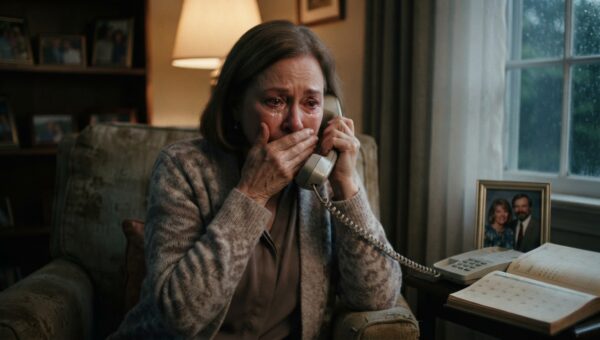
Then the phone rang at 11:42 in the morning. It was not David. It was Mrs. Gable, the counselor from Lincoln Elementary, and her voice sounded tight and pinched over the wire. She asked if I was the emergency contact listed on little Leo’s file, and before I could even confirm it, she dropped the sentence that made my knees go weak. She said Leo had been coming to school three days a week with nothing in his lunchbox except a crumpled paper napkin. She said he finally broke down when another kid offered him a carton of milk and told her he didn’t want to bother his mother because mom and dad were always fighting about the bills.
I didn’t think twice. I grabbed my purse, threw my spare house keys into my coat pocket, and drove straight to the deli down the street from the school.
I bought turkey clubs, a bunch of bananas, and two cartons of chocolate milk, paying in cash because my debit card had been acting up at the register. When I walked into the school office, Mrs. Gable brought Leo out to me. He looked smaller than he had three months ago. His gray hoodie hung off his shoulders like a sack, and his sneakers were scuffed through at the toes.
When he saw me standing by the secretary’s desk, he didn’t hesitate. He dropped his canvas backpack on the linoleum floor and ran straight into my legs, burying his face in my wool sweater so hard I felt his small forehead bump my ribs. I knelt down right there in the middle of the hallway, holding him tight while my eyes stung with hot, sudden tears. He was shaking. He pulled back just enough to look up at me with those big, solemn brown eyes that looked so much like his father’s used to look before David grew up and traded his steady nature for bad luck and worse choices.
He reached up and grabbed the lapel of my coat with trembling fingers. “Mom said you hate us now,” he whispered, his voice cracking on the word mom like he was afraid someone down the hall might hear him telling secrets. “She said that’s why you wouldn’t let us use the car. But it doesn’t matter anyway. Dad’s money goes to the place with the green sign.”
I stared at him. “What green sign, honey?” I asked, smoothing his hair back from his forehead.
“The one downtown by the laundry mat,” he said, blinking back tears. “The flashing one with the cards on it. Dad goes there every night after work. There’s no milk at home, Grandma. We just have saltines.”
I knew exactly what place he meant. It was a new establishment that had popped up six months ago in an old auto parts storefront, painted entirely black with glowing neon clover leaves and the word sweeps written in ten-foot-tall letters across the tinted glass. People whispered about it at the diner. They said it was full of electronic slot machines disguised as sweepstakes terminals, sucking up people’s paychecks five dollars at a time under the guise of selling internet time. I handed Leo the bag of sandwiches and told Mrs. Gable I had to take care of something important.
I didn’t go home. I turned my sedan straight toward downtown, my hands gripping the steering wheel so hard my knuckles turned the color of skim milk. The autumn wind was kicking up dry oak leaves against the pavement, but I didn’t feel the cold. I felt a cold, hard anger settling right behind my breastbone, burning hot enough to clear away three months of sorrow in a single afternoon. When I pulled into the gravel lot beside the old auto parts store, my heart was hammering against my ribs like a trapped bird. The neon sign buzzed in the midday gray, an ugly emerald glare against the weathered brick.
I shoved the front door open, the little brass bell chiming above my head with an irritatingly cheerful sound. The room inside smelled intensely of industrial carpet cleaner, stale cigarette smoke, and hot electrical dust. There were twenty or thirty computer terminals lined up against the drywall, each one flashing with spinning reels of digital cherries and gold bars. Overhead, dusty ceiling fans churned the heavy air. Most of the stools were empty, but about halfway down the row, hunched over a glowing screen with his shoulders curved inward like a question mark, sat my son.
David didn’t hear me walk up behind him. I stood there for a long, quiet second just watching the digital credits tick down from forty dollars to zero in less than ten seconds as he jammed his finger down on a plastic button labeled spin. He reached into his coat pocket with a tired, frantic motion, pulled out a crumpled twenty-dollar bill, and shoved it into the bill validator with the practiced, greasy efficiency of a man who had done this a thousand times. The machine swallowed the cash with a mechanical whir.
I reached out and grabbed his shoulder. “David,” I said.
He jumped so hard his stool scraped three inches across the linoleum, knocking over a paper cup of lukewarm coffee that spilled dark brown across his sneakers. He whipped his head around, his face draining of all color until he looked gray under the fluorescent lights. His eyes darted around the room like a cornered animal before they finally locked onto mine, wide and terrified. He looked smaller than he was, sitting there in his grease-stained work jacket with his thinning hair sticking to his forehead.
“Mom,” he breathed, his voice catching in his throat. “What are you… what are you doing here?”
“I think that’s my line,” I said, keeping my voice lower and steadier than I actually felt. I pointed a finger down at the glowing screen where a small red zero mocked us both. “Is this where the grocery money went, David? Is this why Leo is going to school with nothing in his lunchbox except a paper napkin?”
David shrank back into the plastic seat, his hands curling into tight fists in his lap. “You don’t understand,” he muttered, staring down at the spilled coffee on his shoes. “It’s just an investment. I was going to hit the grand multiplier today. I was going to win it all back and pay the power bill before Friday.”
“You lost the power bill?” I asked, and the quietness of my own voice terrified me more than if I had screamed. “Look at me, David. You lost the electricity?”
He couldn’t look up. He just nodded once, a miserable, jerky motion of his head that made my stomach turn over. “Brenda didn’t know,” he lied, though the lie was so weak it barely floated off his tongue. “She thought the bank error froze our checking account. We’ve been buying groceries on credit cards.”
“There are no credit cards left, David,” I said, reaching down to grab his elbow and hauling him up off the stool whether he wanted to move or not. “Get your coat. We are going home right now, and you are going to tell your wife that her game of pretending everything is fine is officially over.”
He didn’t fight me. He let me drag him out of that dark, humming room into the sharp afternoon light, his head bowed like a schoolboy caught stealing from the collection plate. I made him get into the passenger seat of my car, and I drove the four miles out to their subdivision in complete silence, the hum of the engine filling the space between us. Every time I glanced over at him, I saw my little boy who used to build wooden birdhouses in our garage, now turned into a hollowed-out stranger who couldn’t even look his own mother in the eye.
When we pulled into their gravel driveway, Brenda’s station wagon was parked right by the front steps with a flat front tire that had been sitting low for a week. I marched right up to the front door without waiting for David to catch up, and I didn’t bother knocking. I twisted the brass knob, pushed it open, and walked straight into their living room. Brenda was sitting at the kitchen table sorting through a stack of red past-due notices with a pen in her hand, her hair pulled back in a messy clip. When she looked up and saw me standing there with David trailing behind me like a whipped dog, the pen slipped from her fingers and rolled across the laminate floor.
“What is the meaning of this?” she started, her face flushing a bright, defensive red as she stood up so fast her chair screeched against the floorboards. “You have no right to just walk into my house. You’ve made that very clear for the last three months.”
“Sit down, Brenda,” I said, dropping my canvas grocery bag right in the middle of her stack of unpaid bills. The sound of canned soup and bread hitting the table made her flinch. “I just came from Lincoln Elementary. Mrs. Gable called me because Leo is starving. Not because you’re busy, but because there is no food in this house.”
Brenda opened her mouth to argue, her chin coming up in that stubborn, prideful tilt that had always driven me crazy, but then she looked at David. She looked at his gray face, his downcast eyes, and the way his hands were trembling in his pockets. The lie died right there on her tongue. The defensive armor she had worn for months cracked all at once, and she dropped back down into her chair, covering her face with both hands as dry, racking sobs tore through her chest.
“I didn’t know what else to do,” she cried into her palms, her voice muffled and small. “He swore he stopped last winter. He said the car argument was why you were being mean to us, and I just… I couldn’t admit to anyone that my husband was a gambler. I couldn’t let my mother find out. I couldn’t let you be right about him.”
“Pride doesn’t feed children, Brenda,” I said, pulling out a chair and sitting down directly across from her until she was forced to look at me through her tear-stained fingers. “And blaming me for setting a boundary with my car didn’t fix the hole in your bank account. You protected his secret until your kids were the ones paying the price.”
David finally broke his silence, his voice cracking with a ragged, ugly sound as he sank into the chair beside his wife. “I need help, Mom,” he whispered, reaching out to touch Brenda’s arm, though she pulled away from him with a sharp jerk. “I can’t stop. Every time I get paid, I swear I’m not going back to the green sign, but then I see the flashing lights and I feel like I can fix everything.”
“You aren’t fixing anything by yourself anymore,” I said, reaching into my purse and pulling out my notepad and a pen. “Here is how this week is going to go. David, you are calling your employer right now and telling them you need medical leave for an addiction program. Brenda, we are going to log into every single online account you have and transfer your direct deposit to a secure joint account that requires both of our signatures to withdraw a single dime. And as for the kids, they are eating dinner at my house every single night until the pantry here is full of groceries that I bought myself.”
They didn’t fight me. They didn’t have any fight left. Brenda sat there wiping her eyes with the corner of a dish towel, nodding slowly as the reality of what they had done finally settled over the room like cold ash. It wasn’t a neat Hollywood ending where everyone hugged and smiled through their tears. There was a long, painful silence where nobody knew what to say next, the kind of heavy quiet that only comes when a family has hit rock bottom and has to look at the mess they made.
An hour later, the front door clicked open and little Leo walked in from the school bus, dropping his backpack by the entryway with a familiar thud. He froze when he saw me sitting at the kitchen table with his parents, his eyes darting between us like he was trying to figure out if he needed to run back outside. I stood up from my chair, walked over to the counter where I had already unpacked the bread and soup, and picked up my car keys from the pocket of my coat.
I tossed them onto the center of the kitchen table, right beside the stack of red past-due notices, where they landed with a dull, heavy clink against the wood. Then I walked over to the refrigerator, pulled out a fresh carton of milk, and poured a tall, cold glass for my grandson without saying a word. Leo walked slowly across the kitchen, climbed up onto his usual wooden chair, and took the glass from my hands, his small fingers wrapping securely around the cold glass. He looked up at me, took a long sip, and let out a small, contented sigh that told me everything was going to be alright, even if the road back was going to be long and hard for all of us.