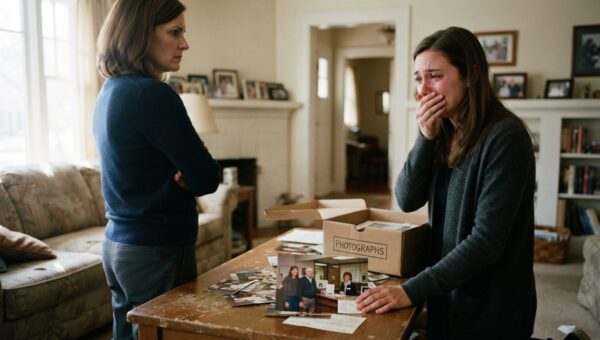
The cedar floorboards of the back hallway always creaked in a very particular three-step rhythm under Dennis’s loafers, but the day he finally convinced me my mind was slipping, the house felt entirely too quiet. For six months, Dennis had been weaving a very neat, very patient web around me. He would move my car keys from the ceramic bowl by the front door and tuck them behind the cookbooks, then stand by the kitchen island with that gentle, worried look he had perfected.
He would tell our kids that I was repeating myself at Sunday dinner. Once, while he was pouring our morning coffee, he looked right into my eyes and said, “Maybe we should talk about assisted living before this gets worse, Sondra.” I was sixty-one years old, and the scariest part was that I actually believed him. I started doubting my own thoughts, wondering if the fog was finally rolling in, so I went out to the local stationer’s and bought a little green notebook with lined pages.
Every single day after that, I wrote down everything. I logged the time I woke up, what I ate for breakfast, exactly where I laid my reading glasses, and every conversation Dennis and I had while the kitchen was quiet. It was my only anchor against a world that seemed to be shifting underneath my feet. The notebook became my private witness, a small square of cardboard and paper that refused to let me gaslight myself.
I didn’t know why he was doing it, but I knew I needed hard facts if I was going to keep my footing.
The morning the whole illusion cracked wide open started at 5:40 AM. The house was still dark, the air cold enough to frost the corners of the kitchen windows, when I heard the low click of the laundry-room door sliding across its metal track. Dennis always woke up early, but usually he was making coffee or checking the market report on his tablet. This morning, he was moving with a strange, deliberate quiet that set my teeth on edge. I slipped out of bed, pulling my old wool cardigan over my shoulders, and followed the sound without turning on a single light.
I stopped just short of the laundry room, keeping myself hidden in the shadows of the hallway. Through the slatted door, I watched Dennis standing by the workbench in the garage.
He had my leather purse hooked over his forearm, and I watched him reach inside, pull out my ring of brass house and car keys, and drop them deep inside an old, half-empty paint can sitting on the bottom shelf. He didn’t rush. He tucked the lid back down with the heel of his palm, just enough to hide them. I stood there, my hand flat against the cold drywall, and I didn’t panic. I just reached into the pocket of my cardigan, pulled out my little green notebook, flicked to a fresh page by the weak spill of the utility light, and wrote down the exact time: 5:40 AM.
That was when I noticed the manila folder tucked firmly beneath his other arm. It was thick, bound with a metal clip, and across the heavy cardstock front someone had typed CAPACITY EVALUATION in stark black letters. Below that, neatly written in Dennis’s familiar cursive, was our daughter Chloe’s name listed as the primary requesting party.
My stomach didn’t drop; it turned to ice. Dennis didn’t just want me to think I was losing my memory. He was building a legal case to strip away my autonomy, and he had used our own daughter to sign the papers.
I waited until he walked back toward the kitchen before I slipped back into the bedroom, my heart hammering against my ribs like a trapped bird. The next three days were a masterclass in holding my tongue while my skin crawled. Dennis was extra attentive, pouring my tea and asking if I slept well, testing the waters to see if I noticed my keys missing yet. I played the part. I let him find the keys for me in the garage later that morning, acting suitably flustered and grateful, while my thumb pressed against the spine of the green notebook sitting safely in my bedside drawer.
By Tuesday afternoon, while Dennis was out at the hardware store buying supplies, I went into the small study and sat at his desktop computer. He was usually careful, but men who think they are winning make sloppy mistakes. It took me ten minutes of digging through his sent mail and draft folders to find what I was looking for. There were half a dozen email chains between Dennis and an elder-law attorney in downtown Charleston. The subject lines spelled it all out in cold legal terms: property transfer timelines, sole inheritance asset consolidation, and medical affidavits regarding cognitive decline. The historic family home and the commercial acreage my parents left me were worth close to a million dollars, and Dennis had figured out that the only way to get his name on the deeds before I updated my estate planning was to have me declared legally incompetent.
I printed the correspondence, folded the pages neatly, and slid them straight into the back pocket of my slacks. Then I drove straight to Arthur Vance, the attorney who had handled my parents’ estate back in ninety-four. Arthur was seventy-two now, with sharp eyes and a desk piled so high with files it looked like a paper fort. He listened to me for twenty straight minutes without interrupting once, turning my little green notebook over in his hands like it was a holy relic.
“Six months of precise timestamps, Sondra?” Arthur asked, adjusting his wire-rimmed glasses as he looked down at my neat handwriting. “This is better than most private investigators give me.”
“He’s been moving things and telling Chloe I’m forgetting conversations,” I said, my voice shaking slightly as I leaned across his leather blotter. “Can he actually force an evaluation based on our daughter’s signature?”
“Not if we move first, and certainly not once a judge sees this log,” Arthur said, tapping the green cover. “Your daughter signed those papers because she was lied to, didn’t she?”
“She thinks I called her crying last month about getting lost on Route 50,” I whispered, the memory of Dennis’s fake phone call burning in my chest. “I never even left the house that day. It’s right here in the book.”
We laid out the plan right there. Arthur drafted a formal notice revoking any pending medical petitions and dispatched an investigator to pull the active paperwork from the county probate court. But the legal paperwork wasn’t what worried me. The real work had to happen at my kitchen table, with my daughter sitting right across from me.
On Friday evening, I asked Chloe to come over for dinner while Dennis was at his weekly poker game with the neighbors. She arrived looking anxious, her car keys jingling in her hand, her eyes darting around the kitchen like she expected me to burn the roast.
“Mom, Dennis said you were having a really hard time finding your words again on the phone,” she said softly, dropping her handbag onto the counter. “He’s just so worried about you.”
“Sit down, Chloe,” I said, my voice completely steady.
I didn’t yell. I didn’t raise my voice. I simply placed the green notebook down on the wood grain between us, right next to a manila folder containing the printed emails from Dennis’s computer and a copy of the capacity evaluation request bearing her signature.
Chloe looked down at the papers, her brow furrowing in confusion. “What is this?”
“That is six months of my life,” I told her, opening the notebook to the very first page where I logged Dennis moving my silver teaspoons into the garage toolbox. “And underneath it is the email correspondence where your husband’s stepfather figured out how to steal the property my parents left me by having a judge declare me senile.”
Chloe reached out, her fingers trembling as she picked up the evaluation request. She read her own signature at the bottom, and the color drained right out of her face. “No. Dennis told me… he said you called him crying from the grocery store parking lot because you didn’t know how to drive home. He said you begged him to get help before you hurt yourself.”
“I haven’t driven to the grocery store on a Thursday in three years, Chloe,” I said quietly, pointing a finger at the neat rows of ink in the notebook. “Look at the dates. Every single time Dennis told you I was slipping, I was either sitting right here in this kitchen or visiting my sister two counties over. He engineered every single piece of it.”
She stared at the pages, her mouth opening slightly as the pieces clicked together into something ugly and undeniable. “He… he called me every time before you guys visited. He told me what to watch for. He made me feel like I was a terrible daughter for not noticing sooner.”
“He played both of us,” I said, reaching across the table to take her cold hand. “And he almost won.”
By the time Dennis walked through the front door at 9:30 that night, whistling softly and hanging his jacket in the hall, the house was bright and quiet. He walked into the kitchen expecting to find an agreeable wife and an anxious daughter discussing assisted living options. Instead, he found Chloe sitting upright at the table with red-rimmed eyes, and me standing by the stove with a cup of black coffee in my hand.
Dennis stopped in the doorway, his eyes flicking from Chloe’s face to the open green notebook resting dead center on the kitchen table. “What’s going on here?” he asked, his voice dropping into that smooth, soothing register he used whenever he wanted to manage a situation. “Sondra, honey, are you feeling all right?”
“Don’t honey me, Dennis,” I said, setting my mug down with a sharp clink against the ceramic tile.
Chloe stood up from her chair, her hands clenched into fists at her sides. She didn’t scream, which was worse. She looked at him with a cold, hollow stare that made him take half a step backward. “You lied to me,” she said, her voice shaking with rage. “You used my worry for my mother to steal her house.”
Dennis tried to laugh it off, offering a weak, dismissive smile as he held up his hands. “Now wait just a minute. Chloe, honey, your mother is clearly having a confused episode. You know how her memory has been acting up all year. She’s imagining things.”
“I am not imagining the paint can in the garage, Dennis,” I said, walking slowly toward him until I was standing two feet away. “I am not imagining the emails to your elder-law attorney in Charleston. And I certainly didn’t imagine the capacity evaluation paperwork you had Chloe sign under false pretenses.”
Dennis’s face went completely rigid, the easy charm evaporating like morning mist off a tin roof. He opened his mouth to say something, to spin another lie, but the words wouldn’t come. He looked past me at Chloe, then down at the notebook, and he finally understood that the trap had closed around him instead.
“Arthur Vance has already filed the restraining motions,” I told him, keeping my voice low and level. “The petition is being withdrawn as we speak. Your bags are in the mudroom. You have twenty-four minutes to get out of my house before I call the sheriff and read him every single entry in this book.”
He didn’t argue. Men like Dennis, who build their entire lives on quiet manipulation and hidden paperwork, don’t know how to fight back when the lights are turned on. He turned on his heel, grabbed his leather jacket off the peg, and walked out the front door without another word.
The house was so quiet after he left that you could hear the refrigerator humming in the corner. Chloe stayed for an hour, crying tears of guilt and relief while we sorted through the wreckage of what Dennis had tried to do, promising to rebuild the trust he had so carefully dismantled. After she left, I locked the deadbolt, turned off the porch light, and walked back into the kitchen.
I picked up the little green notebook, blew off a stray speck of dust from the cover, and laid it flat and closed on the counter right beside a fresh cup of coffee. I didn’t need it anymore as a shield against doubt, but I kept it there anyway, a quiet, solid monument to my own clear-eyed survival.