PART 1
For twelve years, my entire life smelled like laundry detergent, rubbing alcohol, and cheap canned peaches. Dad had his massive stroke when he was sixty-eight, and overnight my childhood home turned into an assisted living facility run entirely by me.
I gave up my job at the county clerk’s office, took early retirement, and moved into my old high school bedroom. My brothers, Tom and Kevin, thought this was a perfectly natural arrangement. Tom lived forty minutes away in the suburbs, where he coached Little League and bought a new pickup truck every three years. Kevin lived three hours away near Raleigh, running an HVAC business. When Dad first came home from rehab unable to speak properly or walk without a gait belt, Kevin clapped me on the shoulder and said, “Thank God you never remarried, Claire. You’re built for this.”
Then they vanished into their own busy lives.
They came around on Thanksgiving and Easter. Tom would show up with a pre-cooked pie, eat half of it, talk loudly over the football game, and leave after two hours. Kevin would send fifty dollars in a birthday card for Dad, or occasionally order a bulk box of disposable underpads from Amazon, as if that made him an equal partner in the business of keeping our father alive. Neither of them ever changed a catheter bag. Neither of them sat in the emergency room at three in the morning while Dad shook with sepsis from a kidney infection. When Dad started having trouble swallowing, I was the one who pureed his chicken stew, measured his water thickener, and slept on a cot at the foot of his bed so he would not fall trying to reach the bathroom in the dark.
Over the years, Dad regained a lot of his mind, but his speech stayed slow and his right side stayed weak. He was trapped in a body that did not cooperate, but his eyes missed nothing. Whenever Tom or Kevin called, they talked down to him like he was a pet dog or a toddler, speaking slow and loud into speakerphone before telling me to make sure Dad drank his fluids. Dad would just stare at the ceiling, waiting for them to hang up.
Dad passed away quietly in his sleep on a Tuesday morning in October. He was eighty.
At the funeral on Saturday, the church parlor was packed. Dad had worked for the municipal water authority for thirty-five years, and old coworkers came by the dozen. That was when Tom and Kevin stepped into the spotlight.
Tom stood by the guest register in his charcoal suit, shaking hands, hugging elderly women with both hands. “It was hard on the family,” I heard Tom tell Mr. Henderson, Dad’s former supervisor. “These last twelve years took everything out of all of us. But we made sure Dad had round-the-clock care. We wouldn’t let him go into a home. We kept him where he belonged.”
Kevin nodded gravely beside him, patting people on the back. “We took turns. Claire held down the day-to-day, but Tom and I handled the big logistics, the heavy lifting, the finances. It was a team effort. A family commitment.”
I stood twenty feet away by the floral spray, holding my damp purse, wearing black flats with worn-down heels. I had not slept more than four hours a night in three months. My hands were rough and chapped from bleach and disposable gloves. A rage so hot and thick rose in my throat that I thought I might vomit right onto the church carpet. But I said nothing. I was simply too exhausted to make a scene in front of people who had come to honor my father. When people offered me condolences, I just nodded and smiled weakly.
After the graveside service, the crowd thinned out. The cemetery was cold, and the wind off the pasture smelled like rain. Tom tapped his watch, checked his phone, and said he needed to get home because his youngest son had a soccer tournament that evening. Kevin said he had to beat the rush hour traffic around the bypass.
“We need to meet at the house next weekend, Claire,” Tom said, barely looking at me as he zipped his jacket. “We have to sort out the property. Dad’s will from 2008 splits the house three ways. Kevin and I think it makes the most sense to put it on the market by November. The market’s hot.”
“We can talk about that next week,” I whispered.
“Don’t start dragging your feet,” Kevin warned gently, using that patronizing older-brother tone. “We’ve all waited twelve years to wrap this up. You’ll get your third, Claire. You can buy yourself a nice little trailer out by the lake.”
They left in their clean, shiny vehicles, tires crunching over the gravel drive.
I walked back into the funeral home to collect Dad’s personal items. Bill Morrison, the funeral director who had known our family since we were children, walked out from the back office carrying a small plastic bag.
“Claire,” Bill said softly, pulling me into a quiet corner. “I kept this in my safe until your brothers cleared out. Your father gave this to me six months ago when he had me come out to the house to pre-plan his arrangements.”
He handed me Dad’s old hardshell hearing-aid case. The blue plastic was scratched from years of sitting on the nightstand.
“He made me promise, Claire,” Bill said, looking me straight in the eyes. “Hand to God. He told me to give it to nobody except you, and only after Tom and Kevin were out of sight. He made me swear on my own father’s grave.”
My stomach tightened. I thanked Bill, took the case, slipped it into my coat pocket, and drove home to the empty house.
The silence in the kitchen was unbearable. The mechanical hum of the rented oxygen concentrator in the corner was gone, leaving the room hollow. I sat down at the formica table where Dad had eaten every meal. With shaking fingers, I pried open the hearing-aid case.
Inside, there were no hearing aids.
Taped flat against the inside of the plastic lid was a tiny, black flash drive.
I got my old laptop from the hall closet, set it on the table, and plugged the drive into the USB port. The drive opened immediately. It contained two items: a scanned legal document in PDF format, and a single video file dated April 14th of that year.
I clicked the video.
The screen flickered, and then Dad appeared. He was sitting right where I was sitting, in this exact kitchen, wearing his green flannel shirt. His left hand was resting on the table, but his right hand was steady. Beside him, leaning against the counter, was a woman I recognized immediately: Brenda Vance, an attorney from our church who specialized in elder law and estate planning.
Dad cleared his throat, adjusted his glasses with his good hand, and looked directly into the camera lens.
“Claire,” Dad said. His voice was gravelly and slow, but the words were crystal clear, completely lucid. “If you’re watching this, your brothers still don’t know that I changed the papers after they…”
PART 2
“…after they came over here behind your back in March and tried to make me sign a power of attorney.”
Dad paused on the screen, taking a slow breath. He reached down, lifted a glass of water, and took a careful sip. My hands were shaking so hard I could barely keep my fingers on the laptop keyboard.
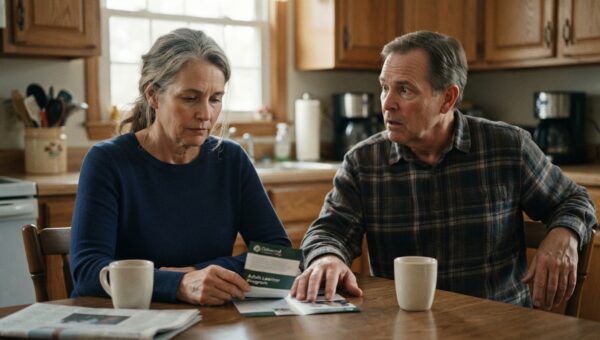
“They waited until you went to the pharmacy and the grocery store that Saturday morning,” Dad continued, his jaw tightening the way it always did when he was angry. “Tom sat where you’re sitting now. Kevin stood by the refrigerator. They brought a notary named Henderson from Tom’s bank. They told me you were cracking under the strain, Claire. They said you were getting forgetful, that you were losing your temper, and that you were going to put me in county nursing if they didn’t step in.”
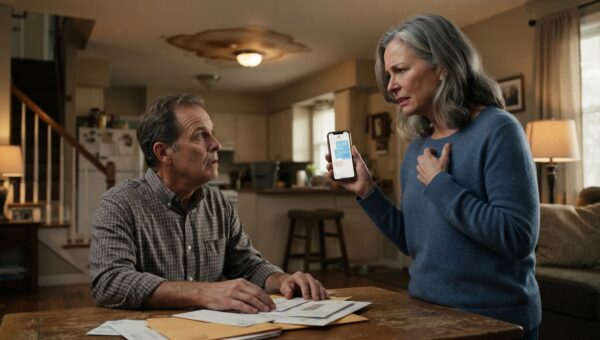
I gasped, a raw, burning pain tearing through my chest. That Saturday in March, I had spent three hours running all over town trying to track down Dad’s specific cardiac medication because the regular pharmacy was out of stock. When I had come home, Tom’s truck was pulling out of the driveway, and Dad had looked exhausted, but he had told me Tom just stopped by to drop off some mail.
“They put three documents on this table,” Dad said into the camera. “A general durable power of attorney, a medical directive, and an agreement to list this house for sale while I was still drawing breath, so they could use the money to stick me in an assisted living wing over in Greenville. They told me it was what you wanted. They said you begged them to take the burden off you.”
On the video, Brenda Vance leaned down slightly into the frame. “Mr. Miller, please state for the record what happened next.”
“I told them to go to hell,” Dad said bluntly. A faint, stubborn smile touched the left side of his mouth. “My arm is busted, Claire, not my brain. I told Tom that if he touched my pen, I’d yell for the neighbors. They got mad. Kevin told me I was stubborn and ungrateful, and Tom said when I died, the state would take half the property anyway because of the old 2008 will. They left. But I knew right then what kind of men I had raised. They didn’t see a father. They saw a parcel of land and a house they could cash out.”
Dad tapped his finger against the table. “On Monday morning, while you were doing laundry in the basement, I used my cell phone to call Brenda. She came over two days later while you were at your physical therapy appointment. Brenda brought two independent witnesses and a mobile doctor who spent an hour running cognitive assessments on me. I passed every single one of them. We filmed the whole medical evaluation, and it is filed with the county clerk.”
Dad leaned closer to the screen.
“The 2008 will is revoked, Claire. Buried. The house is not in probate. In April, Brenda set up a Lady Bird deed, a transfer-on-death deed, fully recorded with the county registry. The moment my death certificate is stamped, this house belongs one hundred percent to you. Not a third. All of it. The bank accounts have you listed as sole pay-on-death beneficiary. There is no three-way split. There is nothing for them to force you to sell.”
Dad’s expression softened, and his eyes grew wet.
“You gave me twelve years of your life, baby. You washed my back. You cooked my supper. You listened to me grumble, and you held my hand when the night terrors came back. Your brothers didn’t carry this family. You did. If they want to play the big men at my funeral, let them talk. But when the time comes to settle the dirt, you hand them the paper attached to this drive.”
The video clicked off.
I sat in the dark kitchen for a long time, the screen glowing blue against my face, weeping until my ribs ached.
PART 3
Seven days later, Tom and Kevin showed up at Dad’s house at ten o’clock on Saturday morning.
They did not arrive alone.
Tom pulled up in his truck, followed closely by a gold sedan. A woman with dyed blonde hair and a professional blazer stepped out carrying a clipboard and a leather binder. It was Marsha Lowe, a local real estate agent whose face was plastered on park benches all across the county. Kevin parked behind them, wearing work boots and carrying a roll of heavy-duty black contractor bags.
They walked up the porch steps without knocking. Tom pushed the screen door open and walked right into the living room, Kevin trailing behind him.
“Morning, Claire,” Tom said, his voice brisk, businesslike, completely devoid of grief. “This is Marsha. She’s going to walk through the rooms, take some preliminary measurements, and give us a realistic listing price. Kevin and I figure if we clean out Dad’s medical junk this weekend, we can have the staging crew in by Thursday.”
Kevin dropped the roll of contractor bags onto the coffee table with a thud. “I brought the truck trailer, too. Any clothes or personal effects you don’t want, we can haul straight to the dump or the Salvation Army this afternoon. We need to clear the master bedroom first.”
I stood by the kitchen door frame, holding a fresh mug of black coffee. I had spent the entire week meeting with Brenda Vance, filing the death certificate, and obtaining the certified copies of the transfer-on-death deed and Dad’s recorded affidavit.
“Good morning, Marsha,” I said politely to the realtor. Then I looked at my brothers. “You didn’t ask me if today was a good time.”
Tom sighed, rolling his eyes as he took off his sunglasses and tucked them into his shirt pocket. “Claire, come on. We talked about this at the cemetery. We don’t have months to sit around feeling sorry for ourselves. The market is cooling off. Dad’s will from 2008 splits the estate three ways. That means Kevin and I hold a majority vote. We’re selling.”
“You don’t hold a majority vote,” I said calmly.
Kevin let out an irritated laugh, shaking his head. “Look, Claire, we know this is hard for you. You’ve lived in Dad’s pocket for twelve years, and you don’t know how the real world operates anymore. But you can’t block a sale. We’re offering to let you take whatever furniture you want before Marsha lists it. After that, the house gets sold, we split the proceeds sixty-forty if you want to be difficult, or equal thirds like Dad intended.”
“Dad didn’t intend for you to sell this house,” I said.
Tom stepped forward, his voice dropping into that tight, commanding tone he used whenever he wanted to intimidate someone. “The 2008 will is filed at the courthouse, Claire. It names me as executor. I am the executor of Dad’s estate. Now go pack your clothes, or let Marsha do her walkthrough without you causing a scene.”
“Marsha,” I said, looking past Tom directly at the realtor. “Before you take one step into that hallway, you might want to look at what’s in this folder.”
I walked over to the kitchen counter and picked up the thick manila envelope Brenda had prepared for me. I pulled out three documents and handed them to the agent.
“What is that?” Tom demanded, reaching to snatch the papers.
“Keep your hands off them, Tom,” I said, my voice dead and steady.
Marsha frowned, adjusting her reading glasses. She looked at the first page, and her expression immediately changed from professional cheerfulness to stiff embarrassment.
“This is a transfer-on-death deed,” Marsha said slowly, looking between Tom and me. “Recorded with the county registry on April 16th of this year. It transfers full legal title of this parcel and the residential structure solely to Claire Miller upon the death of Arthur Miller.”
Tom’s face flushed crimson. “That’s impossible! Dad had a stroke! He didn’t have the legal capacity to sign a deed! I have the 2008 will!”
“Read the next page, Marsha,” I said quietly.
“It’s a certificate of independent legal counsel from Brenda Vance,” Marsha read aloud, clearly wanting to be anywhere else in the world. “Along with a signed mental competency affidavit from Dr. Kenneth Mercer, certified neurologist, stating Arthur Miller was fully oriented and of sound mind on the date of execution. And… a certified copy of the formal revocation of the 2008 will.”
Kevin stared at Tom. “Tom, what the hell is she talking about?”
“She forged it!” Tom yelled, his face turning an ugly shade of purple. He took two aggressive steps toward me, pointing his finger in my face. “You manipulated him! You kept him isolated out here for twelve years, brainwashed him, and stole this house from under our feet! You elder-abused our father!”
“I didn’t forge anything, Tom,” I said. I set my coffee mug down. “And if you want to talk about elder abuse, let’s talk about Saturday, March 14th.”
Both of my brothers froze.
“What?” Kevin muttered, his voice suddenly small.
“Dad recorded a video, Tom,” I said, looking straight into his eyes. “Sitting right at that table. He told the whole story. How you and Kevin snuck in here with a notary while I was picking up his heart medication. How you tried to force him to sign over power of attorney. How you told him I was cracking up and going to throw him in county care. How you tried to seize his house so you could dump him in Greenville.”
Kevin’s eyes went wide. He stepped back toward the front door, looking at the floor. “Tom told me Dad agreed to it,” Kevin stammered, his voice cracking. “Tom told me Dad wanted to move.”
“Shut up, Kevin!” Tom snapped.
“The video is backed up in three places,” I continued, feeling a steady, cold power settle into my bones. “Brenda Vance has a copy. The county probate court has a copy. And the state adult protective services division will get a copy the second either of you attempts to contest this deed. Dad documented everything. His mind was sharper than yours, Tom. He saw right through you.”
Marsha took a step backward toward the porch, clutching her leather binder to her chest. “Mr. Miller, I cannot be involved in this. This property is not part of any probate estate, you have no listing authority, and Mrs. Miller is the sole deed holder. Please do not call my office again.”
She turned on her heel and practically sprinted down the porch steps to her car.
ENDING
The front door clicked shut behind the realtor, leaving the three of us standing in the sudden, heavy silence of the living room.
Tom stood there breathing heavily, his hands balled into fists, looking around the house he had already spent in his mind. The drywall was faded, the baseboards were scuffed from Dad’s wheelchair, and the air still carried the faint trace of Dad’s menthol ointment.
“You think you’re clever, don’t you?” Tom hissed, his voice trembling with sheer, bitter venom. “You stole our inheritance. We have rights to this property. I’m calling my lawyer on Monday morning. We’ll tie this house up in court until you go broke paying legal fees.”
“Go ahead, Tom,” I said evenly. “Brenda Vance told me to invite you to do exactly that. The neurologist’s evaluation was video-recorded. The deed was executed with zero financial involvement from me. And the moment you file a petition, the affidavit detailing your attempt to coerce a vulnerable adult into signing over his property becomes public record. I’m sure the school board where you coach Little League would love to read the deposition about how you treated your disabled father.”
Tom stared at me. For twelve years, he had seen me as a quiet, compliant fixture in this house, someone who washed sheets, cleaned bedpans, and nodded politely while he talked down to her. He had never seen me look him dead in the eye without blinking.
He knew he was beaten.
“You’re dead to me,” Tom spat. “Both of you. Don’t you ever call my house. Don’t you ever try to see my kids.”
He grabbed his sunglasses off his collar, shoved the screen door open so hard it banged against the exterior siding, and stormed down the steps. A second later, his truck engine roared to life, tires spitting gravel as he tore down the driveway.
Kevin stayed behind, standing awkwardly near the coat rack, looking utterly miserable.
“Claire,” he started, his hands fidgeting with his truck keys. “I swear… Tom set that up in March. He told me you were burnt out. He told me you asked him to take over.”
“You didn’t call me, Kevin,” I said, my voice flat and completely devoid of pity. “You didn’t ask me how I was doing. You didn’t come visit Dad when he had pneumonia last November. You showed up with contractor trash bags to throw away his clothes before his grave grass had even begun to take root.”
Kevin swallowed hard. “We’re your brothers. We’re all the family you’ve got left.”
“I haven’t had brothers in twelve years,” I told him. “I had a father. And now he’s gone. Take your garbage bags and get off my property.”
Kevin stood there for a few seconds longer, waiting for me to soften, waiting for the easy-going sister who used to apologize for things she never did. When I didn’t move, he picked up the roll of heavy black plastic from the coffee table, tucked it under his arm, and walked out without another word.
I stood on the porch and watched Kevin’s truck disappear down the county road until the red taillights faded past the tree line.
The silence that settled over the yard was completely different this time. It was not the cold, terrifying quiet of an empty house. It was peaceful.
I went back inside, locked the front door, and walked into Dad’s bedroom. I opened the curtains wide, letting the warm October sunlight pour across the old quilt and the polished pine floor. I picked up the small silver-framed photograph of Dad from his retirement party, wiping a speck of dust off the glass with my thumb.
He had protected me, just like he always promised he would when I was a little girl.
I sat down on the edge of the bed, took the first deep, full breath I had taken in twelve years, and finally began to grieve.