PART 1
The certified letter came on a Thursday afternoon, three weeks after we handed over the keys.
We had spent twenty-four years in that house on Whispering Pines Drive. When our knees finally told us four levels and an acre of mowing were too much, we spent $7,800 getting the place in showcase condition before listing it. We paid a commercial crew to steam every carpet down to the subfloor. We hired an HVAC company to sanitize and seal the entire ductwork system, and we paid a professional cleaning service twelve hundred dollars to wipe down every baseboard, window sash, and cabinet interior.
My husband, Tom, was an electrical systems specialist before he retired, and he had turned that four-bedroom into a complete smart home. Every zone had automated environmental monitors, digital thermostat logs, humidity sensors, and whole-house HEPA filtration units tied into a central control hub.
We had two dogs: Buster, a twelve-year-old golden retriever who spent his days snoring on an orthopedic cot, and Molly, a miniature schnauzer. Both were house-trained decades ago. Neither one had ever had an accident on the carpet, and our vet had groomed them every four weeks like clockwork.
The closing had been completely smooth. The buyers, a couple named Julian and Vanessa Vance in their late thirties, walked through the property twice with their agent and signed the final inspection addendum with zero repair requests.
Then came the certified envelope from an attorney’s office in Clayton.
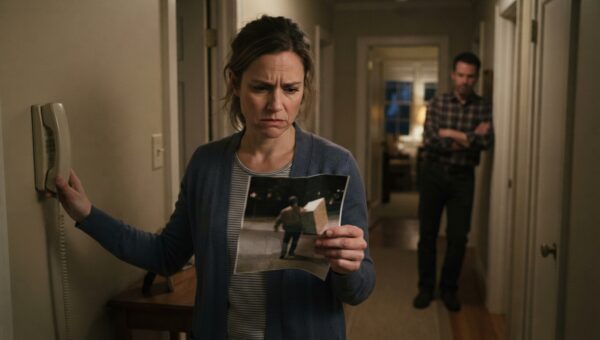
Inside was a typed letter signed by Vanessa Vance:
“We’ve moved in, and… wow. I smell your stinky dogs!!! This is not the energy I envisioned for our sanctuary. Total vibe killer. You concealed severe animal contamination throughout the primary living areas. We brought in our own specialist who says the subflooring requires full replacement. ANYWAY, WE EXPECT $10,000 COMPENSATION within ten business days, or our counsel will file a formal disclosure fraud action in county court.”
My hands were shaking so hard I dropped the letter onto our new kitchen counter. Ten thousand dollars. We had just settled into our single-story patio home, and the thought of an ugly, drawn-out lawsuit hanging over our retirement made my throat tighten up.
I called our realtor, Cheryl, in a full rage.
Cheryl listened to me read the letter out loud. On the other end of the line, she nearly choked on her coffee.
“Ruth, stop panicking,” Cheryl said, her voice sharp and steady. “They signed off on the final walkthrough forty-eight hours before closing without a single objection. The house was spotless. You provided paid receipts for the duct cleaning and carpet steam. You do not owe them a single dime. Tell their lawyer to pound sand and forget it.”
I hung up, trying to talk myself into believing Cheryl. But ten thousand dollars is not something an ordinary retired couple can simply ignore when a legal letter is sitting on the counter.
Tom came in from the garage carrying a basket of laundry. He took the paper from the counter, read it once, and pushed his glasses up his nose. He didn’t yell, and he didn’t call Cheryl back.
“They want ten thousand dollars for a smell?” Tom asked quietly.
“She claims it’s ruined the whole vibe of the house,” I said, my voice cracking with frustration. “She says the subfloor is soaked in dog urine.”
Tom set the laundry down. A slow, thoughtful look came across his face, the same look he used to get when an industrial panel malfunctioned at his plant.
“Ruth,” he said, tapping the edge of the kitchen counter. “The closing packet transferred ownership of the hardware hub on the wall, but remember what happened with the server account?”
I looked at him, not understanding.
“The new router setup,” Tom said. “The hub manufacturer requires the previous admin to release the registered email through the secondary portal, or the whole device resets to factory default. I sent Julian the transfer link three weeks ago, but he never completed the migration on his end. The app is still active on my iPad.”
PART 2
Tom walked into the den and pulled his iPad off the charger.
He tapped the screen, opened the HomeSense icon, and waited for the gateway to connect. Because the smart hub was hardwired into the home’s primary electrical panel and linked to the central cellular backup unit we had installed during a storm three years earlier, the network was still live.
Every room in that house was mapped on the display: master suite, upstairs hallway, great room, basement recreation area, and garage.
“Look at this,” Tom said, turning the screen toward me.
The system didn’t just control the lighting and the deadbolts. It tracked indoor air quality metrics through four separate particulate and volatile organic compound sensors embedded in the return vents.
Tom pulled up the historical logs for the past three weeks, starting from the afternoon we handed over the keys.
For the first eight days after the closing, the air quality index across all four zones read between zero and twelve parts per billion. That was hospital-grade clean. The air sensors had not registered a single spike in ammonia, moisture, or organic odor.
Then came the ninth day.
On Tuesday the 14th, at 11:42 PM, the main zone sensor in the formal living room showed a massive, sudden spike in VOC levels, jumping from 8 to 410 in under twenty minutes. Along with the chemical spike, the humidity sensor in the living room sub-zone jumped from a normal 42 percent up to 88 percent.
The high-humidity alert stayed locked on the screen for three solid days.
“That’s not dog hair,” Tom said, his eyebrows pulling down. “That’s standing liquid. And look at what happened immediately before the spike.”
He opened the environmental timeline.
Ten minutes before the air sensor spiked, the automated smart thermostat in the living room had been manually overridden at the wall panel. Someone had turned the air conditioning completely off and engaged the secondary emergency heat strip, cranking the temperature up to eighty-four degrees. Two hours later, the humidity alert had triggered the whole-house attic exhaust fan, which ran continuously for forty-eight hours straight.
“Why would anyone turn emergency heat on in the middle of summer?” I asked.
“To bake something dry,” Tom replied.
He clicked over to the smart water monitor tied into the main city line in the basement. The monitor recorded water flow by the gallon, tracking every toilet flush, faucet run, and irrigation cycle.
On Monday the 13th, the day before the living room sensor went wild, the main water line had logged an uninterrupted flow of 420 gallons between 2:00 PM and 5:30 PM. The flow wasn’t coming from the master bath or the kitchen sink. It was being pulled directly through the high-pressure spigot in the garage.
Tom sat back in his chair, tapping his fingers against the glass tablet.
“They didn’t smell Buster and Molly,” Tom said. “Something happened in that living room on the thirteenth, and they flooded the floor trying to clean it up before they turned the heaters on.”
“What could they have flooded it with?” I asked.
Tom didn’t guess. He pulled up the smart lock history for the front door and the garage side door.
On the afternoon of the 13th, between the hours of 1:15 PM and 6:00 PM, the electronic deadbolt on the garage service door had been unlocked six times using a guest passcode that hadn’t been programmed by us.
The name assigned to that temporary guest code on the app log was: *Apex Carpet & Tile Restoration*.
PART 3
I stared at the name on the screen.
“Apex?” I asked. “They hired a carpet cleaner two weeks after moving into a house we already had professionally sanitized?”
Tom picked up his phone and dialed Cheryl.
“Cheryl,” Tom said, putting the call on speaker. “Who owns Apex Carpet & Tile over on Highway 40?”
Cheryl paused for a second. “Apex? That’s run by a guy named Marcus Vance. Why?”
“Marcus Vance,” I repeated, looking at Tom. “The buyer’s last name is Vance.”
“It’s Julian’s younger brother,” Cheryl said, her voice suddenly dropping into a low, serious tone. “Marcus runs a mobile detailing and flood mitigation rig out of a warehouse in town. Why are you asking about Marcus?”
“Because Marcus Vance was in our old living room for four hours on Monday the thirteenth,” Tom said. “He pumped four hundred gallons of water through the garage spigot, and forty-eight hours later, Vanessa Vance sent us a demand letter claiming our dogs ruined the subfloor.”
Cheryl let out a sharp, angry whistle. “Send me those system logs right now, Tom. Every timestamp, every water reading, every lock code.”
Tom exported the entire data package into a single PDF file: twenty-four pages of certified sensor records, water meter flow logs, thermostat override timestamps, and the specific door-access logs showing Marcus Vance’s digital credential opening the garage deadbolt.
Cheryl didn’t wait for business hours. She contacted the managing broker of the firm that had represented the Vances during the purchase and requested an immediate conference with their attorney.
The meeting took place the following Monday morning at Cheryl’s realty office in Clayton.
Vanessa Vance arrived wearing an expensive cream trench coat and oversized designer sunglasses, accompanied by her attorney, a young man with a stiff leather briefcase. Her husband, Julian, did not attend.
Vanessa sat across the conference table, folded her arms, and looked out the window with an expression of complete disgust.
“This is an open-and-shut case of failure to disclose,” her attorney began, sliding a folder across the mahogany wood. “My client cannot inhabit the property without suffering severe nausea. We have an estimate from a licensed remediation contractor showing that the living room flooring must be pulled up, the concrete treated, and new hardwood installed. Ten thousand dollars is a modest compromise to keep this out of litigation.”
Cheryl didn’t touch his folder. She looked at Vanessa.
“Vanessa, before your lawyer files anything with the court clerk, there are a few documents you should look over,” Cheryl said smoothly.
Tom slid our twenty-four-page PDF across the table.
Vanessa glanced down at the top page with an irritated sigh. “I don’t know what this technical garbage is supposed to be. I know what my nose smells.”
“That technical garbage is the tamper-proof diagnostic record from the smart hub you forgot to migrate,” Tom said, his voice quiet, calm, and utterly cold. “It shows that for eight days after you took possession, the air in that house was completely clean. It also shows that on Monday the thirteenth, your brother-in-law, Marcus, entered through the garage door using code 4491.”
Vanessa froze. Her hand, which had been tapping a French-manicured fingernail on the table, stopped completely still.
“The log shows Marcus ran four hundred and twenty gallons of water through the garage line,” Tom continued, leaning forward. “Then he turned the emergency heat strips to eighty-four degrees to dry the padding after something soaked the floor. And the remediation estimate in your lawyer’s folder is on letterhead from Apex Restoration, Marcus Vance’s company.”
The lawyer looked at the document in front of him. He picked up the access log, saw Marcus’s name tied to the deadbolt entry, and slowly turned his head to look at his client.
“Vanessa?” the lawyer asked, his voice losing every ounce of its legal swagger. “Did you have work done on the living room before sending the demand letter?”
Vanessa’s face went from pale to a blotchy, uneven red. The smug disdain vanished from her mouth.
“We had a party,” she muttered, not looking at anyone in the room. “It was our housewarming party on Sunday night.”
“What happened at the party, Vanessa?” Cheryl asked.
Vanessa pulled her sunglasses down over her eyes, but her hands were trembling.
“Julian’s college friends brought their two rescue mastiffs,” she whispered, her voice barely audible over the hum of the office air conditioner. “They got into the mudroom, knocked over the bar cart, and the dogs tore into a five-pound bag of dry fertilizer Julian had left in the utility closet. They had violent diarrhea all over the white wool carpet in the great room while everyone was out on the back deck.”
The room went entirely dead.
“You let two strange dogs destroy your own carpet,” I said, every word coming out distinct and heavy. “You tried to hose it out with four hundred gallons of water, and when the pad started rotting under the heat, you blamed my golden retriever and demanded ten thousand dollars from our retirement.”
ENDING
Vanessa’s lawyer didn’t say another word.
He quietly gathered his paperwork, slid the Apex estimate back into his briefcase, clicked the brass latches shut, and looked at Cheryl.
“My office will be withdrawing the demand immediately,” the attorney said, standing up from his chair. “We consider this matter closed.”
“Not quite,” Cheryl said, standing up with him. “If I see one negative comment on social media about this property, or if your client attempts to make an insurance claim citing pre-existing pet damage against my sellers, this diagnostic package goes directly to the state real estate commission and the county prosecutor for attempted insurance fraud.”
Vanessa didn’t look at her lawyer, and she didn’t look at us. She stood up, grabbed her handbag from the floor, and rushed out through the glass doors of the office so fast her heels skidded on the tile.
We walked out into the warm morning sun twenty minutes later.
Cheryl hugged me in the parking lot. “I told you that you didn’t owe them a dime, Ruth. But I have to give Tom credit. I never knew a thermostat could catch a scam in real time.”
“It’s all in the sensors,” Tom said with a faint grin.
When we got back to our single-story patio home, Tom sat down at the kitchen table with his iPad one last time. He opened the administrative portal, entered the master factory override code, and severed the account link completely, wiping our names, our email addresses, and our diagnostic history from the house on Whispering Pines Drive forever.
Buster came ambling in from the sunroom, his tail wagging with a slow, heavy thump against the wall. He rested his gray muzzle on Tom’s knee, looking up with his soft brown eyes.
Tom reached down, scratched Buster behind his floppy ears, and looked across the table at me.
“Good dog,” Tom whispered.
Then he closed the tablet, set it on the shelf by the door, and we went outside into the small, quiet backyard to plant our new tomato beds.