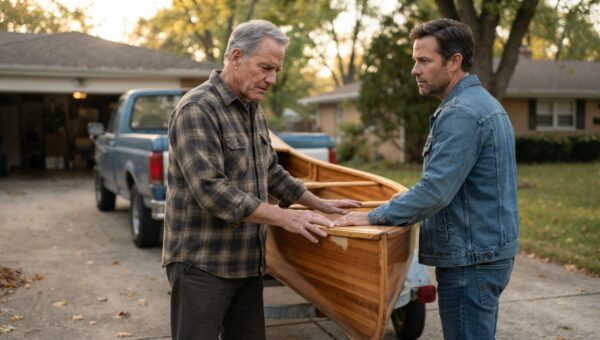
My brother said Dad could not go home before he had even seen the rehab room.
“He needs more care than we can give him,” Dennis said over the phone. “We should look at a nursing facility.”
I was sitting beside Dad’s bed at the hospital, holding a paper cup of coffee that had gone cold. A stroke had left the left side of his body weak. He could speak, but the words came slowly. He had asked three times that morning when he could go home.
“He wants to go home,” I said.
“Everybody wants to go home.”
“That doesn’t mean we ignore what he wants.”
“It means we make a safe decision.”
Dennis lived five hours away in Cleveland. I lived twelve minutes from Dad’s house. I had been the one who drove him to the hospital, talked to the doctors, and found his hearing aids in the ambulance bag. I knew Dennis loved our father. I also knew the word we made in his mouth meant I would do most of the work.
Dad had been independent at seventy-eight. He walked to the hardware store, paid his bills online, and cooked the same three dinners every week. He had fallen once in the winter, but he refused to use a cane. The stroke happened on a Tuesday morning while he was putting a mug in the dishwasher. A neighbor heard the glass break and called 911.
At the hospital, Dad asked me to bring his slippers. When I returned, Dennis had arrived. He was standing at the foot of the bed, looking at the monitor and asking the nurse about discharge planning.
“Dad can’t live alone anymore,” he said.
Dad turned his head toward us. “Home.”
“I know,” I said.
Dennis lowered his voice. “He can barely stand.”
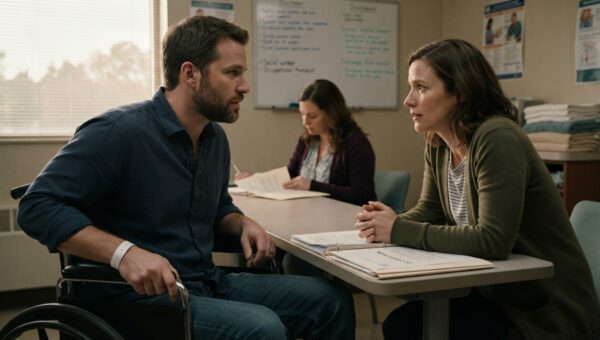
The occupational therapist came in that afternoon and helped Dad transfer from the bed to a chair. He was slow, but he did it with assistance. The therapist explained that he would need several weeks of inpatient rehabilitation and that his abilities could improve. Nobody could say yet whether he would manage at home alone.
Dennis asked about facilities. I asked whether home health could come in. The therapist said we would know more after rehab.
That night, Dennis and I sat in the hospital cafeteria. He had driven in after work and had not eaten since noon. I could see how tired he was.
“I’m not trying to take his choice away,” he said. “I don’t want him to fall and be alone.”
“I don’t either.”
“You can’t be there every hour.”
“I know.”
“Then we need to be realistic.”
I hated that he was right. I also hated that I was the one everyone expected to turn the right thing into a schedule.
Dad spent three weeks in rehab. He gained strength in his right leg and learned to move from bed to chair with a walker. His left hand remained weak. He could eat on his own if the food was cut up, and he needed help with bathing and dressing.
Before the stroke, I had done most of the small things for Dad without calling them caregiving. I picked up his prescriptions when I was already near the pharmacy. I checked his furnace filter, brought him groceries during snowstorms, and reminded him when the property tax was due. Dennis called on Sundays and sent money when Dad needed a new appliance. We had each found a way to help, but only one of us had built his errands into the week.