Arthur had been gone seven months when Elena decided I was rattling around too much space. We were sitting in my kitchen on a Tuesday morning, the light coming through the sheer curtains just like it had every morning since 1983, when she set her coffee mug down with a sharp little clink. She looked around my yellow-tiled counters as if she were appraising salvage. She said the house was too much for one old woman.
I did not yell at her. I just wiped down the laminate with my damp sponge and told her I liked the size of my own kitchen. Arthur built those cabinets with his own hands out of white oak we hauled back from Lumberton on a rented trailer. Forty years of coffee rings and grease splatters were pressed into that wood. It was not just footage to me.
She brought it up three more times before lunch, each time softer, more reasonable, the voice she used when she thought I was being difficult about my blood pressure pills. I told her the same thing every time. The house stayed put.
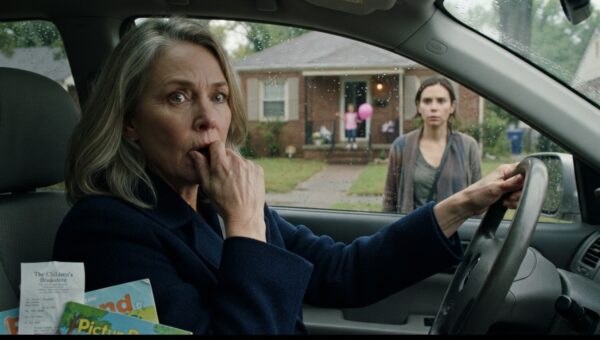
I drove down to the Piggly Wiggly around two in the afternoon to pick up some butter and a sack of russet potatoes. The drive took maybe six minutes each way down the winding parish road where the live oaks hang low enough to scrape the roof of the Buick.
When I pulled back into the gravel drive, something gray and hard caught the glare of the parish sun against the white porch rail.
It was a master lockbox. It had been screwed right into the pine pillar by the screen door, brand new and cold-looking.
I did not even take the groceries out of the passenger seat. I sat there with my hands gripped on the steering wheel until my knuckles went white, staring at that little metal box like it was a snake coiled on my steps. I reached for my phone and dialed Elena before I even turned the ignition off. She picked up on the second ring, sounding brisk and busy, the way she always sounded when she was juggling three spreadsheets at her brokerage firm.
“Elena, what is that box on my porch?” I asked. I didn’t raise my voice. I never raised my voice with her.
There was a tiny pause on the line, just a fraction of a second where she swallowed her breath. “Oh, you saw it. Look, Mother, I was just getting options. The market is peaking right now and Arthur’s insurance isn’t going to stretch forever.”
“Take it off,” I said.
“Don’t be difficult. I’m trying to save you from maintenance costs that you aren’t equipped to handle alone. We have an agent coming by on Thursday.”
“I said take it off, Elena, or I am taking it off myself with a crowbar.”
“You’re being irrational,” she snapped back, her voice climbing an octave. “You’re sitting in a thirty-thousand-square-foot money pit out of pure stubbornness.”
I hung up on her. I did not care about the market peaking or Arthur’s insurance. I walked up those three wooden steps, grabbed a heavy flathead screwdriver from the utility drawer in the back hall, and wedged it into the latch of the lockbox until the screws groaned and pulled free from the pine with a dry tear of wood fiber.
I threw the whole thing into the bottom of my garbage can behind the garage.
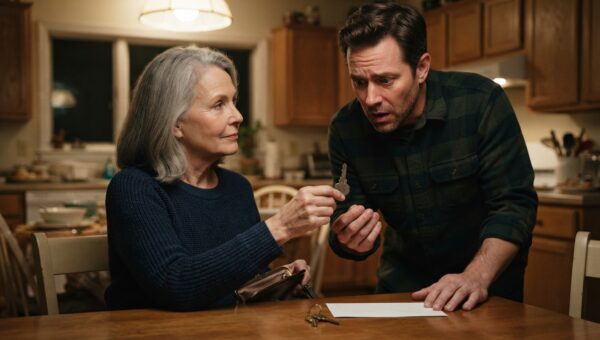
By five o’clock that evening, I had called Roy Jenkins, who had been changing locks in this parish since before Elena was born. Roy came out in his blue canvas jacket, smelling faintly of tobacco and machine oil, and put a heavy brass deadbolt on the front door that took a thick, old-fashioned key. I paid him in cash and watched him pack his drill into his metal case.
“You sleep well tonight, Martha,” Roy told me, tipping his cap on the gravel path. “Nobody is getting through that deadbolt without a sledgehammer.”
I thought that was the end of it. I went to bed early, listening to the crickets through the open screen bedroom window, feeling the weight of the new brass key resting safely on the saucer beside my bed.
The morning sun was barely clearing the pecan trees when someone hammered hard on the front screen door. Not a polite knock, but a fast, nervous rat-a-tat that made the copper wind chimes shudder. I was at the stove heating up leftover coffee from yesterday’s pot.
I wiped my hands on my dish towel and walked down the hall, expecting Elena with her briefcase and her tight, disappointed mouth. Instead, when I pulled the inner door open, I found a young man in a blue button-down shirt and a nervous-looking woman holding a clipboard against her chest like a shield. The man had his hand raised to knock again.
“Morning, ma’am,” the young man said, smiling a quick, tight smile that didn’t reach his eyes. “I’m Arthur, and this is Claire. We’re here for the final walk-through before closing.”
I stood there in my house slippers with the dish towel bunched in my left hand. “You’re who?”
The woman named Claire stepped forward, her brow furrowing as she looked past me into the front hall where Arthur’s framed hunting prints still hung on the green wallpaper. “We’re the buyers. We already put down the earnest money with the agency yesterday morning. Elena said you might be a little confused about the timeline because of the estate transition, but we have the executed contract right here.”
She held out a blue-backed folder. Her fingers were shaking just a little bit against the cardboard.
I didn’t take the folder. I just looked at her face, then down at the papers she was pushing toward my chest. “Nobody is selling this house. Especially not me.”
“Ma’am, please,” Arthur said, his voice dropping into that soothing register men use when they think a woman is losing her grip. “We have a fully signed contract. Look. Here is the purchase agreement.”
He flipped the folder open to the signature page and laid it flat on the small cherry table by the door. At the bottom, clear as day, was my name. Martha Miller. Written in that familiar, looping slant that I had practiced in high school notebooks. But below my name, in the notary block, was a stamp and a signature that made the coffee in my stomach turn cold.
The witness was Marcus Vance.
Marcus had lived three houses down from us since we were all thirty years old. He had retired from the parish courthouse ten years ago as a deputy clerk and kept his notary stamp in his desk drawer like a badge of honor. He had eaten crawfish at our back patio table at least a hundred times. He had helped Arthur put shingles on the shed after Hurricane Andrew.
“Marcus,” I said out loud, testing the name on my tongue because it sounded like a lie even when I said it.
“He notarized it yesterday afternoon,” Claire said, looking more confused by the second. “He said you were too frail to come into the office, so he brought the papers to the house and watched you sign them himself.”
I looked from the signature to the front porch rail where the empty screw holes from the lockbox were still raw and white against the dark paint. Marcus hadn’t been near my house yesterday. I had been at the Piggly Wiggly buying potatoes while Elena and Marcus played lawyer in some air-conditioned office downtown.
“I want you two to step off my porch,” I told them, my voice dropping into that flat, parish-woman register that doesn’t leave room for argument.
“Now wait a minute,” Arthur started, bristling up. “We cashier-checked forty-five thousand dollars into an escrow account yesterday morning based on this document. You can’t just, “
“I didn’t sign it,” I said, looking right into his eyes. “And if you don’t want to get tangled up in federal wire fraud and a felony forgery charge, you will take your folder, go down to the Benchmark Realty office on Main Street, and tell them Marcus Vance and my daughter Elena stole your earnest money.”
Claire went pale. She snatched the folder back from the table as if the paper had suddenly caught fire, grabbed Arthur’s elbow, and backed down the steps without another word. They didn’t look back once as they scrambled into their gray sedan and tore out of the gravel drive so fast they left two black rubber streaks on the paving.
I closed the heavy wooden door, threw the new brass deadbolt, and listened to the solid parish click of the latch settling home. Then I went to the kitchen, picked up the wall phone, and dialed Marcus’s number.
He answered on the first ring, his voice warm and grandfatherly the way it always was when he was trying to sell you something or smooth over parish gossip. “Martha? Morning, dear. I heard the house sale went through smooth as silk. Arthur would be proud of you for simplifying.”
“Marcus,” I said, and every year of my seventy-two winters seemed to settle right into my throat. “You put your notary stamp on a piece of paper and swore you watched me sign it yesterday.”
There was a silence on the line. Not a short silence, but that deep, heavy silence where old men realize they have stepped off a roof and haven’t hit the ground yet.
“Martha, now look,” he stammered, the warmth draining right out of his tone until he sounded like an old dog caught in the pantry. “Elena came by the office. She said you were slipping. She said you agreed to it in principle but you were too stubborn to sign the paperwork because of the memories. She said it was just family business and she needed it pushed through before the weekend buyer walked away. I’ve known that girl since she was in braces. I didn’t think, “
“You didn’t think,” I said. “You put your name on a forgery because Elena asked you to.”
“Martha, let’s not make a federal case out of parish business, “
“You have twenty-four hours to call Benchmark Realty and tell them you notarized a document without the principal present,” I told him. “If you don’t, I am walking down to the sheriff’s office with the security footage from the gas station across the street that shows me buying a bag of potatoes at the exact minute you swore I was signing your book. And after that, I’m filing a complaint with the state licensing board.”
I hung up before he could answer.
By noon, my phone hadn’t stopped buzzing. Elena had called seven times, each time louder and more frantic, leaving voice-mails that started out defiant and ended up sounding like a frightened child. *Mother, please pick up, you’re making a catastrophic mistake, I have creditors breathing down my neck and the business is going under, you don’t understand what happens if this falls through.*
I didn’t listen to the rest of them. I deleted them as they came in.
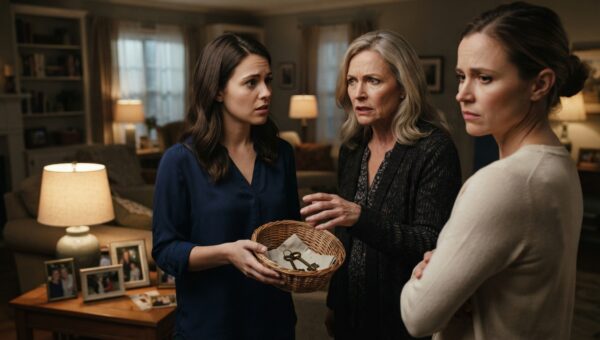
At three o’clock, she pulled her silver SUV into the driveway, got out without turning off the engine, and marched up the steps. She tried the doorknob out of habit, found it locked solid with Roy’s new deadbolt, and pounded on the screen until the wood shook.
I unlocked the inner door and stood behind the screen, looking out at her through the black wire mesh. Her mascara was smudged under her left eye, and her beige linen blazer looked like she had slept in it in the back of her car.
“Open the door, Mother,” she whispered, her voice cracking right down the middle. “Marcus called me. He’s terrified. He’s talking about resigning his notary commission. Do you have any idea what you’ve done?”
“I know what you did,” I said softly.
“I lost the commercial lease, okay?” she burst out, her hands flying up to her face before she grabbed the screen frame with both fingers. “My partner embezzled twenty thousand dollars from the firm three months ago and I’ve been covering payroll out of my own savings to keep the doors open. If this house didn’t sell this week, the bank was going to foreclose on my home and my office both. I was desperate. I thought… I thought you wouldn’t even notice once the money hit your account. I was going to buy you a nice condo down by the marina where you wouldn’t have to deal with the roof leaks and the lawn.”
“You forged my name, Elena,” I said. “You sat down with an old man who should have known better, and you signed my life away on a kitchen table that your father built with his own two hands.”
She stood there on the porch, her chest heaving under the rumpled linen, looking at me the way she used to look when she was seven years old and caught lying about eating the peach cobbler before dinner. The anger in her went flat, leaving just that hollow, grey fear that comes when the bill finally lands on the table.
“Are you going to call the sheriff?” she whispered.
I looked past her shoulder at the live oaks swaying in the late afternoon breeze across the parish road. A mockingbird was perched on the utility wire, singing that sharp, sweet little song it sings every day around this time.
“The real estate agency voided the contract an hour ago,” I told her. “Claire and Arthur got their earnest money back with an apology from the broker. Marcus is writing a confession for his files as we speak.”
Elena let out a long, ragged breath that sounded like air leaking out of a tire. “So… what happens to me?”
“You figure out how to pay your own debts,” I said. “You sell your own car if you have to. But you never, ever touch my house again.”
“Mother, “
“And if you ever come onto this property without calling first,” I added, reaching out to turn the brass key in the deadbolt lock, “I won’t call the sheriff for Marcus’s sake. I’ll call him for mine.”
I didn’t wait for her answer. I pulled the wooden door shut and slid the deadbolt home until it clicked into the frame with a heavy, final sound.
That was three weeks ago. The lockbox is gone from the porch, and the white paint has already started to cover the screw holes where it used to hang.
The sun is going down now over the back pasture, turning the sky the color of a bruised plum the way it always does before a heavy parish rain. I am sitting out here on the porch swing with the cold iron chains creaking softly beneath me, holding Roy’s heavy brass key in the palm of my hand. The air smells like damp pine needles and the sweet olive bush by the driveway that Arthur planted thirty years ago. My house is quiet, and the floorboards beneath my feet are mine.