PART 1
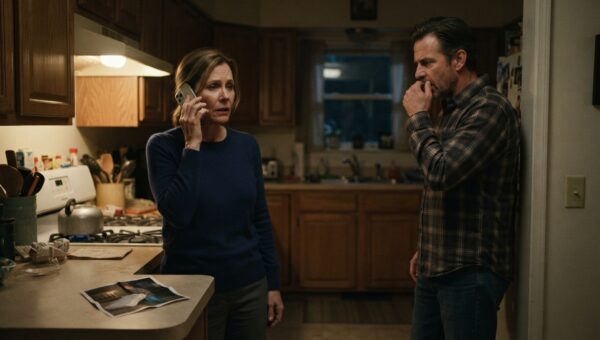
My husband had been working late every Thursday for six months, but the receipt in his coat pocket was from a children’s bookstore across town.
We do not have young kids anymore. Our youngest, Brian, is twenty-seven and lives four states away in Denver. Our daughter, Kelly, is thirty-one, unmarried, and works eighty hours a week at a design firm in Chicago.
We had been empty nesters in our four-bedroom split-level in Mansfield, Ohio, for five years.
Tom was fifty-eight, managed commercial accounts at a local building supply yard, and had never been a man who stayed out past six o’clock without calling first. Then, starting in April, Thursday nights became his late inventory evenings. He would walk through the garage door around eight-thirty, hang his windbreaker in the mudroom, and say the warehouse computer audits were running behind.
I didn’t accuse him of anything. When you have been married thirty-two years, you don’t throw around wild accusations over a late schedule.
Then came last Friday morning.
I took his brown corduroy coat off the hook to take it to the dry cleaner. As I checked the front pockets for pens or loose cough drops, my fingers brushed against a crinkled slip of paper.
It was a register receipt from Storybook Corner on Lexington Avenue. The timestamp was 7:14 PM, the previous Thursday.
The items listed were two hardcover picture books and a pink metallic balloon. The total was $38.45, paid in cash.
Tom had never bought a picture book in his life. When our own children were small, I was the one who took them to the public library on Saturday mornings while Tom mowed the lawn.
I put the slip back in his pocket, hung the coat back on the hook, and didn’t say a word all week.
The following Thursday at five o’clock, I sat in my sedan two rows back in the parking lot of the building supply yard. At twenty past five, Tom walked out the side door wearing his work boots and driving jacket. He didn’t head toward the highway or the diner where the warehouse crew usually grabbed burgers.
He drove south toward the older residential grid near the fairgrounds.
I stayed three cars behind his silver truck as the streetlights came on against the October dusk.
He turned down Maple Terrace, a narrow street lined with cracked sidewalks and small postwar homes, and pulled into the gravel driveway behind a small brick house with yellow trim.
He killed his engine. He stepped out holding a white glossy paper bag from Storybook Corner, along with a pink balloon bouncing on a shiny ribbon.
He walked up the three porch steps and knocked twice.
The front door swung open. A little girl with dark pigtails, wearing a purple hooded sweatshirt, stepped onto the threshold and threw both arms straight into the air.
“Grandpa!” she yelled.
Her voice carried clean across the quiet street through my rolled-down window.
I sat with both hands locked on my steering wheel, my chest so tight I could barely draw breath. My first thought was that Tom had lived a secret life, that he had a second family tucked away four miles from the home where I washed his socks.
I shifted my car into drive. I nearly pressed the gas pedal to run away before anyone saw me.
Then the storm door pushed open wider.
A woman stepped onto the porch. She was in her early thirties, wearing dark jeans and a gray knit cardigan, her hair pulled back into a messy bun. She watched Tom bend down to hand the balloon to the child, then her gaze lifted toward the road.
She looked straight at my sedan parked against the curb.
She didn’t run inside. She didn’t look startled. She said something to Tom, touched the child’s head, and walked down the porch steps, heading right toward my car.
PART 2
The woman walked across the dead grass of the front yard with slow, deliberate steps.
Through the windshield, as she stepped under the amber glare of the streetlamp, her features sharpened. She had a narrow jaw, high cheekbones, and dark eyes behind thin metal-frame glasses.
I didn’t recognize her face, but there was an unsettling familiarity in the way she held her shoulders.
I stayed where I was, my engine idling, my foot pressed hard against the brake.
She stopped beside my driver’s side window. She didn’t tap aggressively on the glass. She waited, her hands shoved deep into the front pockets of her cardigan, her breath pluming in the crisp evening air.
I rolled the window down three inches.
“Mrs. Miller,” she said. Her voice was quiet, polite, and completely steady. “I think you should come inside. It is too cold to sit out here in your car.”
“Who are you?” I asked. My voice sounded thin, stripped of any authority.
“My name is Amanda,” she said. “Amanda Vance. Tom didn’t know you followed him, but I told him six weeks ago that keeping you in the dark was only going to make this look dirty when it finally came out.”
Behind her, on the porch, Tom had stepped back outside. He was holding the paper bag in one hand, his face frozen as he looked across the front yard. When he recognized my car, the bag slipped from his fingers, dropping onto the welcome mat.
“Come inside, Mrs. Miller,” Amanda repeated. “You deserve to see the records.”
I put the sedan in park, cut the headlights, and turned off the ignition.
Walking across that gravel driveway felt like walking through deep mud. My knees were stiff, and my hands were numb inside my pockets. Tom met me at the bottom of the porch steps. He didn’t reach for my arm, and he didn’t try to offer an easy excuse. He looked older than fifty-eight. The lines around his eyes were deep, and his shoulders were hunched against the chilly wind.
“Beth,” Tom whispered. “I was going to tell you next month. I swear to you, I was.”
“Tell me what, Tom?” I looked past him toward the warm light coming through the front door. “Whose daughter is that?”
“She isn’t mine, Beth,” Tom said, his voice cracking. “I am not that little girl’s father.”
“She just called you Grandpa,” I said.
“Let’s go into the kitchen,” Amanda said, holding the storm door open for us. “The neighbors don’t need to hear this on the sidewalk.”
The inside of the house was modest and clean. It smelled of chicken soup, baby shampoo, and cinnamon air freshener. In the living room, the little girl was sitting on a braided rug in front of the television, happily pulling the ribbon of the pink balloon between her fingers.
Amanda led us down a short hallway into a small kitchen. On the laminate dining table sat three thick manila folders, a child’s green plastic lunchbox, and a legal document backed in dark blue paper.
“Sit down, Beth,” Tom said, pulling out a vinyl-backed chair for me.
I didn’t sit. I stayed standing by the edge of the counter, my purse clutched against my ribs like a shield.
“Start talking, Tom,” I said. “Six months. Every Thursday night. Cash receipts for picture books. Who is this girl?”
Tom looked down at his work boots.
Amanda pulled the blue-backed legal document toward her, opened the cover, and turned the second page toward me.
“Her name is Maya,” Amanda said. “She turned four today. Her mother was my younger sister, Rachel.”
Amanda paused, looking from the paper to Tom, then back to me.
“And her father,” Amanda said, “was your son, Brian.”
PART 3
The room seemed to tilt on its axis.
“Brian?” I stared at the paper. “Brian lives in Denver. Brian hasn’t lived in this county since he graduated college in 2021.”
“Brian lived in Columbus five years ago,” Amanda said, her voice dropping into a hard, clear rhythm. “He was twenty-two, working his first logistics job after graduation. My sister Rachel was twenty, working as a dental assistant. They dated for seven months. When Rachel got pregnant in early twenty-twenty-two, Brian panicked. He told her his family had high expectations for him, that having a baby would ruin his career path, and he took a corporate transfer to Colorado three weeks before Maya was born.”
I looked at Tom. His hands were gripping the back of the kitchen chair so hard the skin across his knuckles was white.
“Did you know about this back then, Tom?” I asked.
“No,” Tom said, shaking his head. “I didn’t know a thing until this past April. I swear it, Beth.”
“Rachel didn’t want anything from your family,” Amanda continued. “She worked two jobs. She lived in a basement apartment in Mansfield to be near me. But last November, Rachel was diagnosed with stage four melanoma. It moved through her liver before the doctors could even start immunotherapy. She passed away on March fourteenth.”
Amanda opened the middle manila folder.
Inside was an official certified death certificate from Richland County, dated March 14.
Beside it was a copy of a juvenile court petition for permanent kinship guardianship, filed by Amanda.
“Rachel’s final medical bills wiped out everything we had,” Amanda said. “I work thirty hours a week as a medical billing clerk at the hospital. I couldn’t afford full-time daycare, and the county told me that before they would approve state assistance or grant me legal guardianship, they had to exhaust paternity searches for the father.”
“So you found Brian,” I said.
“I called Brian in Denver in April,” Amanda said. “I told him Rachel was dead. I told him his daughter was living in this house, and that we needed him to sign the consent decree for guardianship so I could put Maya on my employer’s dependent health plan.”
“What did Brian do?” I asked, though the pit in my stomach already knew the answer.
“Brian hung up on me,” Amanda said flatly. “Then he changed his phone number. Two days later, his personal attorney in Denver sent me a cease-and-desist letter threatening to sue me for harassment if I contacted him or his corporate office again. He claimed he had no legal ties to Ohio.”
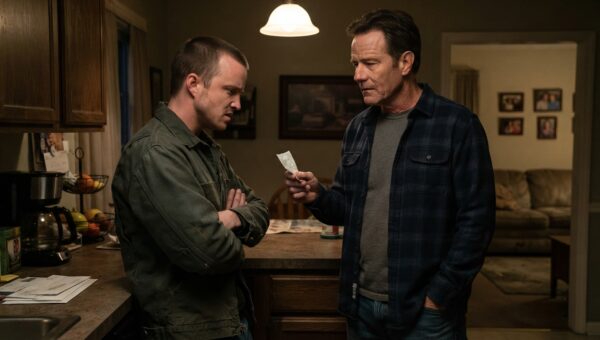
Tom pulled out his wallet with trembling fingers and set a folded piece of paper on the table.
It was a copy of an email from Brian, sent to Tom’s personal inbox on April 18.
I read the three sentences:
“Dad, some crazy girl from Columbus is trying to shake me down for cash claiming I have a kid back home. Do not answer her calls. Do not give her a dime. It’s a scam to derail my promotion. Handle it.”
Tom looked up at me, his eyes wet.
“I came over here that Thursday in April to tell Amanda to back off,” Tom said. “I brought that email. I thought she was a grifter trying to extort money from our boy. I stood right on that porch, ready to threaten her with the sheriff.”
Tom swallowed hard, his chin trembling.
“Then Amanda opened that door,” Tom whispered. “And Maya was standing right behind her in her pajamas. Beth, that little girl has your exact eyes. She has the cleft in her chin that Brian had when he was four. She has the cowlick at the back of her head that wouldn’t lay flat when Brian took his kindergarten pictures. I looked at that baby, and I knew our son was lying through his teeth.”
“Why didn’t you bring this home to me, Tom?” I cried, the tears finally breaking through my eyelashes. “Why did you hide this for six months? Why make me think you were having an affair?”
“Because Brian is your baby, Beth!” Tom said, his voice rising in anguish. “You spent five years bragging to every woman at church about how successful Brian was in Denver. You have his college graduation photo on the mantel. You talk about his clean record, his corporate apartment, his bright future. If I told you our son walked away from a dying mother and left his own flesh and blood to sit in state foster care, it would have broken you in two.”
“So you paid her in secret?”
“I didn’t pay Amanda to keep quiet,” Tom said, pointing to the green lunchbox. “I paid Maya’s preschool tuition. It’s four hundred and sixty dollars a month. I paid it out of my personal overtime pay, in cash, directly to the church nursery on Fourth Street. And every Thursday, I came over here for two hours. I helped Amanda put up the storm windows. I fixed the leaking trap under this sink. I read that little girl stories on the sofa so Amanda could finish her billing charts.”
Tom stepped toward me, his hands open.
“I couldn’t fix what our son did, Beth,” he whispered. “I couldn’t make him a man. But I wasn’t going to let my grandchild grow up without knowing that someone with her blood cared enough to show up on her birthday.”
ENDING
I stood in that small kitchen for a long time, listening to the hum of the refrigerator and the faint laughter of the child in the front room.
The shame in my chest was not for my husband. It was for the twenty-seven-year-old man we had raised, the boy who wore tailored suits in Colorado and thought an attorney’s letter could erase a four-year-old child in Ohio.
I wiped my eyes with the back of my hand.
I took off my winter coat, hung it over the back of the vinyl chair, and looked at Amanda.
“Is there enough of that chicken soup for three?” I asked.
Amanda looked at me, surprised, then nodded slowly. “There’s plenty, Beth.”
We sat around that small table for two hours.
I looked through the photograph albums Amanda kept on the counter: pictures of Rachel holding Maya in the park, pictures of Maya’s first steps, and the official DNA paternity test that Amanda had run through the county court three months ago, proving a 99.9 percent match to Brian through a sample Tom had helped facilitate with his own cheek swab.
At eight o’clock, I walked into the living room.
Maya was sitting on the braided rug, looking at the picture book Tom had bought her, pointing at an illustration of a yellow duck.
I sat down on the rug beside her. She looked up at me with those wide, dark eyes, the exact shape of my own father’s eyes, and held up the pink balloon.
“Look,” Maya said.
“It’s very pretty, sweetheart,” I told her.
We drove home to our four-bedroom house at nine-thirty. The ride was quiet, but it was not the cold silence of the past six months.
The next morning at eight o’clock, I sat at my dining room table and dialed Brian’s cell phone in Denver.
When he answered, his voice was brisk and corporate, full of the hurried importance he always put on when talking to his parents.
“Hey, Mom,” Brian said. “I’m heading into a morning strategy meeting. Is everything okay?”
“No, Brian, it isn’t,” I said. My voice was level, quiet, and cold as iron. “Your father and I spent last night with Amanda Vance and your daughter, Maya.”
The line went completely dead.
“Mom,” Brian stammered after five seconds. “Look, that was a mistake from years ago. You don’t know the whole story—”
“I know the whole story, Brian,” I said, cutting him off before he could build another lie. “I held the death certificate of the girl you abandoned. I saw the court summons you ignored. And I saw your daughter holding the balloon your father bought her.”
“Mom, please don’t let this ruin things,” he pleaded, the corporate polish vanishing from his voice. “I have a vice president track opening up in January. If this gets out, if there’s a court order attached to my wages—”
“There will be a court order attached to your wages, Brian,” I told him. “Your father and I are meeting with a family law attorney downtown at one o’clock this afternoon. You will sign the voluntary acknowledgment of paternity, you will establish Amanda’s full legal custody, and you will pay every single dollar of child support ordered by the state of Ohio, or your father and I will personally deliver the DNA certification to your human resources director in Denver.”
Brian began to argue, but I hung up the phone and laid the receiver on the cradle.
We didn’t keep Thursday nights a secret anymore.
On Thanksgiving afternoon, Amanda and Maya did not sit in that small brick house alone. They sat at the head of our dining room table on Sycamore Street, eating roast turkey and sweet potatoes off my mother’s china plates.
Brian did not fly home for the holidays. He sent a certified legal package containing the signed paternity decree and the custody agreements, along with the first court-ordered support payment. He didn’t call on Christmas, and that was his choice to make. You cannot force a man to have a heart, but you can make him pay his debts.
Yesterday was Thursday.
At five o’clock, Tom and I walked out to the car together. On the back seat sat a bag of groceries, a gallon of milk, and two new drawing pads with washable markers.
When we pulled into the gravel driveway on Maple Terrace, the front door flew open before the engine was even turned off.
Maya ran down the wooden steps, her little shoes crunching on the gravel, her arms wide open.
“Grandma! Grandpa!” she shouted into the chilly afternoon air.
Tom reached down and swung her up onto his hip, laughing as she grabbed the collar of his corduroy coat.
I took the grocery bags from the seat, closed the car door, and walked up the porch steps into the light.