I got it wrong right from the start by thinking love meant never asking hard questions, especially when the answers might disturb the fragile peace we had all managed to carve out after Daddy died. For ten years, I watched Mama stretch every single dollar until it screamed, assuming it was just the natural way of a widow living on a fixed social security check and whatever meager garden produce she could coax out of the dry Texas dirt.
We all played our assigned parts in that little tragedy of our own making. Lyle drove his shiny truck and complained about his cash flow while pocketing every parental bailout he could finagle, and Clara hovered around the edges with her perpetual anxieties about her kids’ orthodontist bills. I just kept my head down, working my shifts at the clinic and dropping by on Sundays with a bag of groceries, never once wondering where the real money came from when the furnace broke or the truck transmission died.
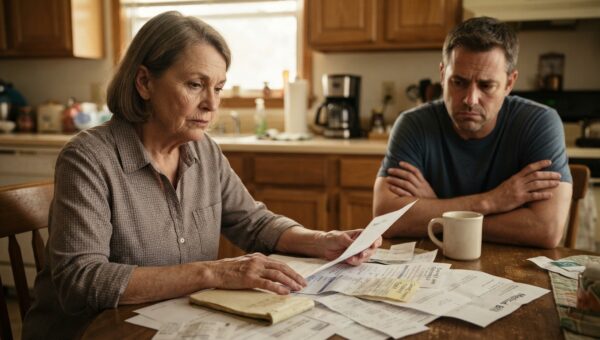
The dining room table still smelled faintly of pot roast and scorched gravy when Mama laid down her fork with a little metallic clink that sounded entirely too loud in the quiet room. Sixty-eight years old, with her silver hair pinned back the same way it had been since I was a girl, she looked smaller than she had at breakfast.
“I sold the house,” she said, her voice entirely level. “The papers cleared this morning. The buyers are taking possession on the first of the month.”
Lyle dropped his fork so hard it bounced against the rim of his stoneware plate and skittered across the worn oak. “Sold it? To who? And for how much, Mama? That place has forty acres attached to the south pasture.”
Clara leaned forward, her eyes wide behind her wire-rim glasses. “Where are you going to live? You can’t just up and sell the homeplace without talking to us first. What about our inheritance?”
Mama didn’t flinch. She didn’t offer her usual softening smile or the gentle scolding she reserved for when Lyle got too big for his britches. She simply reached into the oversized canvas tote bag resting against her chair and pulled out three plain white envelopes, the kind you buy in boxes of a hundred at the post office, unlined and cheap. She slid two of them across the scratched laminate surface toward my siblings, and kept the third one resting squarely under her palm.
“Open them tomorrow,” she said.
Lyle stared at the envelope in front of him like it might bite, then his jaw tightened in that stubborn way he inherited from our grandfather. He didn’t wait. He snatched the paper up, ripped the flap open with a thumb, and pulled out a small brass key stamped with a faded blue luggage tag that read *Unit 402*.
“What is this nonsense?” Lyle barked, pushing his chair back so hard it screeched against the linoleum. “You didn’t sell the house to a developer just to rent a storage locker, Mama. Tell me the numbers. What did you get for the south forty?”
“I said tomorrow, Lyle,” Mama repeated, and there was a cold steel in her tone that made even me hold my breath.
Lyle didn’t care about steel. He cared about his bank accounts, which were always hovering somewhere near zero despite the grand consulting business he kept bragging about down in Amarillo.
He grabbed his car keys off the sideboard, muttered something foul under his breath about senility and meddling lawyers, and slammed the front door so hard the framed picture of Jesus in the hallway rattled crooked against the plaster.
Clara looked down at her own envelope, her hands trembling just enough to make the paper rustle. “Mama, what is going on? Why is Lyle so mad?”
“Lyle is usually mad at something,” Mama said quietly, taking a slow sip of her lukewarm iced tea. “Eat your carrots, Clara. They’re good for your eyes.”
We sat there in that heavy, suffocating silence for twenty minutes, the kind of stillness where you can hear the grandfather clock in the hall ticking off seconds like little drops of lead. I didn’t touch my envelope. I just watched the way Mama’s thumb traced the rim of her glass, noticing for the first time how arthritic the knuckles had gotten over the last few winters.
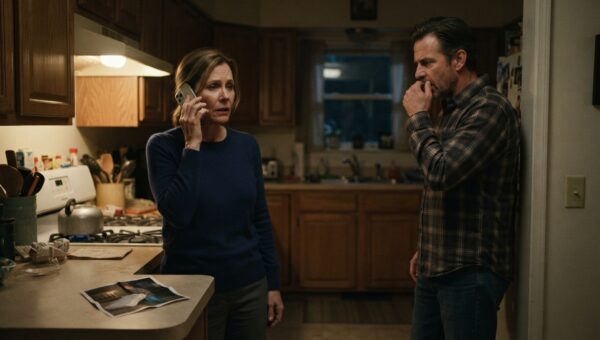
Then my phone buzzed against the table.
It was Lyle. His name flashed across the screen with a harsh, bright light that made me blink. When I swiped to answer, his voice didn’t even sound like my brother. It was high, cracking at the edges, and shaking with a fury that came straight from pure panic.
“She lied,” Lyle yelled right into the earpiece, the background noise of the highway roaring behind him. “The old lady lied to our faces for thirty years! Get over to the U-Store-It on Route 6 right now. You need to see this. You need to see what she’s been hiding from us while we were eating generic beans.”
I pulled the phone away from my ear for a second, staring across the table at Mama. She hadn’t moved an inch. Her eyes met mine with a terrible, heavy sadness that told me she had been expecting this exact phone call down to the minute.
I put the phone back to my mouth. “Lyle, what are you talking about? Slow down.”
“I broke the padlock off Unit 402 with the tire iron,” he shouted, his voice pitching up into something unhinged. “It’s not furniture in there. It’s boxes. Thousands of dollars in cashier’s checks, bank statements, default notices, and payoff receipts with my name on them. She paid them off. Every single one of my business loans from the last ten years. She bailed me out behind my back while letting me grovel. She had the money the whole time.”
His words hung in the air between us, ugly and sharp. Clara gasped, her hand flying to her mouth as the full weight of what Lyle was saying hit her.
Mama finally closed her eyes for a long, slow moment, letting out a breath that sounded like a sigh of old dust. She didn’t look surprised. She just looked tired. Very, very tired.
She reached into her tote bag one last time, her fingers moving with absolute deliberation, and pulled out a single, heavy key attached to a split ring. She slid it across the table toward me, right past Clara’s untouched envelope.
“He opened the wrong unit first,” Mama said softly, her voice barely louder than the hum of the refrigerator. “He always was too impatient to read the whole sign on the door.”
I looked down at the key. Scratched deep into the brass head, in clumsy, uneven capitals that had been carved with the blade of an old pocketknife during some long-forgotten Saturday afternoon in the shed, were the initials *A.H.*
Daddy’s initials.
“Go on,” Mama told me, her hand resting flat on the table now, empty and steady. “Unit 403 is right down the row from the one your brother just vandalized. You’d better go see what your father actually left behind before Lyle tears that one apart too.”
I stood up so fast my knees knocked against the wood. Clara was crying now, soft, confused little sounds, but I didn’t stop to comfort her. I grabbed the initialed key, my fingers closing around the cold metal, and walked out the front door without looking back.
The drive to the U-Store-It facility took seven minutes, but it felt like driving through thick gray cotton. The sun was dipping low behind the flat horizon, turning the West Texas sky the color of a bruised plum. When I pulled my sedan into the gravel lot, Lyle’s truck was parked sideways across two spaces, its passenger door standing wide open.
I found him standing inside the open-air concrete bay of Unit 402, surrounded by a mountain of cardboard bankers’ boxes. The metal clasp of the padlock he’d smashed lay twisted on the asphalt like a dead beetle. He was holding a yellowed bank statement in one hand, his face flushed red, muttering to himself as his eyes darted across columns of figures.
“Look at this,” Lyle snarled when he saw me walk up, waving the paper like a flag of war. “Thirty-two thousand dollars in nineteen-ninety-eight. Another twelve thousand when the seed store went under. She had it. She had all of it tucked away while she made us feel like dirt for needing help.”
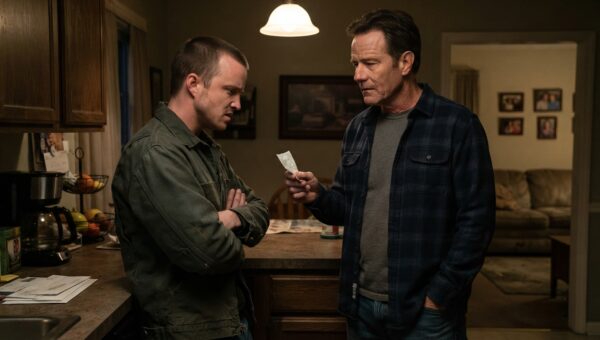
“You broke the lock, Lyle,” I said, my voice sounding flat and distant even to my own ears.
“I have a right to know what my mother was hiding!” he yelled, his voice echoing off the corrugated metal walls of the storage units. “She treated us like charity cases while sitting on a goldmine from the insurance payout after the truck accident. She lied to us about being broke.”
“She didn’t lie,” a voice said from behind us.
We both spun around. Mama’s sedan had pulled up quietly behind Lyle’s truck. She was standing by the driver’s side door, leaning slightly against the frame for support, watching us with that same unblinking gaze. She hadn’t stayed behind. She had followed us every inch of the way.
“You didn’t read the ledger, did you, Lyle?” Mama asked, her voice carrying easily across the concrete. “You saw your name on the top of the stack and your tiny brain stopped working.”
Lyle took a step forward, his chest puffed out, looking smaller than ever against the backdrop of his own exposed wreckage. “It says you paid my debts. It says you bailed me out.”
“I did,” Mama said plainly. “Every single time you came home crying about the bank taking your trucks or your shop going under, I went down to the insurance office and borrowed against my own policy. I sold my mother’s silver tea set to the antique dealer in Lubbock. I cleaned houses in town twice a week after your father died so you could keep playing businessman.”
The silence that followed was heavier than any argument. Lyle opened his mouth to say something, some sharp retort about how she should have helped him, but the words seemed to die in his throat as he looked down at the paper in his hand. It wasn’t a record of hidden wealth; it was a record of slow, agonizing survival. Every page was stamped with past-due notices, interest penalties, and collection warnings that Mama had quietly intercepted, paid off, and buried in the dark so her golden boy wouldn’t have to face the music of his own bad choices.
Mama turned her gaze from Lyle and looked directly at me. “Your key is for the one next door, honey. Go on.”
I walked past Lyle, stepping over the threshold of Unit 402, and slid Daddy’s initialed key into the rusty padlock of Unit 403. It turned with a dry, metallic click that sounded like a lock opening for the first time in ten years.
The heavy steel door rolled upward with a loud rattle, revealing a space that smelled entirely different from the first unit. There was no paper smell of old debt here. This smelled of pine sawdust, linseed oil, and old iron shavings.
Inside, illuminated by the dying orange light of the Texas sunset, were Daddy’s hand-built oak workbench, his chisels laid out in neat rows in their canvas roll, and three wooden crates filled with unfinished birdhouses and cedar chests he never got the chance to sand. Resting right on top of the workbench was a single black-and-white ledger book, bound in cracked imitation leather.
I reached out and picked it up. Inside, written in Daddy’s careful, schoolteacher handwriting from the final months before his heart gave out, was an accounting of a very different kind. It wasn’t a ledger of debt; it was a ledger of love. Every page detailed the hours he worked extra shifts at the grain elevator, the exact cost of the insulin Mama needed, and a note written in the margins on the very last page he ever filled out: *Protect them from knowing how close we came. Let them think it was just bad luck. They need to believe they can do better than us.*
I carried the ledger out into the fading light and handed it to Mama. She took it in both hands, holding it against her chest the way she used to hold us when we were little and scared of the thunder rolling across the plains.
Lyle was staring at the floor now, his boots scuffing the gravel, all the blustery noise completely drained out of him. “I didn’t know,” he mumbled, his voice cracking. “I honestly didn’t know you were working yourself to the bone.”
“Of course you didn’t know, Lyle,” Mama said softly, looking down at the worn leather cover of Daddy’s book. “Because you never once asked how anyone else was doing unless you needed to borrow fifty dollars for gas.”
She turned around, walked slowly back to her car, and got inside. She didn’t slam the door. She didn’t shout. She just sat behind the wheel and waited for me to climb into the passenger seat.
As we pulled out of the U-Store-It lot, leaving Lyle standing alone in the gravel beside his broken padlock, Mama reached into her purse and pulled out a small, heavy brass key with scratched initials, setting it gently on the dashboard right where the last rays of the sun caught the metal. Neither of us said another word all the way back to the quiet apartment in town.