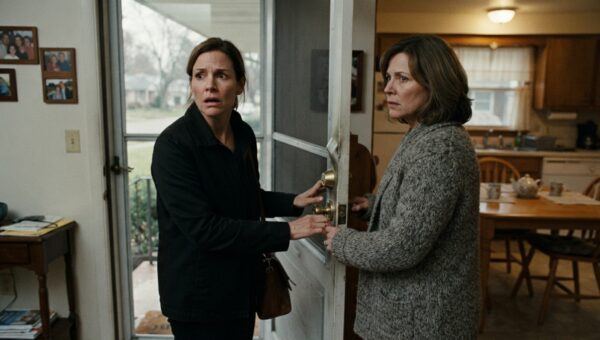
The linoleum in the third-floor corridor of County General always smelled like pine cleaner and stale coffee, especially at 3:14 in the morning when the world outside was pitch black. My knees would ache from the heavy bucket and the push broom, but I kept moving because the night shift was quiet and I needed the check to keep the apartment.
That was back in 1985, long before my joints stiffened up for good and retirement meant sitting by a window watching the delivery trucks go down Main Street.
Room 4B was at the very end of the hall, tucked away behind heavy double doors that stayed shut against the draft. Inside was a boy named Alan Vance, sixteen years old, laid out flat after his father’s pickup truck hit a patch of black ice on Route 9. Three months he had stayed in that exact same bed, breathing through a plastic tube, while his chart collected green stickers and nobody ever came to visit. His family had dropped off the map after the second week, scared off by the hospital bills or just plain worn out by the waiting, leaving him entirely to the mercy of the monitors and the night nurses.
I started slipping into his room around two in the morning when the floors were dry and the floor nurse was busy doing chart work at the station.
At first, I just emptied his small plastic waste bin and dusted the metal tray table where nobody had set a glass of water in weeks. But the silence in that small room felt heavier than the mop bucket, so I started talking just to break the quiet, telling him about the weather or what I had packed for my lunch. After a few nights, I started bringing my paperbacks with me, propping them open against the edge of the metal cart while I worked.
Westerns mostly, Zane Grey and Louis L’Amour books with dog-eared pages and cracked spines I picked up for a quarter at the church bazaar down on Elm Street. I read them out loud while I wiped the baseboards and polished the chrome bed rails, keeping my voice low and steady so I would not wake the other patients down the hall. I read about dusty trails in Arizona and cattle drives across the panhandle, thinking maybe the rhythm of the words would keep him company in whatever dark place his mind had wandered off to.
I did not think it was anything special, just a tired woman passing the hours with a kid who had nobody left to talk to.
Then came a Tuesday morning in late November when I pushed my cart down the hall and found Room 4B completely stripped down to the bare mattress. The sheets were balled up in a gray laundry bin in the corner, the IV pole was gone, and the bedside table was wiped clean of every sticker and chart holder. The day nurse told me they had transferred him down to a specialized rehab facility in Boston because some distant uncle had finally signed the paperwork. I never got to say goodbye, and as the years went by, the memory of that boy faded into the background of a hundred other hospital rooms and thousand-hour work weeks.
Decades passed the way they always do when you are busy working for a living, filling up with grocery lists, rent checks, and the slow, grinding wear and tear of standing on hard floors for eight hours a day.
My husband passed away, the apartment got too drafty in the winters, and eventually my knees gave out completely, forcing me into retirement with a pair of silver-handled crutches and a pension that barely covered my prescriptions. I thought my days of walking the halls of County General were long behind me, buried under forty years of dust and ordinary routine.
Then an ivory envelope came in the mail with a heavy gold crest stamped right on the flap, inviting me as an honored guest to the hospital’s fiftieth anniversary gala down at the grand ballroom of the Omni Hotel. My first thought was that they had sent it to the wrong address, maybe mixing me up with some retired head nurse who had saved lives and earned a plaque on the wall. But the letter had my name spelled out right on the paper, alongside a small handwritten note asking the former night-shift staff to please be present for a special presentation by the department of neurosurgery.
I spent three days trying to decide whether to go, feeling foolish at the thought of putting on my old church dress and sitting among doctors and wealthy donors who gave thousands of dollars to the foundation. In the end, my curiosity won out over my pride, and I took the bus downtown with my cane tapping against the rubber floor mats. The ballroom was blindingly bright, filled with glittering crystal chandeliers and rows of round tables covered in white linen cloths where men in tuxedos and women in silk gowns murmured over glasses of sparkling water.
My seat was tucked away near the side, closer to the back than the stage, but I had a clear view of the mahogany podium where the speakers were taking their turns at the microphone. The hospital administrator droned on for twenty minutes about endowments and research grants, and I found myself nodding off just a little bit, listening to the familiar clink of silver forks against china plates. Then the administrator cleared his throat and stepped aside to introduce the keynote speaker, a man whose name was printed on the program in bold gold letters as the chief of neurosurgery.
Dr. Alan Vance walked up to the podium with a calm, steady stride, adjusting his glasses and looking out over the crowd of five hundred people with an expression that was remarkably grounded for someone who ran a whole hospital department. He did not start with statistics or fund-raising goals, choosing instead to talk about what it felt like to wake up from a very long, dark sleep when you were sixteen years old. The room went so quiet you could hear the hum of the air vents overhead as he described the white walls of County General and the smell of industrial floor cleaner that stayed in his clothes for weeks.
He spoke about the three months he spent in Room 4B with nobody coming to see him, suspended between two worlds while his brain tried to knit itself back together after a wreck that nearly took his life. He told the audience how the doctors had told his chart that he was completely unresponsive, a blank slate with very little hope of ever returning to a normal classroom or a normal life. But then he paused, resting his hands on the wooden edges of the podium, and his voice dropped to a conversational murmur that reached every corner of the crowded room.
He said he remembered the sound of a mop bucket squeaking against the tile at two in the morning, followed by the low, steady drone of an old western paperback being read aloud by someone who had nowhere else to be. He told them about Zane Grey and Louis L’Amour, describing how those stories about wide-open spaces and dusty trails became the only lifeline keeping his mind anchored to the real world while his body refused to move. He said that when he finally woke up and spoke his very first word after months of absolute silence, that word was the name of the sheriff from a dog-eared paperback about a gunfighter named Shane.
The ballroom was completely motionless, every head turned toward the stage as the surgeon took a slow breath and looked directly out into the sea of tables toward the back of the room. He said he spent twenty years searching the old night-shift rosters from 1985, trying to find the woman who left her worn books on his tray table and spent her lonely hours talking to a boy who could not answer back. Then he lifted his hand, pointing his finger right down the center aisle toward where I was sitting with my cane resting against my knee.
“She’s in this room,” Dr. Vance said, his voice breaking just a little bit on the edge of the microphone. “Her name is Glenda, and she taught me that nobody is ever truly lost as long as someone is willing to sit in the dark and speak their name.”
The silence lasted for one full heartbeat before the entire ballroom erupted into a wall of sound, five hundred people turning around in their chairs and clapping until my ears rang. I just sat there with my hands frozen on the top of my cane, my chest tightening up as the spotlight hit my face and every eye in the room locked onto my corner. A young woman in a sharp gray suit gently touched my elbow, helping me to my feet while the applause swelled higher and higher, echoing off the high ceilings and the crystal chandeliers.
They led me down the side steps and through a heavy double door backstage into a quiet, sunlit room where the noise of the ballroom faded away into a soft hum. Dr. Vance was already standing there by the window, his suit jacket off and his sleeves rolled up, looking older than the boy in Room 4B but carrying the exact same kind brown eyes I remembered from the dim light of the night shift. He did not say anything at first, just walked across the carpet and took both of my weathered, calloused hands in his palms, holding them tight while my shoulders shook with a breath I had been holding for forty years.
He reached into his leather briefcase that was resting on a cherry-wood side table and pulled out a small, exceedingly fragile book with a faded orange cover and missing corner pieces. It was an original 1982 paperback edition of a Zane Grey novel, its pages yellowed and held together with clear yellow tape along the spine where the binding had finally given out decades ago. He laid it flat on the polished desk between us, opened to a dog-eared page near the middle where a faint pencil mark sat beside a paragraph about a horseman riding into a canyon at dusk.
“I kept it,” he whispered, looking down at the book and then back up at my face with a quiet, steady grace that made my throat close up completely. “Every time I go into surgery, I think about the way you talked to me when nobody else would, and I try to remember that every single patient is someone worth staying up late for.”
We sat there together for twenty minutes while the gala continued out in the ballroom, drinking weak tea from white porcelain cups and talking about the old days when the floors at County General were made of real stone and the night shift felt like the only quiet place left on earth. He showed me photographs of his family and his medical team, and I told him about my little apartment and my worn-out knees, trading stories like old friends who had just run into each other after a long weekend away. When it was time for me to leave, he walked me all the way out to the front entrance where the afternoon sun was hitting the pavement of Main Street.
Now the book sits right here on the edge of my small wooden desk by the window, resting beside a china teacup and a pair of reading glasses that I only need when the light gets low. My knees still ache when the weather turns cold, and the delivery trucks still rumble past my window every afternoon on their way down to the state highway. But when I look down at my hands, I don’t see an old woman past her prime anymore, and I don’t think about the long hours spent scrubbing hospital tile in the middle of the night. I just see the pages turning, one by one, in a room that used to be dark.