PART 1
At my father’s funeral on a bitter Tuesday in February, my older brother, Raymond, leaned down over the back of my metal folding chair while the minister was still offering the closing prayer.
“Don’t worry about the accounts, sister,” Raymond whispered into my collar. His breath smelled of mints and cold air. “Dad’s $500,000 will stay in the family. I am already handling the paperwork with the trust company.”
I kept my hands clasped tightly over my purse in my lap. I did not turn my head, and I did not answer him. Raymond had spent forty-two years acting as if our father’s hard work was a private fund created solely to float his bad investments. Dad had built Miller Hardware & Supply from a one-room storefront on the county square into a thriving lumberyard and supply yard with nine employees and three delivery flatbeds. Raymond had been named vice president of operations twelve years ago, mainly because Dad could not bear the thought of his only son drifting between sales jobs.
What Raymond did not know, standing there in his dark wool overcoat and acting like the head of the household, was that Dad had already put a quiet plan in motion three months earlier.
Back in November, Dad called me to his brick house on Maple Street on a Sunday afternoon.
His congestive heart failure had worsened, and he was using oxygen around the clock, but his eyes were completely clear behind his gold wire-rimmed glasses.
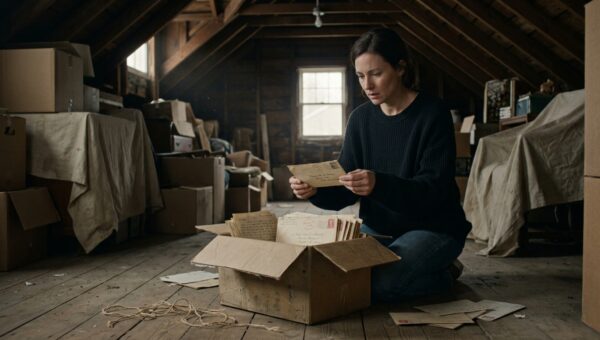
He had an old tin lockbox open on the kitchen table beside his coffee mug. He reached inside, took out a heavy brown manila envelope sealed with red paper tape, and slid it across the clean yellow tablecloth into my hands.
“Take this home, Sarah,” Dad told me, his voice rough and slow from the nasal cannula. “Put it in your bottom cedar drawer under your winter sweaters. Do not mention it to Raymond, and do not break that seal until the afternoon of my funeral.”
“Dad, what is this?” I asked, looking at my name written in his deliberate, heavy engineer’s cursive across the front.
“That is my final accounting,” he said, tapping the table with two calloused fingers. “You have kept the books at the lumberyard for fourteen years, Sarah.
You took thirty dollars an hour and never asked for a bonus, while your brother drew eighty thousand a year to sit in an air-conditioned office and complain about the suppliers. When the day comes, open that envelope. It will give you the footing you need.”
I did what he asked. I kept that sealed envelope in the cedar chest for ninety-two days.
Now, sitting in the chapel as the funeral director prepared to roll Dad’s copper casket toward the hearse, Raymond tapped my shoulder again.
“Meet me at Dad’s house at four o’clock,” Raymond said, his tone brisk and businesslike. “Bring your set of office keys and the payroll ledgers from the safe. We need to inventory everything before probate court opens on Thursday.”
“I will be there at four,” I said quietly.
I drove home alone in the sleet, walked straight into my bedroom, and pulled the brown envelope from beneath my sweaters.
My fingers were cold as I sliced through Dad’s red tape with a kitchen paring knife.
Inside was an official copy of Dad’s last will and testament, stamped by the county chancery clerk three months ago. It left the full liquid balance of his personal accounts, exactly $500,000, solely to me.
Folded neatly behind the legal packet was a single sheet of lined legal paper in Dad’s unmistakable hand. The opening line read: *Sarah, I know what your brother has been doing.*
PART 2
The letter was dated November 12, just two days before Dad had called me to his kitchen table.
*Sarah, I know what your brother has been doing to the business account,* Dad wrote. *In September, when I was in the regional clinic for my vascular stent, First National flagged three unauthorized counter transfers from our commercial operating reserve. Raymond forged my initials on three separate transfer authorizations totaling $114,000. He moved the money into an LLC called Blue Ridge Logistics, an equipment shell company he registered in Delaware.*
I had to sit on the edge of my bed.
For two years, every time the quarterly balance sheets came back tight, Raymond had blamed the price of Southern pine and the rise in local diesel taxes. He had looked me straight in the face at the monthly payroll meetings and said we needed to freeze wages for the yard workers because the lumberyard was barely breaking even. I had delayed buying new delivery tires, and I had put off my own dental work, believing that my father’s business was on the edge of insolvency.
Dad’s letter continued:
*I did not confront him in the office because the doctor told me my heart would not survive another stroke, and I did not want our name dragged through the county paper while I was trying to live. But I hired Frank Patterson down at the title office to do a full forensic review of our commercial lines. Frank found the invoices Raymond submitted for timber deliveries that never arrived at our rail spur. Raymond has been bleeding the company dry to fund a commercial land speculation outside of Knoxville that has already gone into default.*
*The $500,000 in my personal certificates of deposit is not company money. It is the life savings I set aside from selling our original downtown warehouse in 2004. Raymond believes that money belongs to the company, and he believes he will inherit fifty percent of it as co-director. He is wrong. I named you the sole beneficiary on every single CD at First National on November 10. The money belongs to you, Sarah. Use it to keep the yard open, or take it and walk away. That choice is yours. But do not give him another penny to burn.*
I sat there in the quiet bedroom, reading his words three times. My hands had stopped shaking. A cold, steady resolve took their place.
I picked up the original will, Dad’s handwritten letter, and the bank signature cards Dad had attached to the back. I placed them inside my leather portfolio, grabbed my winter coat, and drove over to Dad’s house on Maple Street.
It was ten minutes to four when I pulled into the gravel drive.
Raymond’s late-model black SUV was already idling in front of the garage. He got out the second my tires crunched on the gravel, wearing his polished leather shoes despite the slush.
“Did you bring the office ledgers?” Raymond asked as we walked onto the porch.
“They are in my car,” I lied, keeping my voice even.
He used his key to open the front door. The house was cold and dark, smelling faintly of the lavender cleaner Dad’s visiting nurse had used on the countertops last week. Raymond walked straight to Dad’s roll-top desk in the corner of the den, pulled on the brass handles, and began flipping through the hanging file folders.
“The certificates of deposit should be in the fireproof lockbox under the bottom shelf,” Raymond said without looking up. “Dad had five hundred thousand dollars in three separate instruments. Once those clear into the estate account, we can use three hundred thousand to recapitalize the lumberyard’s credit line, and we can split the remaining two hundred thousand between us.”
“Why does the lumberyard need three hundred thousand dollars, Raymond?” I asked, standing in the doorway of the den with my portfolio under my arm.
Raymond stopped flipping through the folders. He turned around, his expression hardening into that practiced, patronizing frown he had used on me since we were children.
“Because building material costs are through the roof, Sarah,” he said, waving his hand toward the window. “You manage the invoices, but you don’t understand commercial financing. We have supplier notes coming due on the first of the month. If we don’t inject cash into the operating account, the bank will freeze our merchant credit. Dad would have wanted that $500,000 used to protect the family business.”
“Dad didn’t leave that money to the business, Raymond,” I said.
PART 3
Raymond’s eyes narrowed. “What are you talking about? Of course he did. He owned eighty percent of the corporate stock. Everything passes to his estate, and we are his only heirs. We share it equally.”
I walked over to the desk, opened my leather portfolio, and laid the chancery court copy of Dad’s will flat on the blotter right in front of him.
“Dad executed a new will on November 10,” I said. “He left the entire $500,000 in personal funds to me. Solely. He also filed transfer-on-death beneficiary forms with First National Bank. The money is not part of the probate estate. It has already transferred into my name.”
Raymond grabbed the paper, his face turning an angry, blotchy red as his eyes scanned down the signature block.
“This is garbage,” Raymond shouted, his voice echoing off the empty den walls. “Dad had congestive heart failure! He was on heavy medication! You coerced him into signing this while he was confined to his bed! I will take this to county court tomorrow morning and have it thrown out for undue influence!”
“You won’t do that, Raymond,” I said quietly.
“Watch me!” he sneered, slamming his hand onto the desk. “I am the executor named in his 2016 will! I have run that lumberyard for twelve years while you pushed paper! You think you can steal half a million dollars of my inheritance?”
I reached into the portfolio, pulled out Dad’s handwritten letter, and held it out toward his chest.
“Read the first paragraph,” I told him.
Raymond snatched the paper from my fingers. His jaw was set to argue, but as his eyes hit the first sentence, his mouth clamped shut.
The color drained out of his cheeks in less than ten seconds.
His eyes darted across the words: *counter transfers… $114,000… Blue Ridge Logistics… Delaware.*
“Dad knew,” I said.
Raymond didn’t speak. He stared at our father’s handwriting as if the ink were burning his fingers.
“He knew you took one hundred and fourteen thousand dollars out of the operating account while he was lying in the hospital having a stent put in his heart,” I said, taking half a step closer to the desk. “He knew about Blue Ridge Logistics. He knew about the fake timber invoices from the Knoxville land deal. And he had Frank Patterson pull every cancelled check and bank transfer slip before he ever signed that will.”
“Sarah, listen to me,” Raymond stammered, his arrogant, commanding tone completely vanishing. His hands shook so hard the letter rattled against his wool coat. “The Knoxville deal was supposed to be a sure thing. The commercial rail spur was being expanded. I was going to flip those four parcels, replace the $114,000 into the lumberyard account before Dad ever noticed, and walk away with a clean profit for both of us. It just got delayed by the zoning board.”
“You forged our father’s name while he was in intensive care,” I told him, the words tasting like acid. “And then you stood beside his casket three hours ago and told me you were going to handle his money to keep it in the family.”
“It was an investment for the business!” Raymond pleaded, stepping toward me with his palms open. “If the bank audits those missing reserves, the county prosecutor will get involved. They will call it grand larceny, Sarah. I will lose my home. I will lose my contractor’s license. You have the $500,000. You can put the $114,000 back into the company account and nobody ever has to know.”
I looked at my brother. I looked at the dark circles under his eyes, the expensive watch on his wrist that had been bought with company money, and the complete absence of any sorrow for the father we had just put in the frozen ground.
“I am not putting a single dollar of Dad’s savings into your pocket, Raymond,” I said. “And you are not stepping foot inside Miller Hardware & Supply again.”
ENDING
I did not have to file a criminal complaint against Raymond.
Dad’s attorney, Frank Patterson, met with both of us in his office on Thursday morning. Frank laid out the forensic accounting records, the forged bank slips, and the Delaware corporate filings on the conference table. He gave Raymond a simple, binding choice: sign an immediate surrender of his corporate stock and resign as an officer of the company, or Frank would deliver the audit file directly to the district attorney’s financial crimes unit.
Raymond signed the paperwork forty minutes later, his face gray and silent.
He surrendered his twenty percent share in Miller Hardware & Supply back to the company treasury in exchange for a full release of civil claims regarding the $114,000. He lost his eighty-thousand-dollar salary, his company vehicle, and his standing in our town’s business community. Two months later, the private lenders on his Knoxville land speculation foreclosed on the property, forcing Raymond to sell his four-bedroom home on the ridge and move into a rented condo forty miles south in Chattanooga.
He has not called my number since the day he signed Frank’s release.
I kept the lumberyard. I used $60,000 of Dad’s $500,000 to clear the overdue supplier balances, put new commercial tires on all three flatbeds, and give our nine yard workers a two-dollar-an-hour raise that had been frozen for three years. The remaining $440,000 sits safely in a restricted treasury fund, untouched, serving as the solid foundation Dad always intended it to be.
Last Friday was the first warm day of April.
I stayed late at the lumberyard to finish the quarterly tax reconciliation. At six o’clock, after the last flatbed had returned and the yard gates were chained shut, I walked into Dad’s old office at the back of the building.
The room still smelled of pine shavings, black coffee, and old receipts.
I sat down in his green vinyl swivel chair, unlocked the center desk drawer, and took out his brass pocket rule and the handwritten letter he had left me in November.
I looked down at the last line he had written on that yellow legal page: *The money belongs to you, Sarah. Use it to keep the yard open, or take it and walk away.*
I kept the money, but the greatest inheritance was finally knowing who truly loved me.
I folded the paper neatly, slipped it back into the drawer beside his tape, locked the desk, and walked out into the yard to start another week.