PART 1
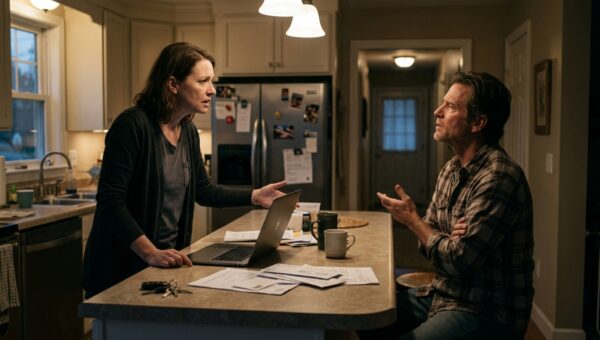
My husband, Arthur, told me across our breakfast table that I had become boring after twenty-eight years of marriage.
He didn’t yell when he said it. He buttered a slice of toast, set the knife across the rim of his plate, and looked at my gray sweatshirt. He said living with me felt like watching paint dry on an old garage door.
He said I had no spark left, that all I cared about was library book sales and whether the ground was warm enough to put in tomato starts.
I was fifty-four years old. I had spent twenty-eight years keeping our two-story house on Ridge Road clean, packing his lunches for the county highway department, and stepping around his black moods whenever work went sour. When he said those words, something in me simply set down its load. I stopped curling my hair before he walked through the door. I stopped asking him how his day went. I wore my comfortable stretched-out wool cardigans, put eight beefsteak tomato plants along the south fence, and spent my Saturday mornings sitting at the public library in town reading old regional history gazettes in the quiet stacks.
If he wanted a dull woman, I decided he could have one. It was easier than trying to please a man who looked through me like glass.
Then came a rainy Tuesday in late April. Arthur had driven up to the district yard in Mercer for an all-day asphalt equipment auction. The house was quiet except for the grandfather clock in the front hall and the rain tapping against the kitchen glass.
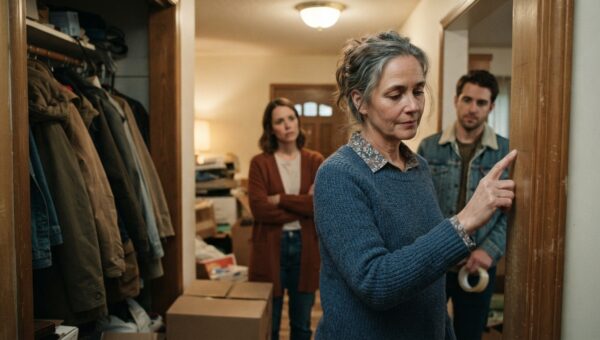
I went into his small wood-paneled office off the living room to look for the spare roll of clear packing tape. Arthur kept the left-hand drawers neat, but the bottom right drawer was locked with a small brass desk key he usually kept on his keyring. That morning, his extra ring of shop keys was sitting right on the blotter beside his reading glasses.
I unlocked the drawer. Under an old box of road department carbon slips was a black imitation-leather notebook with a red elastic band around the middle.
I opened it, expecting to find tractor maintenance logs or fuel receipts.
The first three pages were lists of dates, times, and names written in Arthur’s sharp, slanted hand.
The timestamps were between one and three in the morning over the last fourteen months: dates when I had taken my evening allergy pill and slept straight through until six.
Beside each date were names of people who had been inside our house while I was upstairs in bed.
The names belonged to a local real estate broker named Miller, a private estate appraiser from the county seat, and a woman named Evelyn Cross. Evelyn was the office manager at the regional surveying firm Arthur used for county drainage ditches.
I thought the notebook was a bad joke until I turned to the middle section. There were four pages of detailed floor plans of our home, marked with pencil estimates for quick paint touch-ups to maximize curb appeal. Stapled behind the sketches was a draft listing agreement for 412 Ridge Road, priced fifty thousand dollars below market value for an immediate cash sale.
Tucked into the pocket of the folder was a printed flyer for a lakeside townhouse in Tennessee with Arthur’s and Evelyn’s names penciled in as joint applicants.
My hands shook so hard I dropped my reading glasses onto the rug. I picked them up and read every line twice.
Arthur wasn’t just tired of me. He had spent fourteen months arranging the quiet liquidation of our entire life.
I took the notebook to the kitchen table, pulled out my phone, and quietly took clear pictures of every single page under the overhead bulb. I wanted the dates, the appraisal figures, and the notes about moving our joint savings out of state.
Then I turned to the very last page in the book.
It was dated August 14, three months in the future. Written across the top was the name of Grace Methodist Church, followed by an order of service, a list of twelve pallbearers, and an itemized guest list.
Down at the bottom, Arthur had drawn a line directly beside my name. In heavy black ballpoint ink, pressed deep into the paper, was one single sentence:
“Do not let her hear the recording.”
PART 2
I stood over the kitchen counter with my phone in my hand, staring at that final sentence until my eyes burned.
*Do not let her hear the recording.*
A cold, heavy pressure settled into my stomach. I put the black notebook back into the bottom desk drawer, turned the brass key in the lock, and laid his extra key ring exactly where he had left it on the green blotter. Then I walked back out to the kitchen, wiped down the counter with a damp sponge, and sat down at the table with my hands flat on the yellow formica.
Who had died? Whose funeral was planned for August 14?
My first thought was Arthur’s mother, but his mother had passed away in 2018 and was buried out in Mercer County. Then I looked at the twelve pallbearers he had listed in the notes. Five of them were my own cousins, men who worked the county grain elevators and barely spoke to Arthur except at family reunions. Two were my brothers, Tom and David.
Arthur had not planned a service for his family. He had drafted the program for mine.
Or for me.
The thought hit me like a bucket of icy creek water. I got up from the chair, went to the bathroom, and splashed cold water on my face. I looked in the medicine cabinet. For nine months, Arthur had been bringing me a glass of warm milk every night around nine o’clock, setting it on my nightstand with two generic allergy tablets for my sinus headaches. He had started that routine last July, saying my snoring kept him awake and that the warm milk would help me rest easier.
I had taken that milk, touched by what I thought was an old husband’s clumsy attempt at kindness. And while I slept like lead, strangers had walked through my living room with clipboards and tape measures, assessing the worth of the floor under my feet.
When Arthur came home from Mercer that evening at six-thirty, smelling of diesel exhaust and damp wool, he didn’t look at me twice. He hung his jacket on the hall peg, asked if the pot roast was hot, and sat in his recliner to watch the evening news.
“Did they sell those road graders?” I asked from the stove, keeping my voice level.
“State bought them,” he muttered, not turning his head. “Same old bureaucratic waste.”
I served his plate. I watched his hands as he cut his meat. Those hands had built our back deck. Those hands had held our daughter, Clara, when she was a baby before she grew up and moved to Denver. There was no shaking in his fingers. There was no hesitation. He looked like an ordinary, tired man eating an ordinary Tuesday dinner.
At nine-fifteen, the water kettle on the stove whistled.
Arthur poured the milk into my favorite ceramic mug with the blue flowers. He reached into the small cupboard beside the spice rack, took out the white plastic bottle of generic diphenhydramine, tapped two pink tablets onto the counter, and set them beside the mug.
“Drink that down while it’s warm, Martha,” he said, walking toward the den with his crossword puzzle. “You look worn out.”
I waited until I heard the den door click shut.
I took the mug to the sink, poured the milk straight down the drain, and ran the cold tap until the white swirl was gone. I took the two pink