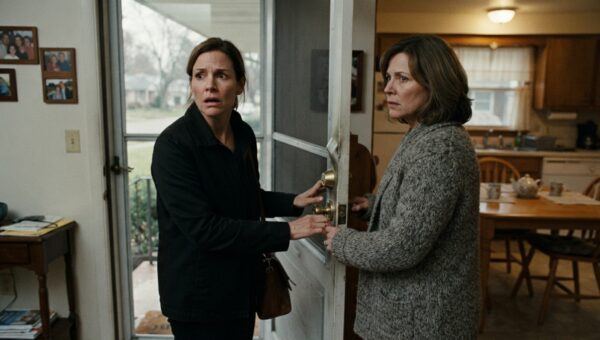
The smell of cumin and scorched tomato paste always lingers in the kitchen long after the stove is off. For five years, that smell meant the exact same thing to me. It meant Sunday afternoon was coming to an end, and it meant I was about to start sweating over the range trying to stretch four servings into eight.
My husband, Wallace, never understood why I used to check the clock at four-forty every Sunday with a knot in my stomach.
To him, it was just his parents dropping by to check in. To me, it was a drill. I would look at the pound of ground beef in the skillet, look at the half-head of cabbage or the single pot of chili, and start calculating how much water I could add before people started complaining that the soup tasted thin.
It always happened the exact same way. They didn’t call. They didn’t text. Randall and Paulette would just pull their sedan up the gravel drive, let the car door slam with that familiar hollow thud, and walk right through the back door. Paulette would sweep into the kitchen with her pocketbook over her forearm, her silver hair lacquered into place, and offer the exact same phrase every single week.
“Oh good, you’re already making dinner,” she would say.
It wasn’t a question. It wasn’t an observation. It was a booking.
Within thirty seconds, Randall would be pulling out a chair at the head of the pine table, making himself comfortable while I scrambled through the pantry to see if we had an extra box of macaroni or a bag of frozen rolls to pad out whatever was already cooking.
I used to say nothing. I would smile until my jaw ached, tell them of course there was plenty, and serve my own children smaller portions so there was enough left for two extra adults who hadn’t contributed a single dime or a single minute of prep work. And whenever I tried to mention it to Wallace later that night after the dishes were done, he would give me the same tired line while he scrolled through his phone on the couch.
“Just let it go,” he’d whisper, like he was talking a dog down from a fence. “It’s family.”
By the time this particular Sunday rolled around, I was done letting things go.
I was tired in a way that sleep doesn’t fix. My feet hurt from standing on the linoleum, and my nerves felt like they had been sanded down to wire. I had spent the morning working a double shift at the clinic, come home at three, and immediately started dinner because I knew what day it was.
I had one pot of chili simmering on the back burner and six squares of cornbread cooling on a wire rack. It was enough for me, Wallace, and our two teenagers, Leo and Chloe. That was the exact count. There wasn’t an extra potato in the bin, and the milk carton in the door had about half a glass left in the bottom.
At 5:02 PM, the gravel crunched outside.
I stopped stirring the chili. The wooden spoon felt heavy in my hand. I looked over at the kitchen window just in time to see Randall’s beige sedan cut the engine.
Wallace was sitting at the kitchen table helping Leo with a math worksheet, completely oblivious to the rhythm of the tires or the way my shoulders locked up.
The back door clicked open before I could even take a breath.
“Hope you made enough!” Randall laughed from the hallway, his voice carrying that booming, careless confidence of a man who had never cooked a meal in his seventy years of life.
Paulette was right behind him, already shrugging off her wool coat and tossing it over the back of the pantry chair like she owned the drywall. Usually, this was the exact second my feet would start moving on their own. I would reach for the extra soup bowls from the top shelf. I would force some imitation of a welcoming grin onto my face and pretend that I loved nothing more than feeding two uninvited guests who treated my kitchen like a public dining hall.
I didn’t reach for the bowls.
I stood there by the stove with the wooden spoon in my hand, watching Paulette walk right past the island and head straight toward the cutlery drawer as if she were looking for the cloth napkins.
“We missed church this morning, so we just took a little drive out by the reservoir,” Paulette announced, not even looking at me as she pulled open the drawer. “Randall said we should stop in. You know how he gets when he smells cumin.”
Leo looked up from his math book, sensing something heavy in the air. He didn’t say anything, but he closed his pencil box with a sharp snap. Wallace finally looked up from the table, his forehead wrinkling as he realized I hadn’t moved toward the cabinets yet.
“Hey, Ma,” Wallace said, keeping his voice low, trying to get ahead of whatever he could feel coming. “We were just kind of wrapping up here. We’re having a quiet one tonight.”
Randall chuckled, walking into the kitchen and rubbing his hands together over the heat of the stove. “Quiet is good. Smells good, too. What’d you make, Cheryl? Smells like you went heavy on the beans this time.”
That was the moment. The exact second where the whole pattern of our marriage, our house, and my sanity sat on the edge of a knife.
I didn’t yell. I didn’t slam the spoon down or burst into tears the way I had wanted to do for three years. I just reached out, took hold of the heavy glass lid on the chili pot, and slowly lowered it down until it settled over the rim with a soft, dull clink.
Paulette stopped rummaging through the silverware drawer. Her hand hovered over the butter knives.
I looked right at her, keeping my face completely flat, and then I looked over at Randall.
“Actually,” I said, my voice sounding quieter than I expected, “I only made enough for our family of four tonight.”
The kitchen went dead silent. The refrigerator hummed in the corner, loud and abrasive, filling the gap where nobody was breathing.
Paulette slowly turned her head, her eyebrows drawing together in that narrow, offended line I knew better than my own reflection. “What did you say, dear?”
“I said we only have enough for four,” I repeated, keeping my eyes fixed right on her. “There’s no extra. If you’re hungry, there’s that diner down on Fourth Street. They stay open till seven on Sundays.”
Randall let out a short, uncomfortable bark of a laugh, looking around the room like we were all part of some elaborate joke he hadn’t been let in on yet. “Very funny, Cheryl. Where are the bowls? Come on, let’s not play games when the food’s already sitting right here.”
“I’m not playing a game, Randall,” I said. “There are four bowls on that counter. One for me, one for Wallace, one for Leo, and one for Chloe. That’s it.”
Paulette’s face didn’t go white or pale; it just tightened up into a mask of pure, unadulterated insult. She looked at Wallace like he was supposed to pull a rabbit out of a hat and fix his wife’s sudden malfunction.
“Wallace,” Paulette said, her voice dropping into that chilly, controlled register she used whenever someone didn’t hand her what she wanted immediately. “Are you going to let your wife talk to your parents this way after we drove all the way out here?”
Wallace stood up from the table so fast his chair scraped against the floorboards with a screech that made everyone wince. He looked at me, his eyes wide and panicked, shaking his head just a fraction of an inch to warn me off.
“Cheryl,” Wallace whispered, stepping toward the stove and lowering his voice so the kids wouldn’t hear every word. “Come on. Just… stop it. Put out two more bowls. It’s not worth making a whole thing out of this.”
“It is worth it to me, Wallace,” I said, looking right up at him. “You can give them your bowl if you’re so worried about being hospitable. But I’m not watering down the kids’ dinner again.”
Wallace opened his mouth, but nothing came out. He looked at his father, then at his mother standing there with her coat half off her shoulders, and then back at me. For five years, he had relied on me to absorb the friction so he never had to feel uncomfortable. He never had to tell his parents no because I was always there to do the heavy lifting of keeping the peace, even when it meant shorting my own children on groceries we paid for with money I earned at the clinic.
“Well,” Paulette said, her voice shaking slightly with rage as she grabbed her coat off the chair and jerked her arms into the sleeves. “I never. After everything we’ve done for this family, coming out here on a Sunday evening just to check on you, and we get treated like vagrants at the back door.”
“You didn’t come to check on us, Paulette,” I said, and my voice didn’t even shake anymore. “You came because it’s five o’clock on Sunday and you didn’t feel like cooking.”
Randall grabbed his jacket off the doorknob, his face mottled red. “Come on, Paulette. We’re leaving. We’re clearly not wanted in this house.”
“You’re not,” I said quietly. “Not without an invitation.”
They didn’t slam the door when they left, which somehow felt worse. They walked out with that stiff, exaggerated dignity of people who believed they were the victims of a great injustice, their boots clicking against the back porch steps one by one. The screen door swung shut with a light spring-load rattle, and then we heard the sedan door slam again, harder this time, metal on metal.
We watched through the small kitchen window as Randall backed the car out of the gravel drive, spinning his tires just enough to throw a handful of loose stones against the fence. The taillights flared red in the gathering dusk, then dipped down toward the highway and disappeared.
Inside the kitchen, the air felt different. It was lighter, but it was charged with a kind of quiet terror that only comes when you finally break a rule you’ve followed for half a decade.
Wallace was still standing by the stove, staring down at the lid of the chili pot like he didn’t quite know what planet he was on. He didn’t look at me for a long time. He just reached up, rubbed the back of his neck, and let out a long, ragged breath that sounded like air leaking out of a tire.
“You really did it,” Wallace murmured, almost to himself.
“I did,” I said.
Leo cleared his throat from the table. “Can we eat now, Mom?”
I looked down at my son. His plate was still empty, but the pot was right there, thick and warm and smelling of cumin and beef, untouched by anyone who hadn’t earned a place at our table.
“Yeah, bud,” I said, reaching for the ladle. “We can eat.”
I served four bowls. Exactly four. I set them out on the pine table where the wood was worn down around the edges from years of elbows and homework and hurried breakfasts. I sat down across from Wallace, and nobody said another word for the rest of the evening.
Wallace didn’t touch his phone during dinner. He just sat there with his spoon, staring into his bowl like he was trying to figure out how to rebuild a house after the walls had already come down. He didn’t apologize to me, and I didn’t ask him to. Some things don’t need an apology once they’re out in the open.
The next Sunday came and went with a silence so deep it felt strange in the corners of the house. No gravel in the drive at five o’clock. No sedan doors slamming. No voice booming from the hallway asking what was for dinner.
By the third Sunday, Wallace looked over at the kitchen clock right around four-forty-five, and I saw him reach for his phone, pause for three seconds, and then lay it back down flat on the table without unlocking it.
We were sitting together in the kitchen about an hour later, the sun dipping low through the window and casting long, clean stripes across the wood. There were four bowls on the table, exactly where they belonged, and the only smell in the room was the cornbread cooling on the wire rack while the house stayed ours from the front door to the back.