The cold linoleum under my slippers always felt a little more brittle in November, right around the time the cottonwood trees dropped their last stubborn leaves against the side of the garage. Last Thursday, the mail carrier shoved a bundle of junk through the slot, and I almost swept the whole stack straight into the green plastic waste basket under the sink.
Credit card offers, funeral insurance ads, and circulars for grocery stores thirty miles away still arrived every week bearing Arthur’s name. Two years since his heart stopped on the basement stairs, and the postal service apparently figured he was just ignoring his bills.
I would have tossed the lot if the handwriting hadn’t caught my eye. It wasn’t the jagged, hurried scrawl of a machine or the blocky print of a collection agency. It was careful, sloping, and deliberate, written in blue ink on heavy cream paper that had a faint, clean smell of cedar instead of damp ink. There was no return address in the corner. Just a Tulsa postmark stamped over a thirty-cent stamp, mailed from right here in our own zip code. And on the back flap, where a name and address should have anchored the seal, there was just one word. Please.
I sat down at the kitchen table with that envelope for over an hour.
Forty-one years of marriage leaves certain marks on a woman, and I knew that man’s every habit as well as I knew the grain of the butcher block. I knew how he liked his coffee black as tar, how he whistled off-key when he was fixing the screen door, and how his blood pressure ticked upward every time property taxes went up. I thought I knew everything there was left to know about Arthur Vance. I thought our life together was an open book with every page thumbed and read.
When I finally slit the top with a dull butter knife, the paper inside felt thick and expensive. It was a single sheet, folded once, and it started with words that made my hands go cold. You promised you would tell her if anything ever happened to you. It has been two years. If you will not, I will.
My breath caught somewhere around my collarbone. The letter was dated three weeks ago, right around the anniversary of the day we buried him.
At the bottom, instead of a signature, there was just a ten-digit phone number with an area code I recognized as local.
I did not sleep that night, nor the night after. I stared at the ceiling fan turning slow circles in the dark, watching the shadows crawl across the plaster while Arthur’s old wool coat hung silent in the hall closet downstairs. I kept turning those lines over in my mind like a smooth river stone that cut my fingers every time I gripped it too tight. Was there another family? Was there some second life he kept tucked away in the east side of town while I was busy canning tomatoes and volunteering at the parish hall? The thought made my stomach heave, but the sheer quiet of the handwriting didn’t feel like a scandal. It felt like a ghost standing in the hallway, waiting for someone to unlock the door.
Yesterday morning, after two sleepless nights and half a pot of chicory coffee, I sat down by the rotary-dial wall phone in the pantry and dialed the number.
The line rang three times before a woman’s voice answered, crisp and thin, as if she had been sitting right beside the receiver waiting for it to scream. Hello?
I had my speech ready. I had practiced three different ways to ask who she was and what she meant by his promise. But my tongue felt thick and dry. Arthur is gone, I said. My voice sounded small, like a stranger’s. He passed away two years ago.
There was a long, heavy silence on the other line. The kind of silence where you can hear the faint hum of long-distance wires and someone breathing raggedly three miles away. Nobody said anything for a second, and honestly that felt worse than shouting.
Oh, the woman whispered finally. Her voice cracked right down the middle on the vowel. Oh, God. He never told you, did he?
Who is this? I demanded, my grip tightening on the receiver until my knuckles turned the color of chalk. Who are you to him?
My name is Clara, she said, and the second she said it, a cold shiver ran straight down my spine. Clara Vance. I am his sister.
The room seemed to tilt slightly on its axis. Arthur never had a sister, at least not one he ever spoke of in forty-one years. Whenever I asked about his family back during our first year in the house, he would jaw-set and look out the window at the distant hills, muttering that the dead were better left buried and the living were better off alone. I thought he was an only child whose parents had been wiped out by the flu when he was a boy. I thought we were just the two of us against the world.
He told me he was an orphan, I said, and the words tasted like ash.
She gave a dry, humorless little huff of air through the line. He wasn’t an orphan. He just chose to bury us thirty years ago so he didn’t have to look at the mess our mother left behind. But we had an agreement. When things got bad with Maya, Arthur promised he would step in and make sure you understood. He swore he would tell you the whole story if anything ever happened to him.
Maya? I asked, the name hanging in the air between us like an unexploded shell. Who is Maya?
My daughter, Clara said, her voice dropping to a harsh, trembling whisper. His niece. The one he has been paying for since she was six years old.
The phone bill for that month fluttered through my memory, along with a dozen little habits I had never questioned. Arthur walking down to the post office alone every single month on the twelfth. Arthur keeping his own separate ledger in the back of the metal lockbox under the bed, the one he claimed was just for old tax returns from his contracting days. I had trusted him completely. That was the easy part of our marriage. I never looked in the box because I loved him, and loving someone means you don’t go digging through their pockets while they are out buying feed.
Where are you? I asked.
On Tenth Street, Clara said. Near the old grain elevator. Will you let me come over, or are you going to hang up on a ghost?
Come on, I said, and dropped the receiver back onto its cradle.
I didn’t wait for her to knock. I went straight to Arthur’s old workbench in the corner of the garage, right past the rusted lawnmower and the jars of bent galvanized nails he could never bring himself to throw away. Underneath the workbench sat his heavy metal tool chest, the one with the brass latch that required a key he kept on his key ring until the day he died. I found the key on the hook by the backdoor, right where it had hung untouched since the hospital returned his personal effects in a brown paper bag.
The lock clicked with a stiff, protesting snap. Inside, beneath a layer of sawdust and old receipts for lumber, sat a small cedar box with no lid. Inside that box was a single yellowed ledger and a safe-deposit key from the First National Bank downtown.
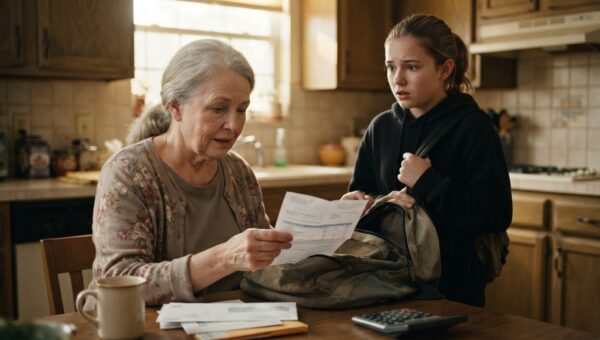
I opened the ledger. The pages were covered in Arthur’s neat, sloping figures, tracking deposits made every single month for three decades. The name Maya Vance was written on the inside cover in parentheses, right above a string of medical supply company names and pediatric orthopedic bills. And clipped to the back page was a birth certificate dated thirty-two years ago, naming Arthur as the uncle and showing a Tulsa address just four blocks from where I stood.
Arthur wasn’t hiding a second family. He was carrying the weight of his sister’s ruined life all by himself, terrified that if I knew about the bitter family fallout over their mother’s failing estate, I would look at him differently. He had cut ties with Clara thirty years ago to keep our new life clean and quiet, but he never stopped bleeding his own personal earnings into a private trust to pay for his niece’s juvenile medical expenses. Not a dime of our joint grocery or mortgage money had ever touched it. He had worked double shifts at the lumberyard for ten years just to fund the principal, keeping his guilt locked away in a wooden box while he kissed my forehead every morning before the sun cleared the ridge.
Forty minutes later, a battered blue sedan pulled up into our gravel drive.
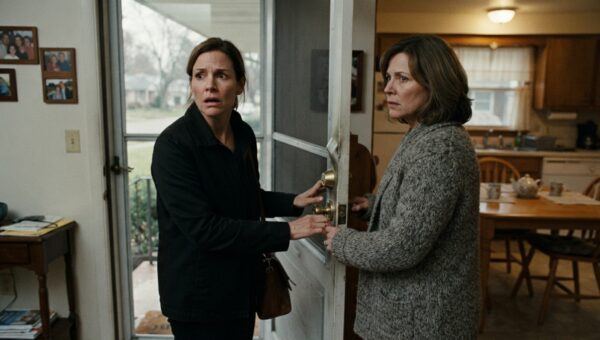
Clara got out slowly, clutching a worn leather handbag against her ribs like a shield. She looked so much like Arthur around the jawline that it made my breath hitch. When she walked up the wooden porch steps, I was standing in the doorway with the cedar box resting right on my hip.
Neither of us cried at first. We just looked at each other across the screen door, taking in the shared ghost of a man who had loved us both in entirely different, impossible ways.
You found the box, she said quietly, her eyes dropping to the metal key in my palm.
I found it, I said, pushing the screen door open and letting the rusty spring whine in the quiet morning air. Come on inside. The coffee is still hot, and we have a lot of paperwork to take down to the bank before noon.
We didn’t talk about the thirty years of silence while we sat at the kitchen table. We didn’t need to. Clara explained Maya’s condition, the endless surgeries on her spine, and how Arthur used to meet her behind the hardware store twice a year just to hand over the bank drafts in plain manila envelopes so his name never appeared on her school records. He was a stubborn, proud, terrified man who thought love meant protecting people from the truth.
An hour later, we drove down to First National together in her sedan, sitting side by side on the cracked vinyl seat. The teller, a young girl who didn’t know either of our histories, handed us the clipboard with a polite, vacant smile. We signed the secondary trustee papers transferring the stewardship of Maya’s medical fund directly into my hands, legally binding what Arthur had started in secret all those years ago.
By late afternoon, the sun was dipping low behind the water tower, casting long, sharp shadows across the front yard. Clara stayed for a while on the porch, neither of us saying much, just listening to the distant rumble of a grain truck shifting gears down on the highway.
After she drove away, I walked back inside the quiet house. I picked up the heavy silver-framed photograph of Arthur and me on our wedding day from the side table in the parlor. Right beside it, I placed a small, faded snapshot Clara had slipped into my coat pocket at the bank. It was an old polaroid of Arthur as a boy of twelve, standing on a sun-bleached porch with his arm thrown awkwardly around his little sister, both of them squinting against the harsh Oklahoma glare with identical, stubborn grins.