The fluorescent lights of the neonatal unit always hummed at a specific, maddening pitch around the twelfth hour of a fourteen-hour shift, sounding a lot like a small hornet trapped behind drywall. By the time I walked out to my old Subaru in the hospital parking lot, my lower back felt like someone had driven a rusted iron wedge right between my shoulder blades.
I had fifteen dollars in my wallet, a cold cup of stale hospital coffee in the cup holder, and forty-two thousand dollars sitting in a dedicated savings account that represented every missed holiday, every double shift, and every ounce of my youth spent wiping infant monitors and charting IV drips.
I figured I would crawl into my twin bed upstairs, sleep for eight unbroken hours, and maybe wake up to a cold glass of tap water. Instead, I turned our gravel driveway at 10:15 p.m. and saw my life sitting out in the damp Maine drizzle.
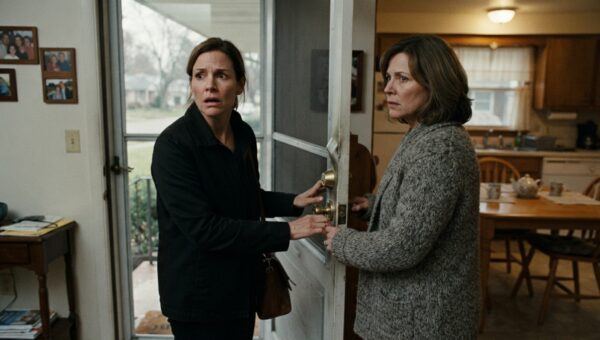
My black canvas suitcase rested right against the bottom step of the porch, flanked by three heavy black trash bags bulging with my winter coats and scrubs. The porch light glared down on the peeling white paint. Before I even cut the engine, the front door swung wide open and my brother, Warren, stepped out onto the welcome mat with a smirk that looked entirely too practiced for a Tuesday night.
He wasn’t even wearing his work boots. He was wearing my father’s old cardigan, looking like he owned the county recorder’s office.
He didn’t say hello. He just reached into the pocket of the oversized sweater, pulled out my bright blue debit card, and slid it across the damp wooden railing toward my windshield like he was tossing a tip to a lazy waitress.
“Your job here is done,” he sneered.
The words didn’t quite make sense for a solid five seconds because my brain was still half-stuck in room four with a baby whose oxygen sats were dropping. I stepped out of the Subaru into the cold puddle, the water soaking right through the thin canvas of my sneakers, and looked past Warren into the front hallway. Brittany, his new girlfriend of four months, was standing right where my old oak bookshelf used to be. She was holding a framed photograph of my late grandmother, the one who left me the seed money for my practitioner certification, and she was casually setting it face down on the hall radiator.
My mother appeared behind Warren, wiping her hands on a dish towel with that tight, pinched look she always got whenever she was about to do something cowardly and call it keeping the peace.
“We need the room, Clara,” she said, her voice flat and thin as dry parchment. “Warren and Brittany are settling down. We can’t have you taking up space upstairs when you’re hardly ever here anyway.”
I looked from my mother to the trash bags, then down at the blue plastic card resting on the wet wood. That card was the key to my advanced nurse practitioner program, funded through three years of grueling night shifts and overtime bonuses that left me eating saltine crackers in the supply closet. I had deposited every penny into what I thought was our joint household credit union account, believing my parents when they said it kept our family finances secure under one roof.
“Where is my money, Warren?” I asked, and my voice sounded smaller than I wanted it to.
Warren laughed, a sharp, barking sound that scared a stray cat out from under the porch lattice. “It’s being put to better use. We locked down the online portal this afternoon. You’re twenty-six years old, Clara. Time you figured out how to pay your own way instead of leeching off Mama and Daddy.”
My father didn’t come to the door, but I could see his shadow sitting in the leather recliner through the front window, perfectly still, watching the local news with the sound turned low. He didn’t have the stomach to look me in the eye, which somehow felt worse than if he had come out shouting.
I searched mother’s face for one sign of the woman who used to braid my hair before church, but I found only a cold, guarded mask that cared more about impressing Brittany’s affluent parents than feeding her own flesh and blood.
“Don’t make a scene in front of Brittany,” my mother whispered, stepping back and latching the screen door with a sharp click.
Warren picked up my suitcase, hauled it down the steps, and dropped it right into the muddy ruts where the gravel had washed away. “Don’t come back,” he called out over his shoulder as he turned the deadbolt. “The police won’t do anything. It’s family property.”
I stood there in the dark, the autumn rain soaking through my uniform top, feeling the absolute, dead silence of a betrayal so total it made my teeth ache. I didn’t cry. I didn’t scream at the door or pound on the glass. Something inside me just snapped, clean and cold, like dry pine under a boot heel. I picked up the blue card, tossed it into the passenger seat of my car alongside my lunchbox, and hauled the heavy trash bags into the backseat one by one.
I backed out of the driveway, the tires spinning twice in the wet clay before catching traction on the asphalt. I drove down toward the old rusted bridge by the paper mill, parking where the sodium streetlights flickered against the greasy surface of the river. My chest felt tight, constricted by a band of cold iron that wouldn’t let me draw a full breath. I reached for my phone to call the non-emergency line, half-convinced Warren was right and that the law wouldn’t lift a finger for a nurse who trusted her own blood.
Then, at exactly 10:34 p.m., my phone lit up the dark cab with a harsh white glare.
The caller ID showed an 800 number belonging to the institutional security division of State Employees Credit Union. My thumb hovered over the screen for two seconds before I swiped it to answer.
“Clara Evans?” a crisp, professional voice asked without any preamble.
“Yes,” I said, my voice shaking despite myself.
“This is Marcus Vance, senior fraud investigator with SECU institutional services. We have an automated flag on your primary linked portfolio. A wire transfer of $42,000 was initiated four hours ago from an external terminal using your credentials, routed to a commercial development account held by Warren and Brittany Evans.”
I closed my eyes, leaning my forehead against the cool steering wheel. “They took it. My family locked me out and took my tuition savings.”
“They attempted to, Ms. Evans,” Marcus Vance said, and there was a slight, professional pause on the line. “However, your account was never an ordinary personal savings pool. When your grandmother established that bequest trust back in seventy-eight, she stipulated strict fiduciary sub-account parameters. Any transfer exceeding five thousand dollars requires secondary biometric or token authorization from the primary holder, or an automatic institutional freeze triggers within two hundred yards of the home branch.”
I sat up straight, the rain drumming a steady, heavy beat against the roof of the Subaru. “What does that mean for the money?”
“It means the transaction failed validation at the server level at 4:15 this afternoon,” he said, his voice reassuringly calm. “The system recognized an IP anomaly and an unauthorized user profile. The funds were instantly rolled back into an isolated, unlinked holding vault under your sole Social Security number. The destination account your brother used has been flagged for institutional fraud review, and any linked balances on their end are currently locked pending an active investigation.”
A strange, quiet warmth started to spread through my chest, pushing back the damp chill of the night. “They can’t touch it?”
“They can’t touch a single cent of it,” Marcus said. “In fact, because the attempt originated from compromised credentials during an active household lockout, our legal department is preparing an automatic referral to the state prosecutor’s office for identity theft and wire fraud. Do you wish to pursue formal charges against the account holders?”
I looked out the frosted windshield at the dark, swollen river rolling beneath the mill bridge. I thought about my mother’s cold dismissal. I thought about Warren standing on the porch in my father’s cardigan, smiling as he shut me out into the rain.
“Yes,” I said, and my voice didn’t shake at all. “Yes, I do.”
The next forty-eight hours moved with the cold, relentless precision of a surgical scalpel. I booked a small, clean efficiency apartment two blocks from the hospital, paid the first month’s rent from my regular payroll checking account, and spent my off-hours signing legal affidavits sent over by Marcus Vance’s department. I didn’t answer the first twelve calls from my mother. I didn’t look at Warren’s frantic text messages asking why his debit card was suddenly declining at the local lumber yard.
By Thursday afternoon, the collapse was complete. My father’s personal checking account, linked to the same household routing number, had been temporarily frozen by the bank’s compliance division while they sorted out the fraudulent transfer attempt tied to Warren’s name. According to the desk clerk at the credit union where my father had banked for thirty years, the family suddenly discovered that none of their bills could clear, and their local credit line had been suspended pending a fraud audit.
My phone rang while I was sitting in the hospital breakroom eating a lukewarm turkey sandwich between admissions. It was my mother, and this time she wasn’t telling me not to make a scene. Her voice was thin, frantic, and cracked right down the middle like old ice.
“Clara, please,” she sobbed, the sound grating against my ear. “You have to call the bank. Your father can’t even buy groceries. Warren made a mistake, he thought it was a general family fund, you know how boys are, “
“It wasn’t a family fund, Mom,” I said quietly, staring out the reinforced glass window at the gray Maine sky. “It was my grandmother’s gift for my education. The one you told me I was wasting my life on.”
“We’re your family!” she cried out, the desperation finally breaking through her pride. “How can you do this to us over money?”
“You put my clothes in trash bags in the rain,” I said. “You told me not to make a scene while your son stole my future. My job here is done.”
I hung up the phone, turned it off, and dropped it into my locker.
Two weeks later, I sat in the bright, quiet kitchen of my new apartment near the hospital. The morning sun poured through the clean white curtains, warming the laminate tabletop where I had laid out my advanced practitioner textbook and a fresh ceramic mug of black coffee. There were no trash bags in the corner. There was no sound of shouting from the hallway, and no cold shadow falling across my door. I traced the rim of the mug with my thumb, looking down at my nursing schedule for the week, clean and entirely my own.