The group chat notification lit up my phone at 4:14 on a Tuesday afternoon, showing a message from my grandmother Evelyn that read like a quiet plea nobody wanted to answer. She asked for help with three hundred and forty dollars and promised she would explain everything later. More than twenty people were in that family group chat, including uncles, aunts, and cousins who lived within twenty minutes of her house.
Not one of them replied. Not even with a single word or a quick question. For forty-eight hours, the message sat there like a ghost in the room, ignored by everyone who had spent decades taking her quiet kindness for granted.
I kept staring at the screen while the kitchen clock ticked away the seconds of my own evening. My husband was folding laundry in the next room, and the television hummed with some low-budget cable news program. I tried to push the notification out of my mind, telling myself that one of her own children would surely step up and handle whatever she needed. Evelyn was sixty-eight, proud, and fiercely independent, and she never asked for anything unless the ground beneath her feet was genuinely shaking. But the silence in the group chat stretched past twenty hours, then thirty, then forty, heavy and deliberate. Everyone was waiting for someone else to blink, or worse, hoping she would just give up and stop bothering them.
By Thursday night, the guilt had settled into my chest like cold lead. I didn’t care about the collective stubbornness of the family or the unspoken rule that nobody wanted to deal with Grandma’s sudden financial hiccups. I opened my banking app, entered her phone number, and transferred the exact sum she asked for without waiting for permission or consensus. Within ten minutes, my phone vibrated against the coffee table with a short reply from her number. She thanked me simply, and her last words were five brief syllables that I would replay in my head a thousand times over the coming days. You’ll understand soon.
Those were the last words she ever sent to anyone. That night, Evelyn passed away quietly in her sleep, her breathing simply stopping sometime before the early morning hours. There was no dramatic struggle, no frantic midnight phone call, just the quiet finality of a tired heart giving out.
The call came from the county coroner at seven in the morning, steady and clinical, shattering the ordinary rhythm of my workday before it had even begun. I dropped my car keys on the floorboards and drove out to her small, cedar-shingled house on the edge of town with my hands shaking against the steering wheel.
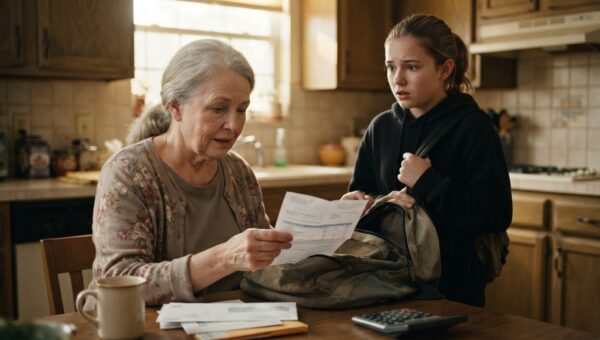
The front door was unlocked, just the way she always left it for family, though nobody from the family had bothered to stop by yet. When I stepped inside the kitchen, I froze right on the worn linoleum floor. Sitting in the center of the oak table was a stack of twenty-two thick, stamped envelopes, arranged in neat little rows like soldiers standing at attention. Right beside them lay a crisp, itemized paper receipt from Vance Express Direct Services, dated the previous night at 9:14 PM, showing a payment of exactly three hundred and forty dollars.
A single handwritten notebook sat open next to the stack, bearing my name on the very first page in her careful, sloping handwriting.
I walked across the room as if the floor might give way, my breath catching in my throat. I picked up the personal letter addressed to me, unfolded the heavy cotton paper, and began to read the words that explained why she had needed that exact sum of money. Evelyn hadn’t been asking for grocery money or utility help, and she certainly hadn’t been begging for handouts. Over the past fifteen years, she had quietly liquidated her savings, sold her late husband’s small collection of tools, and used every spare dime to bail her ungrateful children and relatives out of foreclosures, repossessions, and crushing medical debts. She had kept the ledger hidden in her pantry, recording every single bailout so they wouldn’t lose their homes or their dignity.
The three hundred and forty dollars I sent her had gone straight to the local courier service to release twenty-two certified legacy packets from a paid deposit vault. Those envelopes contained official satisfaction of debt certificates, property deed releases, and quiet legal clearances that wiped away every financial anchor dragging down her adult children and extended family. She had spent her final hours on earth making sure they were entirely free, even while they sat in a group chat ignoring her request for the release fee. They had assumed she was just being a burden, too blind and selfish to realize she was securing their futures while her own life was quietly slipping away.
The doorbell rang softly, breaking the heavy silence of the empty house. It was Mr. Vance, the small-business owner who ran the courier service, stopping by to drop off the final delivery confirmation per her pre-paid instructions. He took off his cap and looked down at the floor for a long moment when he saw me standing there alone in the kitchen. He told me how Evelyn had called him right after the funds landed, her voice thin and tired, insisting that the packages had to go out first thing Friday morning no matter what. She didn’t want a single person missing their chance at a clean slate.
By Saturday afternoon, the rest of the family started trickling into the house for the viewing arrangements, bringing their hollow condolences and suddenly very vocal concerns about her estate. Uncle Mark and Aunt Susan walked into the kitchen complaining about who was going to clean out the pantry and whether the house was worth enough to split evenly among the siblings. They spoke in loud, confident tones, already dividing up belongings before the body had even been laid to rest. I watched them from the doorway, holding the master ledger in my hands while the weight of their profound hypocrisy settled heavily over my shoulders.
They didn’t notice the stack of envelopes on the table until I cleared my throat and stepped into the center of the room. Uncle Mark waved a hand dismissively toward the table and asked if old Grandma had left behind any cash stashed in those envelopes. I didn’t yell or raise my voice, because anger felt too small for a moment this heavy. I simply told them about the group chat silence, about the two days of complete indifference, and about the three hundred and forty dollars they couldn’t be bothered to scrape together. The room went dead silent as I laid out the itemized receipt where everyone could see the exact timestamp.
I started handing the thick, stamped envelopes to them one by one, calling out their names and telling them what was inside each packet. Aunt Susan stared at the official debt satisfaction papers clearing her second mortgage, her face draining of all color as she realized who had actually paid off the bank five years ago. Uncle Mark dropped his car keys when he opened his folder and found the cancelled loan checks that had saved his business from total liquidation. They sat there in the kitchen where they had ignored her final plea, surrounded by the physical proof of sacrifices they never even knew were happening. Nobody had an apology left to give, and nobody could find the words to look me in the eye.
They left the house one by one before the sun had even finished setting, carrying their thick envelopes and their heavy, unpayable debts of gratitude out to their cars in miserable silence. I stayed behind in the quiet kitchen as the shadows lengthened across the floorboards. The house smelled faintly of old cedar and the peppermint tea Evelyn always kept in the blue tin on the counter. I sat down at the oak table in the warm afternoon sunlight, holding the single unsealed letter she had written directly to me. Outside the window, her white hydrangeas were blooming heavy and bright against the fence, nodding gently in the late breeze. I looked out at the garden with a quiet, unbroken heart, finally understanding what she meant when she left me her true legacy.