The steam was just starting to lift off my morning coffee when the front doorbell rang twice, short and sharp, the way someone rings when they think you are hiding from them inside your own house. It was a Tuesday, exactly six days after I had turned my car around in a gravel lot in upstate New York and driven fourteen hours back to Ohio without ever seeing my son’s face.
I didn’t rush to the door. I walked to the counter, picked up my ceramic mug, took a slow sip, and let the silence of my kitchen settle over me. My shoulders still ached from the drive. My car doors still had a light dusting of New York turnpike salt caked along the lower panels.
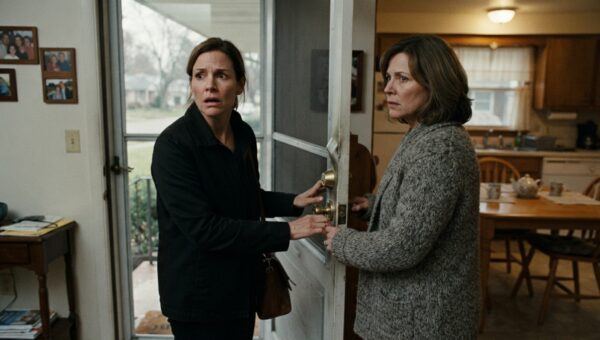
When the bell rang a third time, my phone buzzed against the wooden surface of the island. It was Julian. My only son. The boy I raised alone after his father died on an icy stretch of I-70 when Julian was barely seven years old.
I swiped the screen and put it on speaker while I rinsed my mug in the sink. I should have known better than to answer, but old habits die hard when you spent thirty years jumping every time a boy skinned his knee or forgot his lunchbox.
“Mom,” Julian didn’t even say hello. His voice had that thin, high edge to it that meant he was three seconds away from a temper tantrum. “Arthur Vance from the estate called me twice this morning.
The final caterer and venue settlement didn’t clear. The total is seventy-four thousand dollars, and your name is on the primary booking ledger.”
I turned off the faucet. The kitchen went dead quiet except for the hum of the refrigerator in the corner.
“My name is not on any ledger, Julian,” I said, my voice lower than his, steady enough to rattle him.
“Well, Arthur says it is,” he snapped back, the impatience bleeding through every syllable. “Look, Joselyn’s family had a temporary snag with their wire transfer from their investment accounts. It’s just a clerical delay. But the venue is threatening to take legal action if the balance isn’t wired by noon. As my mother, it’s your duty to step in and cover the bridge loan so we can start our honeymoon without this cloud over our heads.”
He said it just like that. From the safety of wherever he was sitting, expecting the machinery of my life to grind into gear because he had a cash flow problem and a new bride to impress.
“Duty,” I repeated the word out loud, tasting the bitter irony of it.
“Don’t start with that tone,” Julian said, his voice rising. “You already ruined our actual wedding day by refusing to walk through the front gate, and now you’re going to let us get sued over a bank holiday delay? Just call Arthur, give him your account numbers, and wire the seventy-four thousand. I’ll pay you back when we get back from St. Barts.”
“I drove fourteen hours to get to that estate, Julian,” I said, and for the first time, my hand shook just a fraction against the counter. “I had a hotel room booked for three nights. I bought a dress that cost more than my first used car. And when I walked up to those glass double doors, your bride looked right through me.”
“Joselyn told me you changed your mind at the last second because you didn’t want to mingle with her family,” Julian cut me off, his voice flat and defensive. “She said you got cold feet and left.
Why are you bringing that up now when we have an emergency?”
“She told you I left,” I whispered.
“Yes! She was trying to protect my feelings because my own mother couldn’t be bothered to stay for the ceremony,” he yelled. “Just handle the bill, Mom. Please. Just do your job.”
The line went dead with a sharp click. He didn’t wait for an answer. He never did, not since Joselyn moved into his apartment three years ago and started trimming away everyone who didn’t fit into her Pinterest board aesthetic.
I set the phone down face-up on the counter. The screen glowed for a few seconds before going dark.
Six days earlier, the morning of the wedding, the air in the Hudson Valley had been cold enough to bite through my wool coat. The estate sat back behind iron gates, a sprawling stone manor with floor-to-ceiling glass walls that looked out over manicured lawns and white flower arches that must have cost a small fortune.
I had parked my sedan near the auxiliary lot, walked up the paved path with my garment bag slung over my shoulder, and reached the grand glass entrance just as a coordinator was adjusting a spray of white hydrangeas.
Before my hand could touch the brass handle, the heavy glass door swung outward. Joselyn stood there in a silk morning robe, her hair already pinned into an elaborate bridal twist, looking at me the way someone looks at a stray dog on a restaurant patio.
“You’re not supposed to be here yet,” she said. There was no warmth in her eyes, just a cold, calculating assessment of my sensible shoes and my plain leather purse.
“I drove through the night, Joselyn,” I said, offering a small, tired smile. “I’m right on time for the family seating before guests arrive.”
“Her family only,” Joselyn said, stepping forward so her shoulder blocked the gap in the doorway. “We kept the guest list strictly to our social circle. You never mattered to him, and you certainly don’t matter here. Please leave before security sees you.”
Two bridesmaids standing near the inner fountain stopped arranging their bouquets. They didn’t look away; they stared right at me, pretending to inspect the petals while drinking in every detail of my humiliation.
I didn’t yell. I didn’t drop my garment bag and start a scene on the pristine stone steps. I simply looked past Joselyn’s shoulder, hoping to catch a glimpse of my son through the open foyer. But the hallway was empty, drowned in an expensive, artificial silence.
“Is Julian here?” I asked.
“He’s getting dressed, and he doesn’t need your anxiety right before he walks down the aisle,” Joselyn said, her voice dropping into a hard, venomous whisper. “He told me himself he only invited you out of pity because you live alone in Ohio. Turn around, get back in your car, and do us both a favor.”
I looked at her for three long seconds. I saw the desperate, thin panic beneath her heavy makeup, the way her fingers dug into the silk of her robe. Her family wasn’t wealthy. They were playing a very expensive game of pretend, financing an illusion on borrowed credit and high-limit cards, hoping to trap my son into a life he couldn’t afford.
“Have a wonderful wedding, Joselyn,” I had said.
I turned around, walked back down the stone steps, got into my car, and drove straight to a local print shop where I paid twenty dollars to pull the timestamped gate security footage and visitor log from the estate’s public access terminal. Then I called Arthur Vance, the estate director, directly from my car.
Now, sitting in my quiet Ohio kitchen six days later, I picked my phone back up. I didn’t wire seventy-four thousand dollars. Instead, I dialed Arthur Vance’s direct office line.
“Arthur Vance,” the man answered on the second ring, his voice clipped and exhausted.
“Arthur, this is Helen Miller,” I said calmly. “Julian’s mother.”
There was a sharp intake of breath on the other end. “Mrs. Miller. I’ve been trying to reach the primary guarantor on file. We have an outstanding balance of seventy-four thousand, nine hundred and twelve dollars that was supposed to clear via wire transfer this morning from the bride’s father, and it’s bounced twice. If this isn’t resolved by noon, we’re turning the contract over to our legal counsel.”
“I am calling to inform you of two things, Arthur,” I said, leaning against the counter. “First, I am not the guarantor on that contract. I never signed a single piece of paper, and if my name is on your ledger, it was placed there without my consent or signature.”
“Wait,” Arthur stammered, papers rustling loudly in the background. “Miss Vance assured me that you verbally agreed to cover any event overages as part of the family sponsorship agreement.”
“Joselyn lies about a great many things,” I said evenly. “Which brings me to my second point. I am flying into New York tomorrow morning. I have an appointment with you at your estate office at two o’clock. I suggest you have Julian and Joselyn present, because I am bringing the gate security logs from your own property proving that your bride locked me out of the venue on the morning of the wedding.”
The silence on the line stretched out so long I thought the call had dropped.
“Mrs. Miller,” Arthur said carefully, his tone shifting from corporate annoyance to genuine shock. “Are you telling me you weren’t even at the wedding?”
“I was standing at your front glass doors at ten o’clock in the morning, Arthur,” I said. “And your bride told me I never mattered.”
The Hudson Valley estate looked completely different on a gray Wednesday afternoon than it had on a sunlit wedding day. The white flower arches were gone, replaced by bare metal frames waiting to be dismantled for the next weekend’s event. The gravel parking lot was empty except for Julian’s leased BMW and a dusty silver sedan belonging to Joselyn’s father, who looked like he hadn’t slept in a week.
I pushed open the heavy oak door to Arthur Vance’s private office. Julian was sitting in a leather armchair, tapping his foot against the rug. Joselyn was pacing near the window, her phone clutched in her hand like a weapon. Arthur sat behind his desk with a thick manila folder open in front of him.
When I walked in, Julian stood up so fast his chair scraped loudly against the wood floor.
“Mom? What is going on?” Julian demanded, his face flushing red. “Arthur dragged us down here saying there’s some kind of contract discrepancy, and then he said you were coming. Why are you here? We just got back from the airport!”
“Sit down, Julian,” I said. My voice wasn’t loud, but it had the weight of thirty years of solitary authority behind it. He blinked, hesitating, before slowly sinking back into the chair.
Joselyn crossed her arms, glaring at me. “What kind of game are you playing? We have a bill to pay, and you’re dragging us down here to cause drama? Your son’s credit is on the line!”
I didn’t look at Joselyn. I walked straight to Arthur’s desk, placed a single clear plastic sleeve down on the polished wood, and slid it toward him. Inside was the printed timestamped gate log and a clear, high-resolution still photograph taken from the estate’s security camera at 10:14 AM last Saturday. It showed Joselyn standing in the open doorway, her hand raised, blocking my path while I stood on the stone step with my garment bag.
Arthur stared down at the photograph, then looked up at me, his face pale. “Mrs. Miller… this was taken by our front gate camera.”
“Indeed it was,” I said. “Your bride personally turned me away, told me I never mattered to my son, and ordered me to leave the property. Then she went inside and told Julian that I abandoned him because I didn’t care enough to show up.”
Julian whipped his head around to look at Joselyn. His jaw went slack. “What? Joselyn, what is he talking about? You said she called you from Ohio and said she wasn’t coming!”
“She’s lying!” Joselyn shrieked, her voice cracking as she took a step toward the desk. “That photo is photoshopped! She’s trying to ruin our marriage because she’s jealous!”
Arthur pulled a second document from the folder, the original booking worksheet. He ran his finger down the signature line for the financial backup guarantor. Beside my printed name was a scribble that didn’t match my handwriting by a mile.
“Miss Vance,” Arthur said, his voice dropping into a dangerous, professional chill. “Did you sign Mrs. Miller’s name to this financial addendum?”
The room went dead silent. You could hear the faint hum of the office printer down the hall. Joselyn stopped pacing. Her face lost all its color, the heavy makeup suddenly looking like greasepaint under the fluorescent lights. She opened her mouth, closed it, and looked desperately at Julian.
“Julian,” she whimpered, her voice dropping into a little-girl whine that made my stomach turn. “Tell him he’s crazy. Tell your mother to pay the bill. We’re married now. It’s her duty.”
Julian didn’t move. He sat frozen in the leather chair, looking from Joselyn’s terrified face down to the forged signature on Arthur’s desk, and then back up at me. The pieces finally clicked together in his self-absorbed head, the bounced wires, the missing mother, the sudden, desperate phone call six days ago demanding seventy-four thousand dollars from a woman he hadn’t spoken to in three months except to ask for a wedding date.
“You forged her signature,” Julian whispered, the words coming out flat and hollow. “You forged my mother’s name on a seventy-four-thousand-dollar contract.”
“My family couldn’t liquidate the assets in time!” Joselyn screamed, losing all pretense of high-society grace as she threw her hands up in the air. “We had to secure the venue or they wouldn’t let us have the reception! Your mother has money sitting in retirement accounts! She could have paid it without even noticing! Why are you looking at me like that? We’re husband and wife!”
“We are done,” Julian said, the words barely audible over the hum of the room. He buried his face in his hands, his shoulders suddenly shaking.
Arthur stood up, sliding the folder shut with a sharp thud. “Mr. Vance, Mrs. Miller is legally cleared of any association with this account. The contract is fraudulent, and we will be pursuing civil litigation against the bride and groom immediately for the full balance of seventy-four thousand, nine hundred and twelve dollars.”
Julian didn’t look up. He sat there in the wreckage of the life he had bought on credit, broken by the very person he had chosen over his own blood.
I looked at my son one last time. I didn’t feel angry. I didn’t feel triumphant. I just felt tired.
“I had a cashier’s check in my glove compartment for twenty thousand dollars, Julian,” I said quietly, my voice cutting through his quiet weeping. “It was meant to be a down payment for a house when you settled down with someone honest. I was going to hand it to you at the reception.”
Julian dropped his hands, his eyes wide and bloodshot, staring at me as the full magnitude of what he had thrown away finally landed on him. “Mom… please.”
“I am keeping the check, Julian,” I said. “And I am locking my credit tomorrow morning. You chose this life. You can pay for it.”
I turned my back on them, walked out of Arthur’s office, and pushed open the heavy glass doors of the estate.
The afternoon air outside was crisp and smelled faintly of woodsmoke from the valley below. I walked across the empty gravel parking lot, got into my sedan, and pulled the uncashed cashier’s check out of my center console. I slid it neatly back into my leather handbag, snapped the clasp shut, and turned the key in the ignition.
As I backed out of the space and drove down the long private drive away from the glass walls and stone pillars, I didn’t look in the rearview mirror once. My car hummed steadily on the highway heading west, carrying me back to the quiet house in Ohio where nobody lied, and the only bills on the counter were my own.