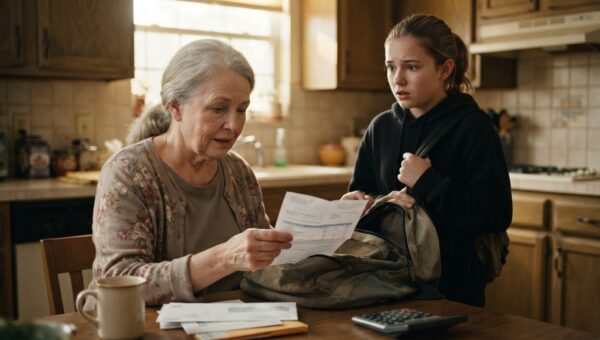
Mama is eighty-one and still sharp as a tack, but she doesn’t go to the bank anymore because my brother Dale handles those errands for her now. I usually stop by her house on Tuesdays to check the mail and make sure her refrigerator isn’t full of things past their expiration date. Last month she was sitting at her kitchen table with her old ledger book open, her glasses pushed down the bridge of her nose, looking worried in a way that always makes my own shoulders tighten up.
She asked why her checking account balance looked so thin lately. Her Social Security deposit has been running four hundred dollars short every single month for two years, and she couldn’t figure out where the leak was.
I told her not to worry about it, that I would drive down to the First National branch on Main Street and sort it out with the manager before lunch. Mama writes in a very specific parochial-school cursive with a sharp backward slant that hasn’t changed since she was a girl in Catholic school in Portland. When I got to the bank, Brenda at the counter pulled up the records for the primary checking account without much fuss because she has known our family since we were kids. But when she printed out the ledger for the last twenty-four months, she frowned at the screen and turned her monitor slightly toward me so I could see the automated transfers.
A secondary account had been opened in Mama’s name at a branch across town on Oak Street, sucking four hundred dollars out of her primary balance on the first of every month like clockwork. Brenda went to the back and came back out with the original account opening documents and the signature card from two years ago. I looked down at the card expecting to see Mama’s familiar backward-slant cursive looping across the signature line. Instead, the name was printed in harsh, rigid block letters. It was Dale’s hand, unmistakable and sloppy, pressed down hard into the blue ink. I asked for a certified copy of the card and the transfer logs right then and there.
The teller looked at me, looked at the card, and what she said next is that my brother had come in with Mama two years ago claiming he had her power of attorney for household care expenses, and that he had set up the sub-account right in front of her while she sat in the lobby chair.
Brenda leaned across the counter and said in a low voice that Dale told them Mama’s arthritis made it too hard for her to sign her usual cursive, which was why he printed her name for her on the intake paperwork. My chest went tight because Mama’s hands have never stopped her from writing her grocery lists or signing her Christmas cards every December. I thanked Brenda, folded the paperwork into three neat creases, and walked straight out to my car without saying another word.
I sat in the parking lot for ten minutes with my hands resting on the steering wheel, watching the windshield wipers flick dust across the glass. I didn’t want to believe that Dale would touch Mama’s retirement money, but the math was right there in black and white on the bank printout. Four hundred dollars a month for twenty-four months comes out to nine thousand six hundred dollars total, siphoned right out from under her nose.
I called Dale twice on the drive over to his house, but he let it go to voicemail both times. His voice mail greeting is still that lazy, cheerful recording he set up when he bought his truck five years ago, and hearing it made my jaw clench so hard my teeth hurt.
When I pulled up to his garage in my old sedan, his work van was parked out front with the side door rattling in the afternoon wind. Dale was inside wiping down a stack of brass fittings with a dirty shop rag, looking entirely too relaxed for a man sitting on a mountain of secret debt. He dropped the rag onto his workbench when he saw me walk through the door, wiping his palms on his jeans with a half-grin that faded the second he saw the manila folder in my hand. I didn’t bother with small talk or pleasantries because I was too tired for any of his usual excuses. I laid the bank signature card and the twenty-four transfer sheets right on top of his workbench among the grease and stray washers.
Dale looked down at the block letters, and the color drained right out of his cheeks so fast it looked like someone had turned off a lamp behind his face. He tried to laugh it off, saying he was just managing some household buffer funds for Mama in case she needed emergency work done on her roof, but his voice cracked on the word buffer. I asked him how a roof repair account managed to send four hundred dollars every month straight to a commercial equipment financing outfit downtown that handles defaulted business loans. He didn’t have an answer for that, so he just stared at the greasy concrete floor and shoved his hands deep into his pockets.
He finally muttered that his business had hit a wall after that bad contract in Pendleton two years ago, and he thought Mama’s savings cushion was big enough that she would never notice the skim. He kept saying he meant to pay it back before she ever found out, as if stealing nine thousand six hundred dollars in small monthly chunks somehow counts as borrowing if you feel bad about it afterward. I told him that the bank fraud division was one phone call away from freezing every asset he had left, and that I wasn’t going to let him drag Mama down into his financial wreckage. He didn’t fight me on it because he knew I had him dead to rights with the bank’s certified copies and the block-letter comparison.
We spent the next hour working out the terms right there on his workbench while the sun went down behind the scrap metal pile in his side yard. I drafted a formal restitution agreement on a legal pad I keep in my glove box, forcing him to sign a notarized promissory note committing to monthly wage repayments directly into Mama’s account until every single cent was restored. I took his spare set of keys to Mama’s house, his bank authorization tokens, and his signed relinquishment of any future proxy rights before I walked out to my car. He stood in the open doorway of his garage with his hands hanging at his sides, looking smaller than he ever had in his life.
The next morning I took all the paperwork to an elder law attorney downtown to make sure the Revocation of Power of Attorney was filed properly with the county clerk. By noon, Mama’s primary account was locked down tight with new security passwords that only I could access, and the secondary account across town was permanently closed with zero balance remaining. I drove over to Mama’s house around three o’clock with a bag of groceries and her updated check register in my canvas tote. The house smelled faintly of lemon wax and old paper, just the way it always did when everything was right with the world.
Mama was sitting at her sunlit kitchen table, carefully writing in her distinctive parochial cursive with its backward slant inside her updated check register, balancing her columns with a stubby yellow pencil. She looked up when I set the groceries on the counter and asked if the bank had managed to fix that little bookkeeping error on her statement. I told her it was all sorted out and that her balance was right back where it belonged, completely safe and accounted for. She gave me a warm, satisfied nod, dipped her pen back into the ink, and went right back to her numbers while I quietly filed the certified bank receipts away into the dark wooden sideboard drawer.