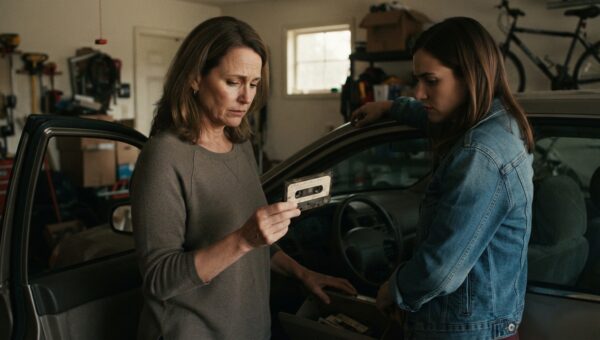
The blue plastic binder sat right on the sticky laminate top of my kitchen table next to a half-empty mug of chicory coffee, looking like a brick of cold lead that had dropped out of the sky.
Five years ago, Clifford swore on a stack of tax forms that his electrical contracting business had gone belly up. He looked me dead in the eye across the mediator’s desk in Edwardsville and told me there was nothing left to divide.
He took the truck, the clean credit, and the polished story about a sluggish economy, while I walked away with a modest $14,000 settlement and two teenage daughters who needed braces, school clothes, and a roof that didn’t leak when the spring storms blew in off the Mississippi.
Back then, my life shrank down to the hum of the cash register at the hardware store by day and the steady rattle of the industrial washing machines at the laundromat on Route 3 by midnight. I learned to stretch a pound of ground chuck across three nights and told my girls that we were just in a lean patch, even when my joints ached so bad from standing twelve-hour shifts that I could barely pull my boots off at the end of the week. Clifford bought himself a new bass boat the following summer and married a woman half his age named Brenda, trading me in like an old mower that wouldn’t start on the first pull.
The phone call came on a rainy Tuesday morning while I was wiping down the laminate counters between breakfast rushes. Brenda didn’t say hello or introduce herself properly. She just asked if I was the woman who used to be married to Clifford Vance.
“I am,” I said, holding the rag tight in my fist. “What do you want?”
“I want to burn him down,” she said, her voice shaking so hard the receiver rattled. “He just served me with divorce papers, and I found out he’s been hiding an 800,000-dollar portfolio in the Caymans since the year we got married. He did the exact same thing to you, didn’t he?”
That was the moment the floor seemed to drop three inches beneath my sneakers. I didn’t scream or drop the rag. I just told her to meet me at the Perkins off the interstate in twenty minutes.
When I pulled into the asphalt lot in my dented station wagon, Brenda was already sitting in a red vinyl booth near the back with her coat still zipped.
She looked pale and wired, like someone who hadn’t slept since the revelation hit her. She didn’t order coffee. She just reached into her canvas tote bag and slid the heavy blue binder across the sticky table surface between us.
“Here,” she whispered, her fingers tracing the edge of the cardboard. “Account numbers, wire transfers, offshore statements from five years ago right up to last month. He used his old business tax ID as a shell to funnel the cash right out from under our noses.”
I opened the cover. The first page was a wire confirmation dated exactly three weeks before Clifford and I signed our mediated divorce agreement. The numbers stared back at me in clean black ink, totaling well over eight hundred thousand dollars routed through a shell company registered in the Caribbean. My breath hitched in my throat because I remembered the exact week those funds moved.
That was the week Clifford told me we had to cut the grocery budget because a major client defaulted on an invoice.
“Why are you giving this to me?” I asked, looking up from the columns of figures.
Brenda looked out the diner window toward the gray highway. “Because my lawyer says I can’t touch those specific accounts if they were established during his first marriage settlement fraud, but you can. And honestly? I just want to see him lose everything he thought he stole.”
I took the binder home and locked it in the metal cash box in my bedroom closet, right underneath my birth certificate and my mother’s silver ring. I knew I couldn’t just walk into the courthouse with a stack of photocopies and wave them at a judge. Family court runs on rules and certified trails, and Clifford had always been clever enough to keep his tracks covered behind layers of corporate paperwork and friendly local accountants.
The next morning, I drove out to see Marcus, a forensic accountant whose office smelled like old paper and stale pipe tobacco. Marcus had grey hair that stuck out in tufts and a pair of half-moon reading glasses he pushed down his nose every time I handed him a new page. He didn’t smile when I laid Brenda’s binder on his desk. He just adjusted his glasses and started turning the leaves with slow, deliberate fingers.
“Well,” Marcus said after about twenty minutes of quiet leafing through the tables. “Your ex-husband was very busy while you were working the double shift at the laundromat. These aren’t just hidden assets. This is textbook fraudulent concealment during active litigation.”
“Can we prove it in front of a judge?” I asked, my hands gripping the edge of his wooden desk until my knuckles went white.
Marcus looked over his spectacles and tapped a ledger line with his yellow pencil. “We can. And once we file a petition for fraud on the court, the standard statute of limitations on property settlements goes right out the window. A judge takes a very dim view of perjury, Mrs. Vance. Especially when the paper trail is this clean.”
It took two weeks of late nights at the kitchen table, cross-referencing old tax returns from our marriage with the offshore deposit schedules Brenda had provided. Every number lined up like a row of dominoes. Marcus drafted the formal legal petition, complete with an itemized trace report that showed exactly how Clifford had starved our marital estate while padding his personal accounts in the tropics.
When the process server finally handed Clifford the emergency motion at his commercial job site downtown, my phone rang within ten minutes. I let it go to voicemail, but he called right back. I finally hit speaker while standing at the kitchen sink.
“Are you out of your mind?” Clifford shouted through the small speaker, his voice tight with panic. “What is this nonsense about an emergency fraud filing? You signed that settlement five years ago! It’s over!”
“It wasn’t over, Clifford,” I said, my voice surprisingly steady as I stared out the window at the neighbor’s overgrown hedge. “You just forgot to mention the eight hundred thousand dollars you hid in the Caymans.”
There was a long, sharp silence on the other end of the line. The kind of silence where a man realizes the floor has finally given way beneath him.
“Look,” Clifford stammered, his tone dropping from fury to a greasy, desperate whine. “We can talk about this. You don’t need lawyers poking around my business. Let’s settle this privately. I can wire you twenty grand by Friday. Just make the petition go away.”
“Twenty grand?” I said, letting out a dry, humorless laugh. “Clifford, that wouldn’t even cover the back interest on what you stole while I was scrubbing floors at midnight. See you in court.”
I hung up the phone and tossed it onto the counter. My hand was shaking just a little bit, but it was a good kind of shaking. The kind that comes from standing up straight after carrying a heavy load for too long.
The morning of the hearing, the courtroom on the third floor of the county building was cold and smelled of damp floor wax and old wood. Clifford sat at the respondent’s table with a high-priced attorney from Springfield who wore a tailored gray suit and kept whispering in his ear. Clifford looked older than his years, his face flushed and his fingers drumming a nervous tattoo against the varnished oak table. Brenda sat three rows behind me with her own lawyer, watching him with a cold, flat expression that told me she was entirely done with him.
When our case was called, Marcus took the stand first. He didn’t raise his voice or use fancy language. He simply walked the judge through the itemized forensic trace, pointing out how business revenues from Clifford’s electrical company had been systematically diverted into Caribbean shell accounts right during our original 2019 divorce proceedings. He laid out the tax filings, the wire confirmations, and the cross-border deposit slips with the quiet authority of a man who had done this a hundred times before.
Clifford’s attorney tried to object, calling the documents inadmissible third-party hearsay, but the judge simply held up one hand and cut him off mid-sentence.
“Mr. Vance,” the judge said, looking down from the elevated bench with a gaze that could freeze water. “Did you sign a sworn financial affidavit during your 2019 dissolution proceedings stating that your business liabilities exceeded your liquid assets?”
Clifford swallowed hard, his throat bobbing visibly against his collar. “Yes, Your Honor, but, “
“And did you or did you not maintain active control over offshore liquidity accounts totaling upwards of eight während, excuse me, eight hundred thousand dollars during that exact same period?”
Clifford opened his mouth, looked at his lawyer, and then closed it again. The silence in the courtroom stretched out until you could hear the hum of the overhead fluorescent lights.
“That’s what I thought,” the judge said, his pen scratching sharply across the paper. “The prior settlement is hereby vacated due to intentional fraud upon this court. All domestic and accessible offshore assets held by the respondent are frozen effective immediately. A receiver will be appointed to liquidate holdings for full restitution, retroactive support calculation with statutory interest, and complete legal cost reimbursement to the petitioner.”
The gavel came down with a dry, heavy crack that echoed off the high ceiling. Clifford slumped back in his chair, his face going gray as his expensive lawyer quietly began packing up his leather portfolio without saying another word.
I didn’t smile or shout in the hallway. I just walked out into the bright afternoon sunlight, took a deep breath of the crisp autumn air, and pulled my car keys out of my pocket.
That evening, the house was wonderfully quiet. I sat at my kitchen table in the soft amber glow of the small lamp, closing the heavy black ledger where I had logged every double shift and every unpaid bill for the past five years. My eldest daughter was upstairs packing a duffel bag for her dorm orientation next month, her laughter drifting down the stairs as she talked to her sister about textbooks and meal plans. The blue binder sat nearby, empty now and harmless, its secrets laid bare in the harsh light of accountability. I closed my work schedule notebook for the very last time, slid it into the back of the drawer, and finally let my shoulders drop.