The kettle was whistling on the back burner, but the sound didn’t register until the copper bottom started to smell like scorched tin. I stood there by the stove with a dry dishtowel in my hand, staring out the kitchen window at the rear end of that old navy blue Lincoln parked by the garage. It had sat in the exact same spot for twelve months, three weeks, and four days.
Right where Richard had parked it after driving us home from the cemetery.
I never wanted to touch the thing. Every time I looked at those chrome bumpers, I could hear Richard leaning against the driver’s side door in his shiny black suit, telling me I could keep the land barge because he was taking everything else.
I turned off the burner. The silence in the house was heavy, the kind that settles in when you realize nobody is ever coming back up the front steps to ask for a cup of coffee or a heating pad for their aching knees.
Mama had lived in this house for forty-one years. When Daddy passed away, she didn’t want to move into town, and I didn’t want to leave her out here alone by the creek. So I stayed. While Richard moved three states away to sell commercial real estate and send postcards twice a year, I was the one who woke up at two in the morning to help Mama to the bathroom.
I was the one who spoon-fed her broth when her hands shook too hard to hold a spoon.
Richard only showed up when his bank account got thin or when he needed a weekend to pretend he was a dutiful son for his golf buddies. He’d sit at our kitchen table, drink Mama’s good coffee, and talk real estate while sliding a folded napkin across the counter.
“Just need a little bridge loan until the commercial park closes, Mama,” he’d say, flashing that big grin that didn’t reach his eyes. “Pay you right back with interest.”
Mama never said no to him. She’d just look down at her floral apron, her fingers smoothing the cotton hem over and over again, and tell me to get her checkbook from the sideboard drawer. She always told herself he was just building a life for his kids, but I watched her retirement account shrink from a healthy cushion down to a thin layer of dust.
When Mama finally passed in her own bed with her hand in mine, the grief didn’t hit me all at once. It came in waves, heavy and suffocating, until the day of the funeral arrived with a cold, spitting rain that soaked right through our coats.
That was when Richard showed up in a rental SUV, smelling of expensive cologne that didn’t fit a Methodist churchyard. He didn’t cry once. He stood by the open grave with his hands in his pockets, looking at his watch every two minutes like he had a tee time he couldn’t miss.
Back at the house, before the sandwiches even got cold on the paper plates, Richard walked into the living room holding a legal yellow pad. He looked around the room like a landlord inspecting a cheap motel he was about bulldozer.
“Here is how we’re going to handle things,” Richard had said, tossing the yellow pad onto the coffee table. “I’ve already talked to an appraiser in town.
The house is going on the market next month. I’ll take the primary cut on the liquid accounts since I have family expenses to cover, and you can keep whatever is left in the checking drawer. Oh, and the car.”
He pointed a cuff-linked thumb out the window toward the Lincoln.
“Take the land barge. It runs, and you’ll need something to get to the grocery store once I sell this place out from under you.”
I didn’t argue. I didn’t have the fight in me. My bones felt like lead, and my heart was just a dull, aching thud behind my ribs. I just nodded and told him to get out of my sight. He left before sundown, taking the paperwork, the photo albums he cared about, and every cent Mama had left in her main bank accounts.
For a year, I lived in the front two rooms of the house like a ghost. I didn’t go into Mama’s sewing room. I didn’t open the pantry where she kept her canned peaches. And I certainly didn’t walk past the rear bumper of that Lincoln.
It was a Tuesday when I finally decided I couldn’t look at the old car rusting in the drive any longer. The registration was expiring, and the county code enforcement officer had already left a yellow warning tag stuck to the mailbox post.
I grabbed a trash bag, a roll of paper towels, and a bottle of window cleaner from under the sink. My hands were shaking a little as I walked out the back door. The sun was high and bright, hitting the faded blue paint of the Lincoln until it looked almost purple in the glare.
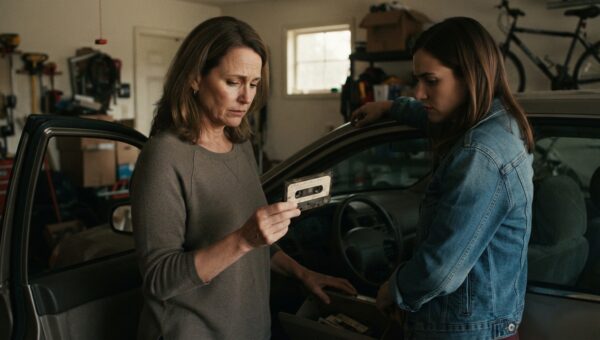
I opened the driver’s door. The interior smelled like spearmint gum Mama used to keep in the glove box and old wool. It smelled like her. I reached down and pulled the lever for the trunk release under the dash with a dry, metallic *thunk*.
Walking around to the back, I lifted the heavy steel lid. It groaned on its old hinges, rising up to let the daylight pour into the dark well of the trunk. There was a spare tire under the floorboard, sitting in the deep circular well where the factory put it.
Except the floorboard cover was slightly crooked.
I didn’t think much of it at first. I figured Mama must have jammed a jug of windshield fluid down there years ago. But when I hooked my fingers under the gray felt liner and pulled up, something heavy shifted in the dark.
It wasn’t fluid. It was wrapped in heavy brown oilcloth, the kind farmers use to grease machinery against the rust, tied shut with thick gray baling twine.
I stood there in the driveway for a long second, the wind rustling the maple leaves overhead, my mind refusing to click into gear. I reached down, my fingernails catching in the coarse twine, and gave it a sharp pull. The knot gave way with a dry snap.
Inside the cloth was a stack of manila folders and a long, flat bundle tied with ribbon.
I dropped right there on my knees on the gravel drive, not caring about the sharp stones biting through my jeans. My fingers fumbled with the clasp of the top folder as I opened it up to the pale afternoon light.
There were cashier’s checks. Four of them, issued by the county bank downtown, all made out in my name alone. I stared at the numbers printed in neat black ink. $25,000. $40,000. $15,000. $30,000.
Underneath the checks lay a notarized property deed, dated just three months before Mama passed, transferring the title of this exact house and the two acres it sat on directly to me, free and clear of any estate claims. And right beside it was a small, black-bound ledger with Mama’s familiar, sloping handwriting filling every line from margin to margin.
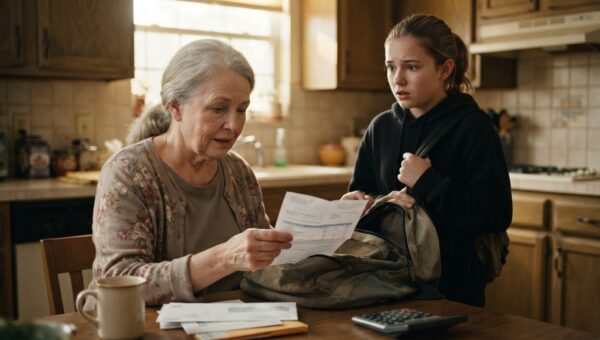
I turned the pages with trembling fingers. It was an accounting. Every single dollar Richard had wheedled out of Mama over the past ten years was written down in black ink with dates, check numbers, and brief, heartbreaking notes in the margins. *March 14: Richard took $5,000 for the boat down payment. Told him this is the last.* *August 22: Richard said the mortgage was past due. Gave him $12,000. God help me, I hope he uses it.*
At the very bottom of the last page, written in a hand that shook much worse than the rest, was a single sentence: *He will take everything else when I’m gone, but he won’t touch the Lincoln because he thinks it’s trash. Artie knows where the key is.*
I sat there on the gravel for a long time, the paper getting warm in the sun, until my vision blurred so badly I couldn’t read the words anymore. Mama hadn’t been weak. She hadn’t been helpless. She had known right down to her bones what Richard was, and she had outsmarted him from her own deathbed.
I got up off the ground, brushed the small stones off my knees, and gathered the papers back into the oilcloth. I didn’t put them back in the trunk. I carried them straight into the kitchen, laid them out on the oilcloth tablecloth, and picked up the wall phone.
Artie Miller answered on the second ring. He had retired from the garage down on Route 9 three years ago, but his voice sounded just the same.
“Artie,” I said, my voice cracking before I could even get the words out. “It’s Clara. I found it.”
There was a short pause on the other end of the line, the sound of a screen door slamming in the background.
“I wondered when you were going to clean out that trunk, honey,” Artie said softly. “Your mother made me swear on my mother’s grave I wouldn’t say a word to you until you found it yourself. She said you needed to be the one to finish the job.”
An hour later, I was sitting across the walnut desk from Mr. Vance, the family attorney whose office smelled of old calfskin books and peppermint floor wax. He adjusted his glasses, sliding the notarized deed and the cashier’s checks under the brass lamp.
“Everything is completely airtight, Clara,” Mr. Vance said, tapping a finger against the bottom corner of the deed where the county seal was pressed into the paper. “Your mother signed this in my office with Artie as witness. Your brother’s probate claims won’t hold up for five minutes against a recorded transfer predating his filings. And as for the ledger, my God. I’d call that an advance on his inheritance distributed directly by the testator. He owes the estate money, not the other way around.”
I didn’t feel triumphant. I just felt a strange, quiet clearing in my chest, like the air after a summer thunderstorm when the humidity finally breaks.
Three days later, Richard pulled into the driveway in his shiny black SUV.
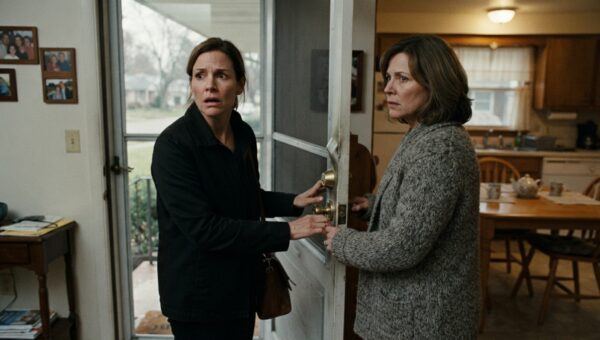
He didn’t even knock. He just walked right through the back screen door like he still owned the place, carrying a leather folio under his arm and a real estate agent trailing a few steps behind him with a clipboard.
“Well, Clara,” Richard said, flashing that familiar, oily smile as he tossed his car keys onto the kitchen table. “I hope you’ve started packing your things. The closing on this property is set for the first of next month, and the buyers want to do a walkthrough of the back rooms today.”
I was sitting at the kitchen table with a cup of black coffee, my hands wrapped around the warm ceramic mug. I didn’t stand up. I just watched him walk toward the pantry like he was measuring the square footage for his own pocketbook.
“You’re a little early, Richard,” I said. My voice didn’t shake at all. It sounded flat and steady, like stone.
He stopped, turning around with a frown pulling down the corners of his mouth. “What are you talking about? I sent you the notice by certified mail last week. You have no legal right to stay here. The estate is mine to liquidate.”
I reached out, picked the manila folder up off the wooden table, and slid it across the surface right toward his coffee cup.
Richard looked down at it. He didn’t touch it at first. But then he recognized the gold-embossed stamp of Mr. Vance’s office on the corner of the envelope.
“What is this?” he muttered, his voice dropping an octave as he reached out and pulled the flap open.
He didn’t read the whole thing. He didn’t have to. His eyes caught the bold lettering of the property deed with my name typed clear as day at the bottom, and then his gaze dropped to the pages of Mama’s ledger detailing every single wire transfer he had leeched out of her accounts over the last decade.
The color drained right out of his face, leaving him looking gray and pinched under the fluorescent kitchen lights.
“You can’t do this,” Richard whispered, his voice cracking on the last word. “This is… this was supposed to be split. She didn’t know what she was signing.”
“She knew exactly what she was signing,” I said, standing up from the table so I was looking right down into his eyes. “And she knew every single dollar you took from her was already accounted for. Mr. Vance has copies of everything, Richard. Every check, every wire, every lie you told her over the phone.”
The real estate agent standing in the doorway shifted uncomfortably, clutching her clipboard to her chest like a shield. “Uh, Richard, if there’s a title dispute here, I think maybe we should step outside.”
Richard didn’t move. He stood there staring at the papers on the table, his mouth opening and closing like a fish out of water, trying to find some leverage that wasn’t there anymore.
“You’re going to leave now,” I said, pointing my finger toward the open screen door. “And you are never coming back up this driveway again. If I see your car parked out here once more, I’ll have the sheriff hand you the rest of Mr. Vance’s paperwork regarding those advance inheritances.”
He looked like he wanted to yell, like he wanted to raise his hand the way he used to when we were kids and I wouldn’t hand over the television remote. But he looked at my face, and he saw there was nothing left to bargain with. He grabbed the folder off the table, tucked it under his arm, and turned around without another word.
I watched through the screen door as he walked back to his SUV, his shoulders slumped inside his expensive suit, and backed out of the drive so fast he clipped the edge of the mailbox post.
The dust settled slowly in the gravel.
I walked out onto the front porch, carrying a fresh vase of garden flowers I had cut that morning, and set them down on the wooden table beside my rocking chair. The old Lincoln was still sitting by the garage, looking like a stubborn blue whale stranded in the grass, but it didn’t look like an insult anymore.
I sat down, pulled my sweater tighter around my shoulders against the evening chill, and listened to the crickets starting up down by the creek. For the first time in forty years, the house was entirely mine, and the quiet was the sweetest thing I had ever known.