The deadbolt made a dull, heavy clunk that echoed down the hallway, and for the first time in thirty-six months, the air in this house actually belonged to me.
My knuckles were white where I gripped the brass thumb-turn. My back still ached from lifting Arthur out of that hospital bed before the hospice nurse arrived with the oxygen tanks.
For three solid years, my life had been reduced to timed doses of morphine, the clinical smell of rubbing alcohol, and the steady, quiet draining of every single dollar I had managed to set aside before Arthur got sick.
When he finally passed away three weeks ago, I thought the hardest part was behind me. I thought I would get a few days to breathe before the stack of medical bills and the back-due mortgage notices arrived in the mail.
Instead, I got Wesley.
Wesley was eighteen, built like his father with those wide, stubborn shoulders, and he had spent the entire three years of Arthur’s decline sitting in front of a computer screen with a headset over his ears. He never once emptied a bedpan. He never once called the pharmacy at two in the morning when the refill was short.
He just waited for his inheritance, or whatever scraps he figured were left of our small brick home out here by the river.
This morning, the electric company sent an automated notice saying the power would be cut off by Friday unless I came up with $5,500 to clear the balance.
My checking account had exactly forty-two dollars and sixteen cents in it.
I walked into the kitchen where Wesley was pouring a bowl of cereal, the milk splashing over the sides onto the laminate counter, and I asked him if he could pitch in from the summer landscaping money he had been bragging about.
He didn’t even look up from his phone. He just chewed his cereal, let out a short, wet laugh, and told me I was childless and that he was my retirement plan.
“You’re childless,” he had said, his voice dripping with that lazy, cruel dismissal that still made my ears ring. “I’m your retirement plan. It’s your job to support me.”
Hearing those words wasn’t like getting hit. Getting hit is quick. This felt like someone had reached inside my ribs and turned all my organs upside down.
Every drop of grace I had kept stored up through years of wiping vomit, washing soiled sheets, and crying quietly in the laundry room just evaporated.
I didn’t yell. I didn’t scream or throw a plate against the wall.
I just looked at him, walked to the front door, slid the spare deadbolt, and took every house key off the ring on the hook.
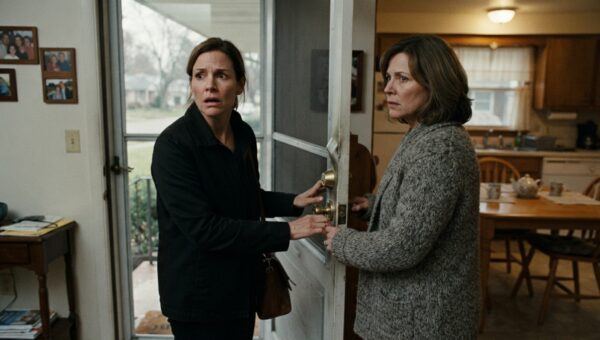
When he came back from his friend’s house an hour later, he rattled the front knob twice before banging his fist against the wood. I sat right there at the kitchen table with my cold chicory coffee and watched the brass doorknob shake.
“Open up,” he yelled through the panels, his voice cracking with sudden, ugly panic. “You can’t lock me out. This is my house too.”
“Go find somewhere else to live,” I told the door, my voice steadier than my hands. “You are an adult now. Figure it out.”
He pounded for another ten minutes before his truck tires squealed down the gravel drive.
The silence that followed was heavy, the kind of stillness that settles over a church after the mourners have all gone home and the candles are still smoking.
I knew I needed to clear out his bedroom. If I was going to survive on my own in this place, I needed to rent that room out to someone who would pay their way, maybe one of the women from the dietary department down at the county home who was always looking for a cheap place near the bus line.
I pushed his bedroom door open, and the smell hit me instantly. It was stale socks, cheap body spray, and old takeout boxes.
The room was a disaster. Clothes were piled in heaps on the floor, and empty soda cans sat on the windowsill with little rings of dried syrup crawling with ants.
I grabbed a black plastic trash bag from the box under the sink and started shoveling the trash off the floor. When I reached the bed, I had to kick aside a pile of dirty sweatshirts to get to the metal frame.
That was when my foot hit something solid and heavy shoved way back against the baseboard near the wall.
It was a heavy black canvas duffel bag, the kind gun owners use for heavy gear, zipped shut and wedged so hard into the corner that I had to pull it out by the strap.
When I dragged it into the middle of the room, the weight of it caught me off guard. It didn’t feel like clothes. It felt dense, like a sack of dry mortar mix.
I dropped to my knees on the dirty carpet, my fingers catching on the brass zipper. I didn’t think twice. I just pulled.
The zipper gave way with a sharp, tearing sound that seemed way too loud in the empty room.
My stomach didn’t just drop; it felt like it turned to ice water.
There were no clothes in the bag. There were thick, neat bricks of banded hundred-dollar bills, rubber-banded and stacked three rows deep. Next to the cash sat a manila folder with my full legal name written across the tab in Arthur’s shaky, dying handwriting.
I pulled the folder out, my hands shaking so hard I dropped the first two pages onto the floor.
I picked them up and held them under the weak light of the bedside lamp. It was a supplemental insurance payout document from the union, dated four months before Arthur died, for exactly fifty thousand dollars.
At the bottom was a copy of the check made out directly to me, intended for caregiver relief and final medical debt.
Right beside it was a bank deposit receipt stamped by the teller at the downtown branch, showing the check had been cashed and converted into cashier’s funds using a forged signature, my signature, with Wesley listed as the secondary co-signer on a power of attorney Arthur must have signed while he was heavily medicated on oxygen.
Folded underneath the checks was a personal note on a yellow legal pad, written in Arthur’s hand just days before he stopped speaking.
It said he was sorry, that Wesley had convinced him the money was safer in cash to avoid estate taxes, and that he trusted his son to make sure I was taken care of when the end came.
I sat on that dirty bedroom floor for a long time, the smell of stale dust and old carpet filling my nose while the reality of what those two had been doing behind my back finally settled into my bones.
While I was washing Arthur’s back and rationing out his pain pills to make the prescription last another two weeks, my husband and his golden boy had quietly intercepted my mail, stolen my relief check, and tucked fifty thousand dollars in cash under a teenager’s mattress.
They weren’t just neglecting me. They were waiting for me to lose the house to foreclosure so Wesley could step in as the legal heir to unencumbered property while I ended up in a charity ward.
By 6:00 in the morning, I had the bag zipped back up and sitting on the passenger seat of my old Buick.
I drove straight to the office of Walter Finch, the attorney who had handled Arthur’s simple will three years ago.
Walter took one look at the insurance document, the forged signature, and the bank stamp, and his eyebrows went straight up into his gray hairline.
He didn’t say a word for nearly a full minute. He just picked up his desk phone, called the local detective he’s known since high school, and told him we had a matter of grand larceny and forgery that needed immediate attention.
By noon, Wesley was standing on my front porch again, but this time he wasn’t alone.
He had brought two town police officers and a locksmith in a neon-yellow vest, confident that the law was going to march him right back into his bedroom like a wronged prince.
I watched them from the living room window, sipping my chicory coffee until the knock came.
When I opened the front door, the young officer on the left started in with the standard speech about unlawful eviction and tenant rights.
I didn’t interrupt him. I just stepped back, let the door swing wide, and pointed to the kitchen table where Walter Finch was sitting with the file opened flat next to my coffee mug.
“Before anyone talks about tenant rights,” I said, my voice flat and cold as lake ice, “you might want to look at what Officer Miller has to say about the fifty thousand dollars currently sitting in my car trunk that these two stole from my insurance payout.”
Wesley’s face went from an arrogant smirk to a sickly, gray shade of yellow in less than a second.
He stammered something about his dad giving it to him, but the lead officer had already picked up Arthur’s handwritten note and was comparing the signature to the bank records Walter had laid out.
The next twenty minutes were a blur of sharp voices, rustling paper, and Wesley’s sudden, pathetic transformation from a tough guy into a kid who realized he was looking at a felony record before his nineteenth birthday.
In the end, Walter didn’t even have to press the full extent of the charges.
We sat at that scratched laminate table while Wesley signed a formal, notarized relinquishment of any and all claims to the estate, handing over every single cent of the recovered cash in exchange for us not sending him straight to the county jail.
By 4:00 in the afternoon, the front porch was empty again.
The police cruiser had backed out down the drive, and Wesley was gone, his pickup truck loaded down with whatever junk he could cram into the bed in ten minutes, heading God knows where.
The house was finally, truly quiet.
I walked out onto the front porch with a fresh mug of tea, the late afternoon sun warming the old wooden boards beneath my slippers.
In my lap sat the clean, unencumbered title to this house, free of every single debt Arthur had left behind.
Down at the end of the gravel drive, a red moving van idled by the mailbox, its blinker clicking in the dry air as the new tenant, a quiet, steady nurse from the county home, got out to check the house number.