The cedar jewelry box on my dresser always smelled faintly of dried lavender and old silver polish. For seventeen years, a square white envelope sat at the very bottom beneath my mother’s garnet ring and a pair of pearl studs my grandmother gave me when I turned twenty-one. Hannah had taped it shut with three strips of yellowed scotch tape when she was nine years old, pressing down the edges with her small thumb until she was satisfied it was secure.
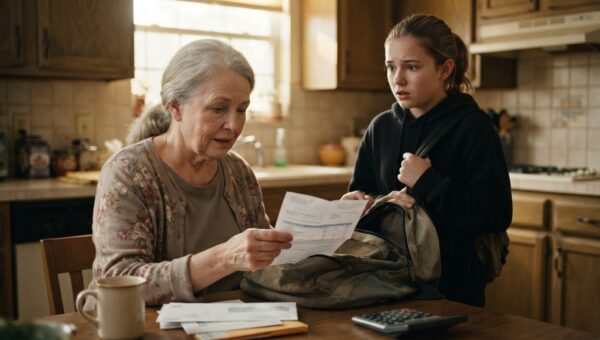
In blocky, uneven pencil strokes, she had written Don’t open until I’m married right across the front. I never touched it. Not through the lonely Christmasses after Arthur left, not through the foreclosure notices that arrived like clockwork every spring, and not through the endless nights when I sat at the kitchen table with a calculator and a cup of cold instant coffee trying to figure out how to stretch eighty dollars for another two weeks.
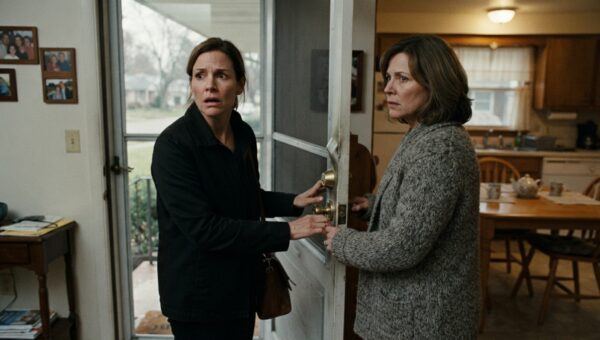
Last Saturday was Hannah’s wedding day at the old brick inn outside Amarillo. The courtyard was loud with distant laughter and the heavy clink of silverware against china from the reception tent outside. I had excused myself between the salad course and the main speeches, needing a quiet minute to fix my lipstick and catch my breath under the harsh lights of the bridal suite. My hands were shaking slightly as I unlocked my leather vanity case, reached past the spare bobby pins, and lifted the taped envelope out.
Seventeen years is a long time to keep a promise to a child. The paper felt heavier than I remembered, yellowed around the creases where the glue had dried out completely. I slid my fingernail under the tape, peeled it back with a dry ripping sound, and pulled out a single sheet of lined notebook paper.
Her nine-year-old handwriting was childishly round, leaning hard to the left because she always gripped her pencil too tight. Dear Mommy. If you’re reading this, I must be married. I hope my husband is tall. I hope he likes dogs. I hope he makes me laugh like Daddy makes you laugh. But most of all, I hope he knows what you did for me. The nights you sat outside my door. The meals you skipped. The dreams you gave up. I hope he knows I’m only good because you were good first. I love you forever.
Even when I’m old. Even when you’re both in heaven. Your girl.
I sat down hard on the edge of the velvet dressing bench and cried until my mascara ran down my cheeks in black streaks. I remember that winter she wrote it. Arthur had packed his duffel bags into the trunk of his battered sedan while the ground was frozen hard as iron, leaving without a forwarding address or an explanation that made any sense. He just looked at me across the hood of that car and said he couldn’t do it anymore. He told me I deserved better than a man who had nothing left to give, and then he backed out of the drive without looking back. For seventeen years, I carried the bitterness of that morning like a stone in my pocket. I worked thirty hours a week at the county records office and cleaned three houses on the weekends just to keep the lights on, telling myself every single day that we survived because of my own two hands and nobody else’s.
When I finally reached up to wipe my eyes with a corner of my linen handkerchief, my thumb caught the rough edge of the paper. I almost missed it. On the back, written in dark black ink with an adult’s steady pressure, Hannah had added a few lines recently. P.S. – Mom, I need to tell you something about Dad. Something I learned on my wedding day. Come find me before the first dance.
I didn’t bother fixing my makeup. I stood up so fast my knees popped, smoothing down the dark blue silk of my dress with frantic palms. The hallway outside the bridal suite was empty, save for a young waiter carrying a tray of empty champagne flutes who mumbled an apology as he hurried past. I pushed open the heavy oak doors leading out to the glass-enclosed conservatory at the far end of the terrace. The evening air smelled of damp cedar and clipped lawn grass. The conservatory was usually reserved for potted ferns and winter storage, but tonight someone had strung white fairy lights through the rafters, casting long, wavering shadows across the stone floor.
Hannah was standing near the far wall, her lace veil pinned back over her dark hair, looking smaller than she had in her wedding gown all day. Next to her stood Arthur. He had grayed heavily at the temples since I last saw him across a courtroom aisle, and his shoulders were slightly rounded beneath his rented tuxedo, but the moment I stepped onto the flagstones, he looked up with those same tired brown eyes that used to watch me fold laundry on Sunday afternoons. He wasn’t supposed to be here. Julian had told me months ago that her father declined the invitation, citing old bitterness and a life lived too far away in the oilfields near Midland.
“Mom,” Hannah whispered. Her voice had that exact same high-pitched catch it used to have when she scraped her knee on the gravel playground behind the elementary school.
She didn’t wait for me to speak. She reached into the beaded evening bag hanging from her wrist and pulled out a thick, leather-bound book with cracked binding. She held it out to me like it was something fragile that might break in the open air. It was an old bank ledger, the kind with green columns and faded ink entries dating back nearly two decades. I didn’t take it at first. I just looked from the book to Arthur’s face, noticing for the first time the deep, permanent calluses across his knuckles and the faint white scar running along his jawline from a rig accident he never liked to talk about.
“He came to see me this morning at the hotel,” Hannah said softly, her fingers trembling against the leather cover. “Before I put the dress on. He gave me this ledger, Mom. And he explained what happened back then.”
Arthur cleared his throat, a dry, raspy sound that made me feel like I was standing in the kitchen of our old house on Maple Street again. “I didn’t walk away because I stopped caring, Clara,” he said, and his voice was lower than I remembered, rough around the edges like gravel under a heavy tire. “The business didn’t just fail. The partners left me holding the entire corporate liability. If I stayed on the title, the courts would have stripped this house, the car, and every dollar in your checking account to pay off the bank liens.”
I stood there by the door, my fingers still clutching the lined piece of paper from the jewelry box. “You left a note on the kitchen table saying you were done,” I said, and the words sounded thin and hollow in the high-roofed glass room. “You didn’t say a word about liens.”
“If I told you, you would have tried to fight it,” Arthur answered, taking one slow step toward me before stopping himself. “You would have sold your mother’s rings. You would have taken on debt that would have broken your back for the next thirty years. The only way the lawyers and the creditors would leave you and Hannah alone was if I took full personal fault and disappeared across the state line where my wages could be garnished directly at the source.”
Hannah stepped closer, her hand resting gently on her father’s sleeve. “Every month for seventeen years, Mom, the money for the mortgage check and my braces and the college fund didn’t come from a family trust like you thought,” she said, her eyes shining with unshed tears. “Dad worked eighty-hour weeks on a drilling platform outside Odessa. Every single dollar he earned above what he needed to live on went straight through a third-party escrow account to our old account. He made the solicitor promise never to tell you where it came from.”
The silence in the conservatory was absolute, save for the faint rustle of the wind through the oak trees outside the glass panes. I looked down at the ledger in Hannah’s hands. The columns of numbers were neat and methodical, hundreds of small, anonymous deposits stretching across two hundred pages, matching every single lean month I had spent convincing myself I was the only one holding our family together. Seventeen years of anger, of resentment, of late-night kitchen table weeping over bills I thought I was paying alone, all of it built on a foundation of a lie he told so we wouldn’t sink beneath his failures.
“You let me hate you,” I whispered.
“It was easier,” Arthur said quietly, looking down at his polished shoes. “As long as you thought I was a coward, you had someone to be mad at. Anger keeps you going. Despair just makes you lie down.”
I didn’t feel the triumph I thought I would feel if I ever found out why he left. There was no sudden rush of vindication, no lightning strike of justice. There was only a profound, heavy quiet settling over my chest, like the stillness that comes right after a long summer storm finally passes over the plains. I reached out and took the leather ledger from my daughter’s hands, the cover still warm from where Arthur had held it. The paper was rough under my fingertips, identical in texture to the lined sheet still clenched in my other hand.
“You’re going to miss the first dance if we stay out here talking in the dark,” Arthur said, though he didn’t move away. He looked at me with a question in his eyes, the same hesitant look he used to give me when he came home late from the yard covered in grease and hoping there was still a cup of coffee left on the stove.
I looked at Hannah, then back down at the two papers in my hands. The old nine-year-old wish about her husband being tall and making her laugh had already come true out there in the pavilion where Julian was probably looking around for his bride. But the second part, the part written on the back in the dark ink of adulthood, had done its work.
“Go on out,” I told my daughter, my voice steady for the first time all day. “I’ll be out in a minute. Your father has to walk you down to the floor anyway.”
Hannah smiled, a quick, radiant flash of her old childhood self, and threw her arms around my neck before turning toward the terrace doors. Arthur hesitated for a second, then followed her through the glass frame into the warm yellow glow of the main reception tent.
I stayed behind in the quiet conservatory for a moment longer, folding the seventeen-year-old lined paper carefully along its original creases and sliding it back into my pocket alongside my handkerchief. Through the glass, I watched Julian take Hannah’s hand as the band struck up a slow, sliding waltz under the lanterns. Arthur stepped up beside them, offering his arm with a careful, old-fashioned courtesy, and my daughter took it without a second thought, leading him out toward the polished oak floor where the rest of the world was waiting.