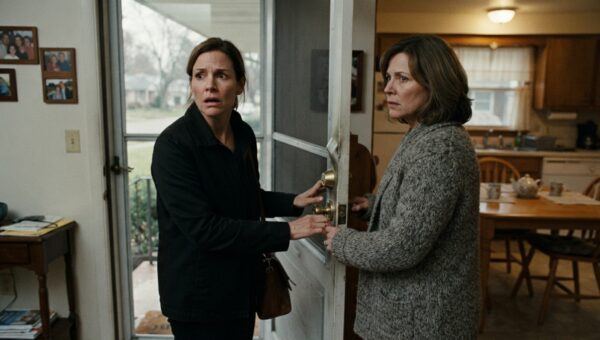
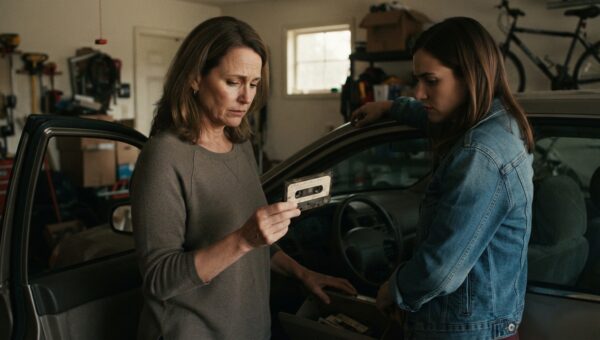
The vinyl booth at the Red Lobster on South Limit Avenue smelled of stale floor wax and warm garlic butter, exactly the same as it had on our tenth anniversary, and I remember thinking that was a comforting sort of permanence. We had lived in this brick house on Maple Street for twenty-two years, raised two kids who were now halfway through college out in Lincoln, and built a modest little structural engineering firm that kept us comfortable.
I had spent the better part of three months turning the words over in my mouth, rehearsing them while driving between job sites, convincing myself that honesty after all this time was a virtue. I was fifty-four years old, my hair was graying at the temples, and the secret of what happened back in the winter of 2016 had started to feel less like a memory and more like a stone lodged right behind my breastbone.
Brenda was sitting across from me, wearing the navy blue silk blouse I bought her for her birthday back in October, her reading glasses tucked neatly into the chain around her neck. She had always been a quiet woman, the kind who listened twice as much as she spoke, keeping accounts and balancing checkbooks with a heavy mechanical pencil while I ran the business. The cheddar bay biscuits came out in a little wicker basket, and she reached out, broke one in half with her thumb, and laid a pat of butter right on the steaming crumb.
“We made it thirty years, Artie,” she said, looking up at me with those pale blue eyes that hadn’t changed a bit since we were kids in Kearney. “That is something to say.”
“It is,” I said, and my hand started shaking against the textured grain of the laminate table. “It really is, Bren.”
This was the exact moment I should have kept my mouth shut. Every sensible instinct I had left told me to nod, take a bite of the biscuit, talk about the kids’ midterm grades, and let the dead past stay buried in the dirt where it belonged. But the guilt had a way of turning sour after eight years, a persistent little ulcer of self-pity that convinced me I needed absolution before I could enjoy another decade of breathing her air. I kept telling myself that a clean slate was better than a dirty secret, forgetting entirely that some secrets are the only things holding a rotten floor up from caving in.
I set my water glass down, and the condensation left a cold ring on the paper placemat. “I need to tell you something, Bren. I’ve needed to say it for a long time, and I can’t sit here tonight and pretend we’re just… starting fresh without getting it out.”
Brenda didn’t flinch. She just kept her eyes on her plate, her fingers steady as she buttered the second half of the biscuit. “Go ahead, Arthur. I’m listening.”
“I cheated on you,” I blurted out, the words tumbling over each other like loose gravel down a chute. “Eight months. Back in 2016. Right after the company expansion stalled out.”
The silence in the restaurant hummed with the distant rattle of silverware and the low murmur of the kitchen line, but right at our table, the air went completely flat. I waited for her to drop her fork. I waited for her to cry, or throw her water, or pack up her purse and walk out into the Nebraska wind right then and there.
I had built up this scene in my head a hundred times, picturing her shock, her tears, the long ragged road of earning her back one small concession at a time. I was ready to play the penitent husband, ready to take whatever punishment she handed down because I figured I had it coming.
She calmly dipped a piece of crab leg into the little metal cup of melted butter, took her time chewing it, and swallowed before she even looked back up at me.
“I know,” she whispered.
My throat went dry. “You… what?”
“I know,” she said again, her voice terrifyingly level. “Eight months. With that woman who handled the zoning permits down at the county annex.”
I just stared at her, my mouth slightly open, the blood draining right out of my face. The world didn’t shatter or collapse like they show in the movies; it just got very small and very cold, like someone had shut a heavy iron door between us. “You didn’t… how could you possibly know? I was careful. I kept the receipts off the joint cards, I used cash for the rooms, “
She didn’t raise her voice. She didn’t have to. “You were sloppy, Artie. You always were when you thought nobody was looking.”
She reached into her handbag resting on the booth seat beside her, pulled out a small brass key stamped with stamped numbers along the bow, and slid it across the red laminate table. It stopped right beside my water glass, the metal catching the amber glow of the wall sconce.
“I followed you to the hotel,” she said, and her eyes were as hard as winter gravel. “While you were upstairs with her, I was downstairs meeting a divorce lawyer.”
My heart gave a heavy, sickening thud against my ribs. “You were… downstairs?”
“Mr. Robert Sterling,” she said, naming the senior partner at Sterling and Cole over on Fourth Street. “His office was in the same professional block behind the motor lodge back then. I watched your truck pull into the side lot from the parking garage across the street. I walked right down those stairs, sat in his office for forty-five minutes, and learned everything I needed to know about how joint asset division worked in the state of Nebraska.”
I reached out blindly, my fingers brushing the cold metal of the key, but I couldn’t pick it up. “Brenda, please. That was eight years ago. It ended. We stayed together, we built the new warehouse, we went on vacations, “
“We stayed together because Mr. Sterling gave me some very good advice,” she interrupted, her tone flat and final. “He told me that if I filed for divorce in 2016 while the business was still heavily leveraged and the mortgage on the Maple Street house was half-paid, the court would split everything right down the middle. He told me you would walk away with half the equity, half the savings, and enough freedom to go marry whoever you pleased while I started over at forty-six with two kids heading to college.”
She leaned forward just an inch, resting her forearms on the table. “He told me to wait. So I waited.”
“Eight years,” I whispered, the words tasting like copper in my mouth. “You stayed with me for eight years while hating me?”
“I didn’t hate you, Artie. I just managed an investment,” she said, and there was no anger in her voice at all, which somehow felt infinitely worse than screaming. “I waited until the kids graduated without debt. I waited until the commercial property valuation tripled. I waited until the statutory timeline for contesting asset restructuring had passed cleanly through every state audit and corporate filing.”
She tapped her fingernail against the edge of her butter plate. “Last Tuesday, the final legal transfer documents went into effect. I lawfully transferred ownership of the primary real estate and business equity into an independent irrevocable family trust protecting myself and our children. I emptied the joint investment holdings, closed out the commercial accounts, and deposited the finalized divorce petition and all the paperwork into a safe little box downtown.”
She stood up then, smoothing down the front of her navy silk blouse, leaving her half-eaten biscuit sitting beside the butter cup. She didn’t look back down at me. She didn’t raise her voice for the waitress or the couple in the next booth.
“I’ve waited eight years for this moment,” she said softly, looking down at the brass key still sitting by my hand. “That key opens Box 412 at First National Bank. You’ll find the filed petition inside, along with the date-stamped surveillance photographs from the hotel lobby back in 2016 and the pre-drawn settlement agreement. Sign it, Artie. Or don’t. Either way, the house is in the trust, the business accounts are cleared, and my lawyer will see you at nine o’clock on Monday morning.”
She turned and walked out toward the double glass doors of the restaurant, her sensible loafers clicking against the linoleum with a steady, unhurried rhythm. I sat there in the red vinyl booth for nearly twenty minutes while the busboy cleared the adjacent table, staring down at the little brass key until the amber light from the wall sconce started to blur around the edges.
The next morning, the bank was quiet when I walked through the heavy glass doors at nine sharp. The teller behind the counter looked at the brass key, checked my driver’s license with a glance that had nothing personal in it, and led me back to the small private viewing room behind the vault. She unlocked Safe Deposit Box 412, slid the heavy metal drawer out onto the green felt table, and left me alone with the silence of the safe.
Inside lay a thick manila envelope tied with cotton string, exactly as Brenda had promised. When I slit the top open with my thumbnail, the first thing that slid out onto the green felt was an 8x 10 glossy photograph of my truck parked in the rear alley of the downtown hotel, dated November 14, 2016, at 3:14 in the afternoon. Beneath it were certified land registry deeds showing sole trust ownership of the Maple Street house and the commercial warehouse, alongside the stamped divorce decree waiting for my signature at the bottom of the stack.
There were no hidden assets left to find, no joint accounts to raid, and no legal loopholes left to pry open. I sat there in that small, cold room for a long time, turning the brass key over and over in my palm, realizing with a heavy, sinking clarity that my confession hadn’t cleared anything at all. It had simply given her permission to finally hand me the bill for a dinner we started eating eight years ago.