The hotel keycard felt cold and heavy against my thumb, tucked right behind a cream-colored piece of cardstock that read Save the Date. For three months Don had been slipping out of the house every Thursday evening at five sharp, wearing a freshly pressed button-down and a sandalwood cologne I never bought him. Fourteen hundred dollars had quietly vanished from our shared savings account since March.
I had already driven to the courthouse office on Tuesday morning, paid the filing fee, and placed the crisp, unsigned divorce papers right in the center of the kitchen table.
The kitchen clock hummed a steady, dry rhythm against the wall. Outside, the dusk was settling over the driveway where his truck sat parked, mud dried thick on the rear tires.
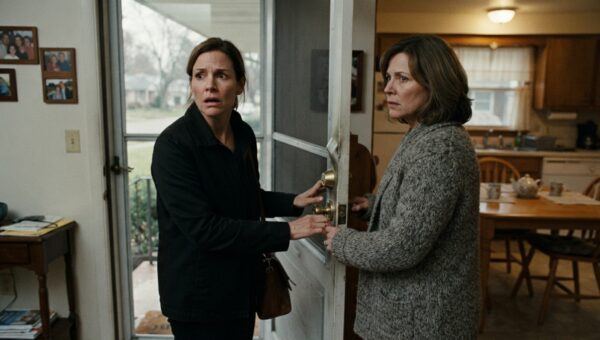
When the front door clicked open, I didn’t move. Don walked into the kitchen carrying a brown paper bag from the bakery down on Main Street, his shoulders slightly rounded the way they always got after a long week at the lumber yard. He stopped dead when he saw the papers sitting under the overhead light.
“What’s this, Clara?” he asked. His voice wasn’t loud. It never was.
I picked up the blue plastic keycard and dropped it onto the wood. “You tell me, Don. You’ve been spending your Thursdays somewhere else.
And don’t tell me it’s overtime, because the ledger doesn’t match and neither does the cologne.”
He looked down at the card, then at the bank statement I had slid right beside the petition. For a second, I thought about the last four years of quiet grief in this house. The way our holiday table stayed set for two instead of three. The way my own mother’s stubborn pride seemed to have passed down straight through our bloodline like a bad inheritance. I waited for him to stammer or invent some clumsy excuse about work friends.
Instead, Don didn’t raise his voice or step back. He reached into his shirt pocket, pulled out his worn leather phone case, tapped the screen a few times, and laid the device flat on the table between us.
“Listen to the voicemail, Clara,” he said softly. “Just listen to the whole thing.”
I crossed my arms tight over my chest, glaring at the dark glass of the phone. Then I pressed the little white triangle icon.
A crisp, bright young woman’s laugh crackled through the tiny speaker, clear and light, followed by an easy voice that hadn’t echoed in our hallways since the summer she turned twenty-two. “Dad, tell the bakery they messed up the frosting colors again, but don’t panic. Everything else is locked in. Tell Mom I’ll save her a seat.”
My hands went completely still in my lap. The breath caught somewhere behind my ribs, sharp and hot.
Don pulled out the wooden chair opposite me and sat down, his palms resting flat on the grain. “It’s Jenna,” he said, and his voice cracked just a little bit. “She called me back in March, Clara. She’s marrying a nice boy named Marcus in June, and she wants you there. I was trying to figure out how to tell you without you immediately saying no.”
The room seemed to tilt slightly. Four years. Four whole years since the night she packed her hatchback in the driveway after I told her that if she walked out that door to move in with a man she’d only known six months, she needn’t ever come back.
I had meant it then. Or at least I thought I did. My pride had been a heavy iron anchor dragging us both down into the dark.
“Why a hotel?” I managed to whisper, my throat feeling like sandpaper. “Why fourteen hundred dollars?”
Don leaned forward, his eyes shining under the kitchen light. “She didn’t want to come back to this house yet, Clara. Not after the things that were said. She was too scared of walking through that front door and hearing your voice shut down again. So I rented the small conference room at the Riverside Inn on Thursday nights. We met there with a counselor from the community center for two hours every week. We talked through every single fight we ever had since she was a teenager.”
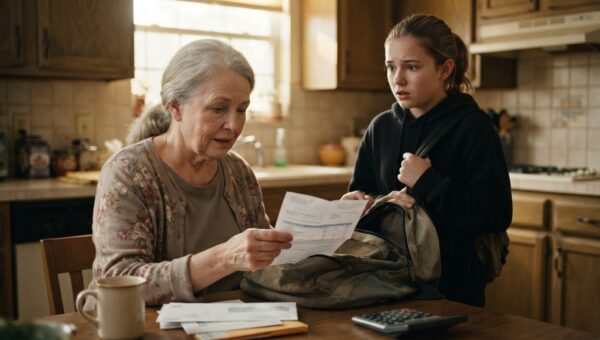
He reached into his jacket pocket and pulled out a folded packet of receipts, sliding them across the laminate toward me. I looked down. The $1,400 wasn’t missing for some secret life or a mistress. It was broken down into exact line items: $500 for the rustic barn venue deposit down in Oconto County, $400 for the catering tasting retainer, and $500 for the florist down-payment to secure white hydrangeas and greenery.
“She didn’t have enough saved for the venue booking because of her car repairs over the winter,” Don said quietly. “She was too proud to ask you directly. She asked me. And I told her I’d match every dollar she could scrape together from her waitress tips, because I wanted my daughter to have a proper wedding day.”
I picked up the Save the Date card. On the back, written in Jenna’s familiar, hurried handwriting, were the words: *Please come. I want my mom to see me walk down the aisle.*
The anger I had carried like armor for three solid months didn’t fade all at once; it just turned into something hollow and heavy. I looked at the divorce papers sitting right beside the venue receipts, the neat black ink of the legal petition looking petty and small under the kitchen light.
“She’s getting married in three weeks,” I said, my voice barely audible over the hum of the refrigerator.
“June twelfth,” Don said, nodding. “At the outdoor chapel by the river. The same place your sister got married.”
I didn’t say anything for a long time. I thought about the Thursday nights I spent sitting right here in this kitchen watching television alone while feeling sorry for myself, convinced my husband had checked out of our marriage, while he was thirty miles away sitting in a beige hotel meeting room trying to glue our family back together.
Slowly, I reached out across the table, gathered the crisp pages of the divorce petition, and tore them right down the middle. Then I tore them again into small, untidy squares and dropped them into the wastebasket by my foot.
Don let out a long breath, his shoulders dropping an inch as if a forty-pound sack of feed had finally been lifted off his back.
“She’s scared, Don,” I said, feeling the hot prickle of tears finally breaking through. “She’s just as stubborn as I am.”
“She gets it honestly,” he said with a faint, tired smile. “Do you want to talk to her tonight, or should I call her back?”
I reached for his phone on the table, my fingers trembling slightly as I picked it up. “Give me the phone. I’ll dial.”
The phone rang three times before a familiar voice answered on the other end, breathless and high. “Dad? Did you forget something else about the seating chart?”
I closed my eyes for a second, listening to the sound of my only child’s voice after four endless years of silence.
“It’s not your dad, Jenna,” I said, my voice shaking so hard I could barely form the words. “It’s Mom.”
There was a sharp intake of breath on the other end of the line, followed by a long, heavy silence that felt louder than any argument we’d ever had.
“Mom?” she whispered.
“I got the Save the Date,” I told her, blinking hard as the tears spilled over my cheeks. “And I want you to know… I’m going to be there. In the front row.”
On the other end of the line, Jenna let out a sound that was half sob and half laugh. “Okay, Mom,” she whispered. “I’ve got your seat right up front.”
By the time Saturday, June twelfth rolled around, the morning sun was cutting warm and bright through the tall pines surrounding the river chapel. The wooden pews were filled with cousins, neighbors, and old friends we hadn’t seen in years.
I sat in the front row right beside Don, my fingers laced tightly through his calloused hand. Resting on the wooden aisle pew right beside my hip was a small brass tag, screwed neatly into the oak grain.
It was engraved with three simple words: Reserved for Mom.
As the string quartet started up near the altar and the heavy oak doors at the back of the chapel swung open, I didn’t look back at the crowd. I just kept my eyes fixed on the aisle as Jenna stepped out into the light, wearing white lace and looking straight at me with a smile that finally chased away four years of shadow.