The grease on the paper plates had gone cold by the time Grandpa cleared his throat at the end of the table. He was seventy-nine then, and he still did the New York Times crossword in ink, never pencil, because he said if you made a mistake you just crossed it out and owned it. We were sitting out on his screened-in porch with the rusty screen door that always needed a kick to latch, eating fried chicken Aunt Clara had brought over in a greasy cardboard box.
The sun was dropping low behind the silo, turning the sky that dusty orange color you only see out past the county line.
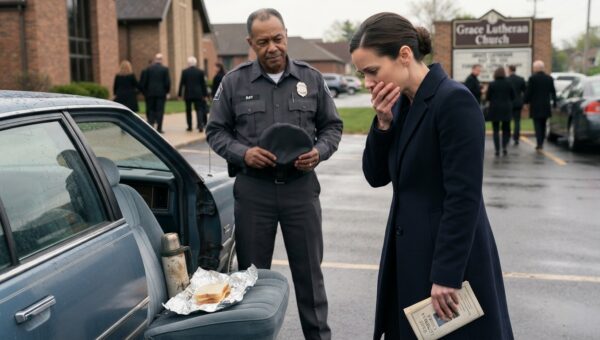
Grandpa laid his paper down flat, wiped his thumb on his paper napkin, and looked around at all of us like he was sharing some kind of prize. He said a nice young fellow had walked right up to him out by the garden center at the Walmart in town three days ago and finally explained his will to him properly. He said it like somebody had done him a favor. Like he was grateful for the help. The trouble was, none of us had touched that will since Grandma passed away five years back, and Harlan, the family lawyer down on Main Street, kept the only signed copies in a green metal filing cabinet behind his desk.
So I spoke up right there, sitting across the table with my iced tea sweating into the wood.
I just said it plain, that nobody had been working on Grandpa’s will and he must have got turned around by some salesman.
The room changed so fast it made my ears pop. Cousin Mark stopped chewing his chicken leg and his face went the color of skim milk, and then he suddenly found something fascinating on the pattern of his paper plate. Aunt Clara dropped her roll basket on the picnic table and jumped up to check on the screen door like it was about to fall off its hinges, muttering something about a draft. Not a single person at that table would look me in the eye. For a family that usually argued over politics and crop prices until the porch light drew bugs, that silence was the loudest thing I had ever heard in my life.
I didn’t say another word after that. I just watched them. And the more I watched the back of Mark’s neck turning red, the more my stomach knotted up with a cold, heavy feeling that told me whatever had happened in that parking lot, it wasn’t some stranger working my grandfather alone.
Half the people sitting around that table already knew every word of it.
The next afternoon I drove my old truck out to Grandpa’s place without calling ahead. The gravel in his driveway made that familiar crunch under my tires, and I found him out on the side porch whittling down a cedar shingle with his pocketknife, whistling some old tune without any words to it. He looked up and smiled, squinting against the bright afternoon glare.
“Thought you had work today,” he said, folding the knife with a small click.
“I took the afternoon,” I told him, stepping up onto the porch boards that always gave a little half-click under my heel when the weather turned damp. “Grandpa, about yesterday. About that man at Walmart. Do you still have whatever he gave you?”
Grandpa blinked, looking genuinely puzzled for a second before he nodded toward the kitchen. “In the roll-top desk.
In that brown envelope the fellow handed me with my name spelled out in block letters. Said it was just county tax updates for the homestead.”
My heart gave a hard thump against my ribs, but I kept my voice steady so I wouldn’t scare him. I walked through the screen door into the kitchen, the linoleum cool under my socks, and went straight to the old walnut desk. The pigeonholes were full of feed store receipts and church bulletins, but right in the middle sat a thick manila envelope stamped with a local mailing address I didn’t recognize. Vance Legal Services. Mobile Document Preparation.
I pulled the flap open and slid the papers out onto the drop-leaf counter. It wasn’t tax updates. It was a formal property codicil, typed up on crisp legal paper that smelled faintly of cheap copier toner. It was written in dense, heavy legalese, but the part at the bottom didn’t take any figuring out at all. It was an amendment to Grandpa’s original will, slipping in a brand new clause that transferred sole ownership of the entire forty-acre homestead and the house directly to Cousin Mark upon Grandpa’s passing, cutting the rest of us out entirely without a word.
My hands started shaking so bad I almost dropped the sheets on the floor. I looked down at the signature line, and right there in Grandpa’s shaky, stubborn handwriting was his name, signed in black ink just like he did his crosswords. Below it were two witness signatures. One of them belonged to Mark, and the other belonged to a woman I’d never seen before, likely some girl Vance paid twenty bucks to sit in a parked sedan out behind the garden center.
Grandpa walked in behind me, wiping his hands on his trousers, and leaned over my shoulder. “Everything all right with the forms?” he asked, his voice entirely too trusting, too innocent.
“Grandpa,” I said, and my throat felt tight as a dry hinge. “Did Mark tell you to sign this?”
He frowned, his white eyebrows pulling together. “Mark said the county was changing how they taxed farm ground. Said I needed to sign a release so the property didn’t get split up too many ways when I’m gone. He said it keeps the place in the family. He brought the fellow by my porch to talk it over last week.”
“Mark told you that,” I whispered, the anger finally burning through the coldness in my chest.
“Well, he said it was easier than going all the way into town to see Harlan,” Grandpa said, finally hearing the rough edge in my voice and looking down at the papers with a sudden, uneasy furrow in his brow. “Is something wrong with it?”
“Everything is wrong with it,” I told him, and for the first time I saw the confusion on his face turn into something real and sharp. He wasn’t a fool, he was just old, and he believed his own blood wouldn’t look him in the eye and pick his pocket while he sat on his own porch.
I didn’t wait. I folded the papers back into the manila envelope, grabbed my truck keys off the counter, and drove straight into town to Mr. Harlan’s office. Harlan was seventy himself, with spectacles that always slid down the bridge of his nose and an office that smelled of old leather and pipe tobacco. He looked over the documents through the top of his glasses, his face getting darker with every page he turned. He didn’t even have to look them up in his green filing cabinet to know what they were.
“This is an unrecorded codicil,” Harlan said, his voice flat and hard as a paving stone. “Drafted by an unlicensed third-party document preparer who specializes in skirting county probate rules. If this had been filed after your grandfather passed, Mark would have owned the whole farm before the ink on the death certificate was dry, and none of you could have stopped it.”
“Can we fix it?” I asked.
Harlan pulled a fresh yellow legal pad toward him and uncapped his fountain pen. “We can fix it today. But we are going to need your grandfather here, and we are going to need your aunt and your cousin sitting right across from me when we tear it up.”
By eight o’clock that evening, we were all crowded into Grandpa’s living room. Aunt Clara sat on the edge of the floral sofa, twisting her handkerchief until her knuckles were red, while Mark stood by the front window with his hands shoved deep into his pockets, pretending to look out at the dark yard. Grandpa sat in his high-backed armchair with his hands folded over the top of his cane, looking less like an old man being taken advantage of and more like a judge waiting for the verdict.
Harlan laid the fraudulent codicil out on the coffee table right between them, alongside a copy of Grandpa’s original 2010 will and a fresh revocation document that was already typed and waiting.
“Clara,” Harlan said, his voice dropping into that courtroom register he used when he was done playing games. “You want to explain why you hired a mobile notary to intercept a seventy-nine-year-old man in a retail parking lot?”
Clara burst into tears before the sentence was even finished, her hands flying up to cover her face. “Mark has a family coming up, he needed the security, the farm is too big for just one person to manage, we only wanted to make sure, “
“You wanted to steal your father’s farm behind his back,” I said from the doorway, my arms crossed tight over my chest.
Mark spun around from the window, his face hot and blotchy. “Shut up! You don’t know anything about how hard things are!”
“That’s enough!” Grandpa’s voice didn’t shake at all. It cracked through the room like a dry pine bough breaking underfoot, and the whole place went dead still. He leaned forward on his cane, looking at his daughter and his grandson with eyes that suddenly looked fifty years younger and a whole lot colder than I had ever seen them. “You think I’m losing my mind, Clara? You think because I sit on the porch and whittle wood that I don’t know who owns the dirt I plowed out of these hills with my own hands?”
Nobody said a word. Clara was crying into her handkerchief now, and Mark wouldn’t look up from the braided rug.
Harlan tapped the revocation paper with his finger. “You’re going to sign this acknowledgement that the document is null, void, and fraudulent, Mark. And you’re going to pay my hourly fee for drafting the correction today, or we take this down to the sheriff’s office and let the county prosecutor decide how a mobile notary got your father’s signature on a deed he never read.”
Mark didn’t argue. He didn’t even look at his mother. He just grabbed the pen Harlan offered him, scratched his name across the bottom of the paper like he was trying to tear right through the page, and walked out the front door without saying goodbye, letting the screen slam behind him so hard the window glass rattled in the frame.
Aunt Clara stayed another ten minutes, trying to talk to Grandpa, trying to touch his sleeve, but he just sat there in his chair looking straight ahead at the fireplace, telling her quiet-like that she could come back when she learned how to speak to her father face-to-face instead of through a stranger in a parking lot. When she finally left, the house felt big and hollow, the way it had been ever since Grandma died.
The living room was quiet again, just the sound of the old desk clock ticking against the mantel and the refrigerator humming in the kitchen.
Grandpa walked over to the dining table where the papers were stacked, picked up his heavy black ink pen, and slowly, carefully capped it with a crisp click. He didn’t look back at the papers. He just sat back down in his chair, pulled his crossword puzzle back onto his lap, and went back to filling in the blanks.