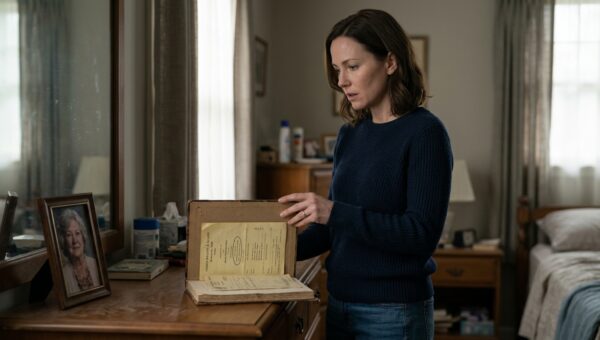
Ten years of double shifts at the medical supply warehouse leave a specific kind of ache in your lower back that sleep doesn’t touch. I bought my apartment in the spring of 2014 when I was twenty-seven, eating instant ramen for months just to make the down payment and working every weekend holiday nobody else wanted. I didn’t ask my family for a dime because I knew how my mother Helen operated.
If you took a dollar from her, she owned ten percent of your soul forever. So when my younger sister Gina quit her job last year claiming some mysterious chronic fatigue syndrome that supposedly left her too weak to stand for more than ten minutes, I kept my distance. I figured it was just another one of her dramatic phases, the kind that usually ended when she ran out of money and needed someone to bail her out.
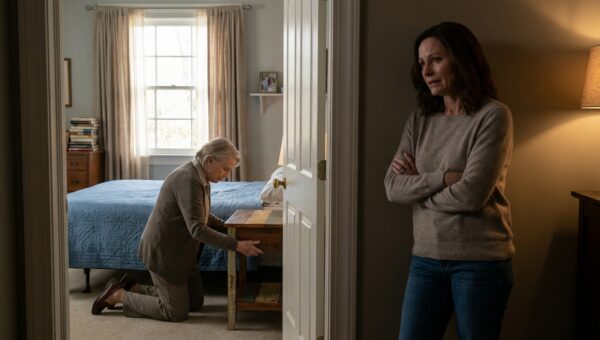
Mother bought into it entirely, acting like Gina was some tragic invalid who needed protecting from the harsh world. Every time I went over to Sunday dinner, Mother would sigh heavily over the roast beef and talk about how hard it was watching her baby girl suffer. Gina would sit on the sofa wrapped in a fleece blanket, looking pale and sipping ginger tea, talking in a soft, breathy whisper about her doctor appointments and specialist fees.
At first, I felt bad. I sent a couple of grocery deliveries and paid for her prescription co-pays a few times. But then I started noticing small cracks in the performance. I would see a geotag on an Instagram story from a boutique gym downtown at 8:00 AM on a Tuesday, right around the time Gina was texting me to say she couldn’t even lift her head off the pillow. Then came the concert check-ins from her friends’ public accounts, showing her front-row at an outdoor festival while Mother swore up and down Gina had spent the weekend in the emergency room.
I didn’t start a fight right away. That isn’t my style. Instead, I opened a private folder on my laptop and started quietly archiving every piece of digital evidence I could find. Timestamped screenshots of her beach trips, her late-night club check-ins under neon lights, her gym selfies, and the text messages where she swore she was too sick to leave the house.
I kept quiet for three months, watching the pile grow larger and larger, wondering just how far they were going to push the lie. I didn’t know the answer until a Tuesday afternoon in October when the buzzer for my apartment rang downstairs and Mother’s voice crackled through the intercom saying they needed to talk to me about something urgent.
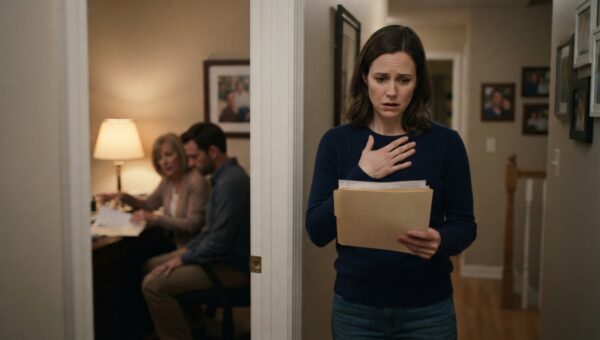
When I opened my front door, Mother walked in first holding a thick manila folder, and Gina trailed right behind her looking surprisingly energetic for someone supposedly bedridden. They didn’t even take off their coats before Mother steered Gina toward the living room sofa like she was leading an injured racehorse to the starting gate. I stood by the kitchen counter with a mug of coffee in my hand, watching them settle in as if they owned the place. Mother cleared her throat twice, putting on that pious, martyr face she always used when she was about to ask for something unreasonable.
“We need to talk about your future security,” Mother said, smoothing her skirt over her knees. “Gina’s doctor says her condition is going to require long-term care and stability. She needs a place where she can rest without landlords bothering her.”
I took a slow sip of my coffee. “She has a lease on her studio apartment downtown. Her landlord hasn’t bothered anybody.”
Gina leaned forward, her eyes bright and entirely devoid of the sick-room fog she usually wore around me. She reached into Mother’s manila folder and pulled out a stack of crisp, white legal pages, sliding them across my coffee table until they stopped right near the edge. “That’s why we’re here,” Gina said, her voice entirely steady. “Please put your apartment in my name. I’m too sick to work.”
There was no hesitation in her voice, no awkwardness, just the casual entitlement of someone who genuinely believed my ten years of labor belonged to her by right of birth. The papers on the table were blank transfer deeds, ready for my signature, with spaces already filled in for property ownership reassignment. Mother nodded encouragingly, chiming in with her usual emotional blackmail. “You live alone, you’re strong, you can always rent somewhere else or buy another place later. Gina has nothing. You have to think of family first.”
I didn’t yell. I didn’t slam my coffee mug down. I just walked over to the kitchen island where my tablet was plugged into the charger. I picked it up, unlocked the screen with my thumb, and tapped open the private folder I had spent three months building. I walked back over to the coffee table and set the tablet right on top of the blank transfer papers, sliding it across so the screen faced them directly.
There was Gina, caught mid-spin under purple neon club lights, laughing with a cocktail in her hand at 2:00 AM on a Saturday night. Swipe. There she was doing deadlifts at a high-end fitness club on a Tuesday morning when she had texted me claiming she was too dizzy to stand. Swipe. There she was boarding a flight to Miami for a weekend music festival on a date Mother had sworn Gina was admitted to a clinic for severe fatigue.
I looked straight into my sister’s eyes. “If you’re so ill, how do you dance till dawn?”
Gina’s smile vanished so fast it looked like it had never been there. Her hand hovered over the tablet screen as if it were burning hot, and she jerked her fingers back. Mother leaned in, squinting at the photos, her face flushing a dark, mottled red. “Where did you get these?” Mother stammered, her voice suddenly losing its pious rhythm. “Those are old. Those must be from years ago before she got sick.”
“Look at the timestamp in the corner, Mother,” I said, my voice flat and cold. “October 14th. That’s three days ago. The night you told me Gina was hooked up to an IV because her body was shutting down.”
Gina started scrambling for excuses, her hands fluttering nervously over her lap. “I went out for fresh air! My doctor said light socialization is part of my recovery therapy! You don’t understand anything about my medical condition!”
“Your medical condition apparently includes racking up twelve thousand dollars in credit card debt at high-end boutiques and VIP lounges,” I said, reaching down to pick up the manila folder that had slipped sideways on the table. Inside weren’t medical charts at all, but past-due collection notices and credit card statements addressed to Gina at Mother’s house. The truth sat right there in black and white. Gina was drowning in lifestyle debt from partying and traveling, and they had hatched a plan to steal my debt-free apartment so they could use it as collateral for a bank consolidation loan. Mother wanted to secure Gina’s future by sacrificing mine, banking on the fact that I had always been the dependable one who would just absorb the blow and start over.
“You knew, didn’t you?” I looked directly at Mother. “You knew she was out partying while you were lying to my face every Sunday.”
Mother stood up, her jaw tightening defensively. “We are your family! How dare you treat your sister like a criminal over some silly pictures? She made a few mistakes, she’s stressed, she needs help!”
“She needs to leave,” I said, pointing straight toward the front door. “And take your blank papers with you.”
Gina jumped up from the sofa, her mask of vulnerability entirely gone now, replaced by a sharp, furious glare. “You’re heartless! You’re going to watch your own sister drown just because you’re greedy?”
“Get out,” I said. “Both of you. Right now.”
They didn’t sign the papers. They didn’t get my apartment. Mother grabbed her manila folder off the table with shaking hands, muttering something about how I would regret this arrogance, and practically dragged Gina toward the hallway. The heavy wooden door clicked shut behind them, sealing out the noise of their excuses and leaving an absolute, profound silence in the room. I stood there for a long moment listening to the hum of the refrigerator, feeling the tension slowly drain out of my shoulders as the reality of what I had just stopped finally settled in.
The next morning at 9:00 AM sharp, I was sitting across the desk from Marcus, a trusted property attorney whose office smelled of old paper and leather-bound ledgers. I didn’t hold anything back. I laid out the whole story, showed him the unsigned transfer papers they had brought, and had him place an immediate fraud alert and legal lock on my property title. Marcus helped me draft a formal notification to be sent by certified mail stating that any future attempts to forge documents or harass me at my residence would be met with immediate police action. I also changed my locks by noon, installing a heavy-duty deadbolt that required a physical key no family member would ever possess again.
By evening, the street outside my window was quiet, the autumn air crisp and biting against the glass. I made a fresh cup of coffee, walked out onto the balcony, and leaned my forearms against the cold iron railing. Down below, the city lights flickered to life across the avenue, stretching out into the distance as far as I could see. Every inch of pavement and concrete down there belonged to a city where I had busted my knuckles and worked every miserable double shift imaginable to carve out a safe space of my own. My phone buzzed once on the small glass table behind me, a text message from an unknown number that I didn’t even bother opening before silencing the ringer entirely. I took a slow sip of my coffee, looking out over the skyline bought with ten years of honest labor, knowing that nobody was ever taking it away from me.